


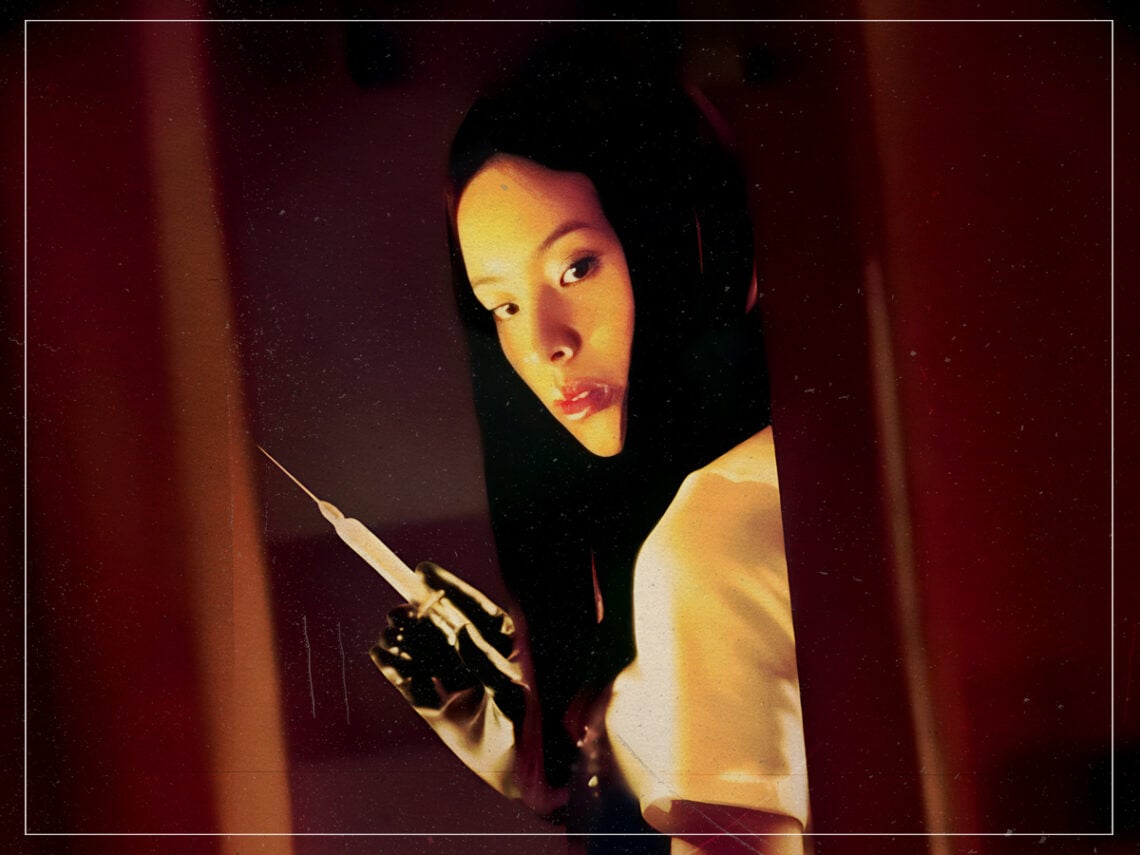
Takashi Miike explains why ‘Audition’ is a love story

With more than 100 films under his belt, including titles like Ichi the Killer, Alive, and Visitor Q, lovers of Osaka-born director Takashi Miike have plenty of material to sink their teeth into. Yet, it’s Audition, starring Ryo Ishibashi and Eihi Shiina, that audiences continue to return to all these years later, even as the slow-building horror celebrates its 25th anniversary.
Based on the 1997 Japanese novel by Ryū Murakami, Audition follows widower and movie producer Shigeharu Aoyama in his pursuit to find a new wife after receiving encouragement from his teenage son. To assist his search, Aoyama sets up an audition for a fake movie where he can meet potential partners. It’s here he encounters the demure ex-ballerina Asami Yamazaki whose beauty and submissive appearance catches his eye.
In this way, the film masquerades as a romantic drama, lulling the viewer into a false sense of security for the first 50 minutes. That is until Miike dials up the anxiety with seamlessly cut shots that give the impression of one long scene. The audience is then saddled with the reality of Yamazaki’s past, a story riddled with abuse, and we see Shiina shirk off her passive mask and become the sadistic instigator.
Shiina’s performance is particularly impressive, given it was the actor and former model’s second professional on-screen role. Miike gave the actor complete creative control to interpret her character as she saw fit, citing her “happy smile” in the final scene as a stroke of genius.
Although this is not Miike’s first flick, Audition is the movie that won the director international acclaim following its debut at the Vancouver International Film Festival in October 1999. It also established Miike’s reputation as a horror director with a proclivity for entertaining the taboo and depicting graphic violence. At screenings of Audition, including its debut to European audiences at Rotterdam in 2000, there were reports of mass walkouts following the film’s climactic torture scene, which utilises acupuncture needles and piano wire in creative and bloodcurdling ways.
Yet in a recent interview, Miike insists that the film is not a horror but rather a “love letter”. It’s this perspective that encouraged the director to shoot the grim final scene, which he says almost never happened. “I thought pain was something the couple could share together. In other words, their love was fulfilled,” he explains. “This is how I remember the movie should end. No matter how much it hurts, the next morning will turn out to be surprisingly boring.”
While it may seem absurd to paint Audition as a love story, even if its initial premise takes cues from the romantic-comedy textbook, a rewatch reveals it is wiser on relations between men and women than we first thought. Underscored by a hetero-pessimistic outlook, perhaps Audition provided the scaffolding for revenge dramas like Emerald Fennell’s Promising Young Woman and David Fincher’s psychological thriller Gone Girl. The film certainly offers plenty of fodder for a feminist reading, with Miike’s critique of the entitled 1990s male archetype.
