


Takashi Miike’s ‘Audition’ and the critique of the male gender role

There’s a striking sense of violence in the films of Japanese director Takashi Miike, including the likes of Ichi the Killer, Dead or Alive and Visitor Q. Still, there can occasionally be instances of social critique alongside the acts of brutality. For instance, in 1999’s horror gem Audition, based on the 1997 novel by Ryu Murakami, Miike provides a shocking examination and repudiation of the male gender role and its dominance in Japanese society.
Ryo Ishibashi plays Shigeharu Aoyama, a widower who, at the advice of his film producer friend, puts together a mock casting audition for him to meet a new prospective partner. After several women audition for the ‘role’, Shigeharu becomes allured by a seemingly timid woman called Asami Yamazaki, played by Eihi Shiina, and as their new relationship progresses, her dark history comes to light leading to disastrous consequences for the widower.
As the chilling narrative of Audition unfolds, Miike begins to explore the nature of male entitlement and the objectification of women in 1990s society. What seems like a romantic drama soon becomes a horror tale of nightmarish proportions. Shigeharu might garner sympathy at the beginning of the film, considering the death of his late wife, but his method of finding new love is one that merely sees women as objects to be considered only based on their superficial qualities; in this instance, by their beauty and submissiveness, therefore relegating them to male acquisitions.
Shigeharu simply believes that he can manipulate the women around him according to his desires, and his evident lack of emotional engagement with both Asami and the other hopeful auditionees serves as a critique of men’s frequent inability to understand the humanity and complexity that women possess. Miike and Murakami, therefore, expose the kind of traditional gender role that men often slot into, one in which they cannot form emotional connections without any authenticity beyond the desire for sex and company.
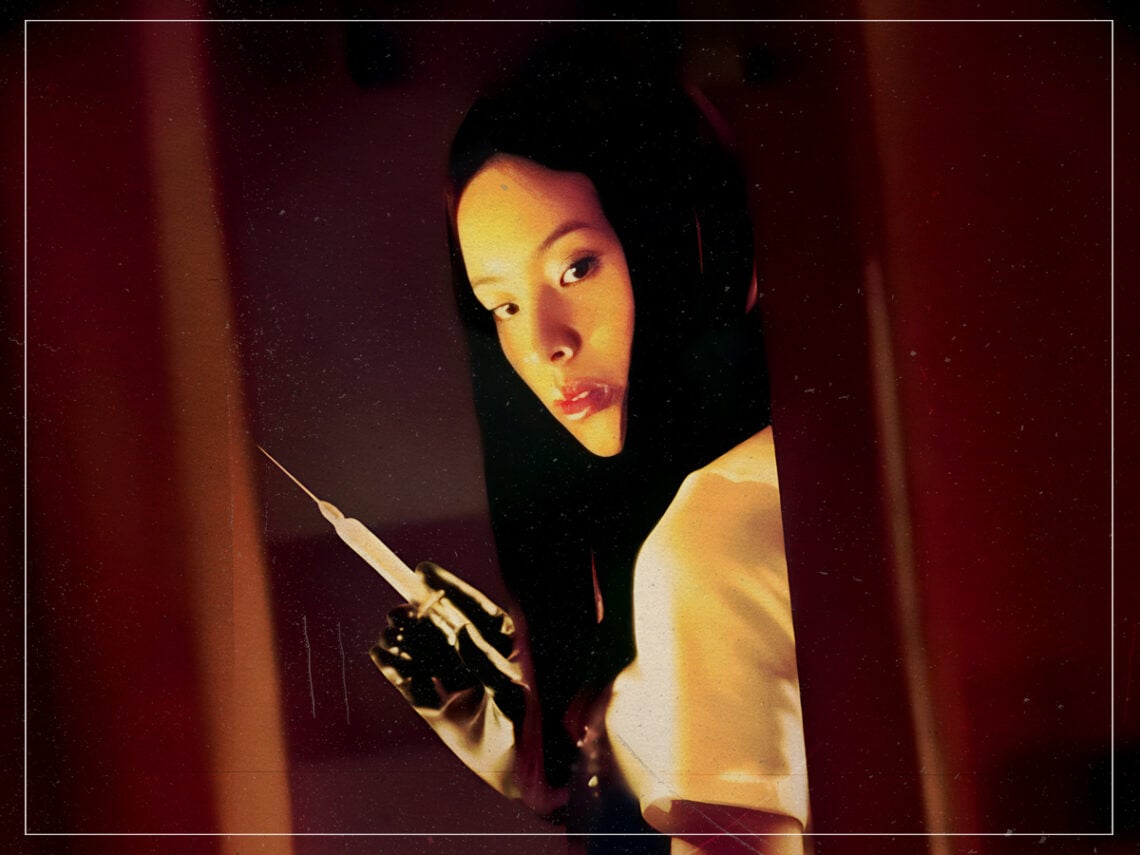
Where Audition really ramps up its criticism of patriarchy, though, is through the character of Asami herself. Shigeharu likely selected Asami for her meek and passive personality. Still, as he spends more time with her, he learns that she is a deeply traumatised individual. When Shigeharu fails to properly engage with her troubled emotional state and history of abuse, she begins to wreak violent havoc on him as retribution against the male gender role on a broader scale.
At the climax, Asami tortures Shigeharu in some of the most gruesome scenes ever witnessed in Japanese cinema, and such extremity serves as a juxtaposition with her quiet demeanour, showing that Shigeharu was wrong to assume her characteristic based on a short audition alone. These horrific moments of the film serve to show the way that trauma and pain inflicted by a male-centric culture and society can explode into violence, which is made even more shocking by contrasting with the seeming tranquillity of the earlier scenes.
In becoming a torturer as a result of her history as an abusee and the emotional neglect of Shigeharu, Asami subverts the dichotomy between the male and female gender roles, even if only through the avenue of traditional male violence.
In essence, though, Audition is a visceral and eternally memorable critique of the patriarchy, a social system in which women are objectified and assessed based on their prospective qualities as romantic partners alone and not as autonomous individuals with personal histories, needs and desires of their own. It serves as a harrowing celebration of female power and a reminder of trauma’s ability to explode into violence when left unaddressed as a result of misogynistic attitudes and behaviour.
