


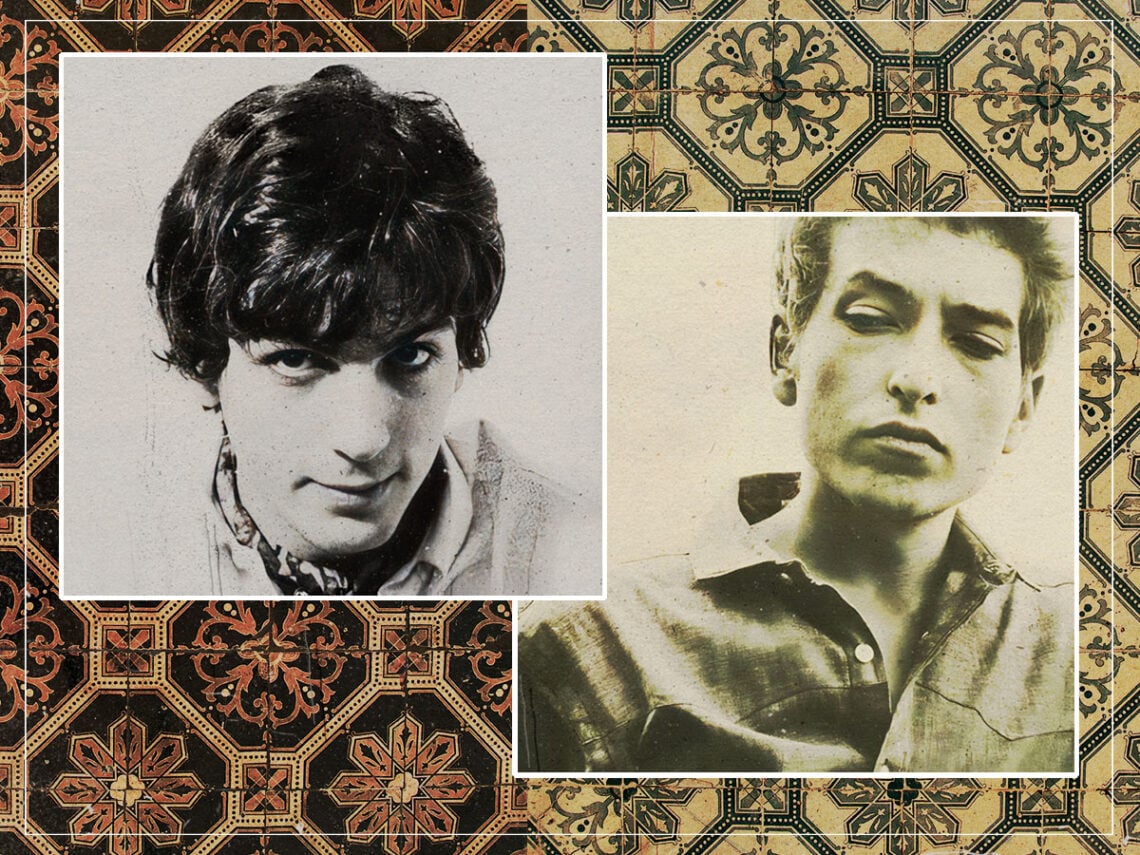
Syd Barrett’s lost ode to Bob Dylan

Before Pink Floyd and the emergence of their experimental brand of rock, Syd Barrett was just like all other music fans: utterly obsessed with Bob Dylan. In one of his earliest tracks, the musician wrote an ode to his idol that helped him find direction on his creative path.
It was 1964, and Barrett was still new to music, only really playing in small local bands, which his mother encouraged to help him get through his father’s death. He had a girlfriend who loved the music of The Beatles and The Rolling Stones. He also had a new friend in the form of David Gilmour, a fellow student at his art college. And he had two tickets to see Bob Dylan.
While Barrett was just another kid with a love for music, Dylan was becoming a sensation. His earliest albums had set him up as the next great protest singer. Alongside Joan Baez, the pair were deemed to be the new faces of folk as they sang together at festivals across America. Tracks like ‘Blowin’ in the Wind’ and ‘The Times They Are A Changin’’ were swiftly becoming new classics as Dylan shot to fame and rose through the ranks of the blossoming folk-rock scene of the 1960s counterculture.
Dylan played all over the world, and in 1964, he performed in London. A young Syd Barrett and his girlfriend Libby Gausden were in attendance for what would be a life-changing performance for the Pink Floyd founder. He was so inspired by what he saw that he went home and wrote a song.
‘Bob Dylan’s Blues’ stands as one of the earliest known tracks written by Barrett, penned long before the involvement of any sort of publishing or record deal and really before he was taking music seriously at all.
“Goin’ to write me a song / ‘Bout what’s right and what’s wrong,” Barrett sings like a kind of manifesto. As if setting out a new life for himself, he seems to be looking up to Dylan and deciding that is what he wants for himself. Calling the folk artist “the king”, his admiration for the musician is crystal clear as he sings of Dylan’s poetry, travels and money.
After the concert, something seemed to shift in Barrett. He enrolled at Camberwell College of Art to study painting, joined a new band with Roger Waters and Nick Mason, and generally seemed to throw himself into the life of an artist. It seemed to inspire him to be more outright in chasing down his dreams as Mason recalls of the once shy Barrett, “In a period when everyone was being cool in a very adolescent, self-conscious way, Syd was unfashionably outgoing; my enduring memory of our first encounter is the fact that he bothered to come up and introduce himself to me.”
This burst of inspiration passed down from Dylan to Barrett may well have changed the course of music history. ‘Bob Dylan’s Blues’, along with ‘Terrapin’ and ‘Maisie’, two other songs written around the same time, are evidence of Barrett’s increasing interest in blues and folk. Moving away from the more classic rock and roll of his teens, his musical landscape was widening to include more R&B, blues and other more left-field genres being imported from America.
He’d bring all of this to Pink Floyd, who started out mostly as a well-liked R&B covers band, playing London’s underground music circuit. But as the years went by and Barrett committed more and more to the artist and poet’s lifestyle he so clearly admired in Dylan, the band quickly grew a repertoire of originals that would become the basis for their now-renowned sound.
“It always felt to me that most of the ideas were emanating from Syd at the time,” Nick Mason said of Barrett’s early days in the band. Two years on from that Dylan gig and this early track, the musician seemed to be a font of inspiration, much like his idol. Bringing the prophecy of becoming the “king” and the “poet” he looked up to. As if he knew it all along, one verse in particular really came to life when considering Pink Floyd’s psychedelic and dreamlike sound:
“Well I sing about dreams
And I rhymes it with “seems”
‘Cause it seems that my dream always means
That I can prophesy all kinds of things”.

Never Miss A Tale
The Far Out Bob Dylan Newsletter
All the latest stories about Bob Dylan from the independent voice of culture.
Straight to your inbox.