


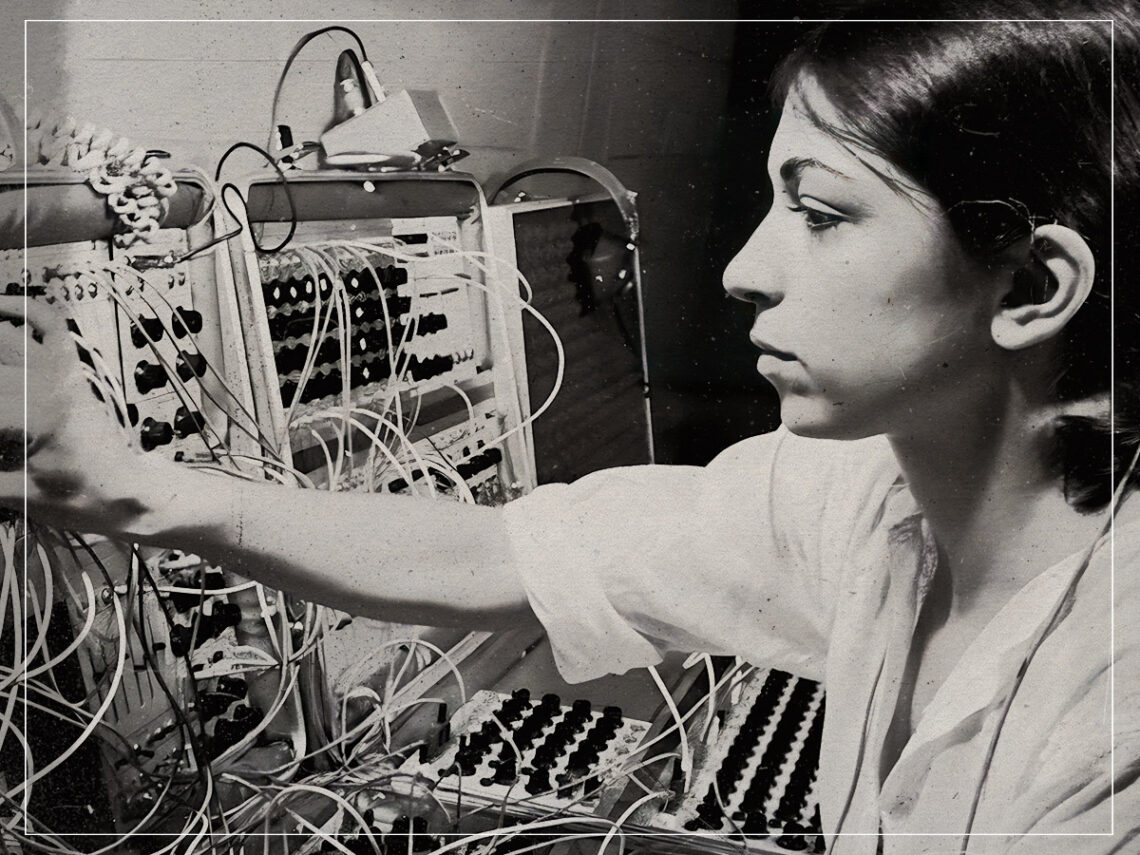
Suzanne Ciani: the American synth pioneer

When discussing synths and the wave of electronic music that first broke out in the 1970s, the conversation is too often male-centred. Names like Brian Eno, Isao Tomita, Tony Banks and Jan Hammer dominate the synth world, but what about Suzanne Ciani?
A name too often forgotten in the history of electronic music, Ciani was America’s first synth icon. Her contributions to the instrument, helping to pioneer it as early as 1970, are vital.
Back in the 1970s, while studying music composition at the University of California, Ciana was an early name getting to grips with the Buchla. Having met Don Buchla, the inventor, at university, Ciani was one of the first names to use the instrument. Launched in 1963, Buchla Electronic Musical Instruments, or BEMI, were creating an early synthesizer model that pioneered the sound alongside the Moog. According to Ciani, the Buchla was “San Francisco’s neck-and-neck contender to New York’s Moog … run by a community of festival freaks and academic acid eaters.”
Talking about Buchla himself, Ciani said, “I call Don the Leonardo DaVinci of instrument design.” She quickly began working for the company as a total devotee to the instrument while she studied. In a rented studio near her college, Ciani would pay $5 a visit to play the instrument, starting to craft her own unique sound.
By the time she’d finished her studies, Ciani was a Buchla expert. Navigating the bulky instrument, her live performances quickly captured attention. Described as a “choreography of movements”, Ciani made the clunky, big machine look effortless, turning the futuristic instrument into something graceful, exciting and intriguing.
However, her reputation was immediately being held back by sexism. While working at Buchla, soldering and building machines, the workers took a vocal interest in wanting to learn to play the instrument. Ciana offered to teach some classes, and Ed Buchla initially agreed. But after the first session, Buchla declared, “We’ve decided that we don’t want women in the class,” to which Ciani replied, “But I’m the only woman in the class!”
Ultimately, Ciani left her job, deciding to strike out independently and compose music to prove everyone who doubted her wrong. By the end of 1970, she had released her debut album, Voices of Packaged Souls, an early example of electronic synth music with an initial release of only 50 records.
In 1974, Ciani decided to leave the West Coast for New York, where she would live for 19 years, making a name for herself as a synth pioneer. Travelling with only her clothes and her Buchla, she became a session musician to pay the bills. By 1976, her contributions to the instrument earned her a National Endowment for the Arts grant, allowing her to focus even more on elevating the reputation of synthesizers.
In 1978, Ciani founded her own company and turned her attention towards making jingles and commercial music. She worked with brands like Coca-Cola, Merrill Lynch and AT&T, helping to bring the sound of the synth into mainstream American media. But even after the sound of the synth graced the famous Coca jingle, people remained baffled by the instrument.
By 1980, synths were slowly getting more and more popular. Kraftwerk were becoming more widely known, Gary Numan introduced the instrument to the new wave scene, and more bands were integrating the instrument. But it was still a few years off being made super popular, notably linking to when Prince first introduced electronic synths on his 1984 Purple Rain album. Ciani was still doing her best to popularise the instrument, even appearing on David Letterman’s chat show for a live performance.
“Nobody even understood that the sound was coming out of the machine, it just didn’t compute,” Ciani told The Guardian. “It was so unknown that the connection couldn’t be made. It’s like when they say when Columbus came across the ocean, that the Indians didn’t even see the ship because they had no concept for ships,” she added.
Outside of the synth world, Ciani’s name might not be well known. Her own music was never a mainstream hit, always flying under the radar as a cult figure beloved by synth and electronic fans. She continued to work away long into the 1980s, ‘90s and into today, providing film scores and jingles while also featuring as a guest musician on many albums. But despite not getting her own hit, Ciani’s pioneering work enabled so many others to bring the synth into the mainstream. Without her early engagement with the Buchla and tireless work to popularise the instrument, the enduring sound of the synth may never have broken through.
