


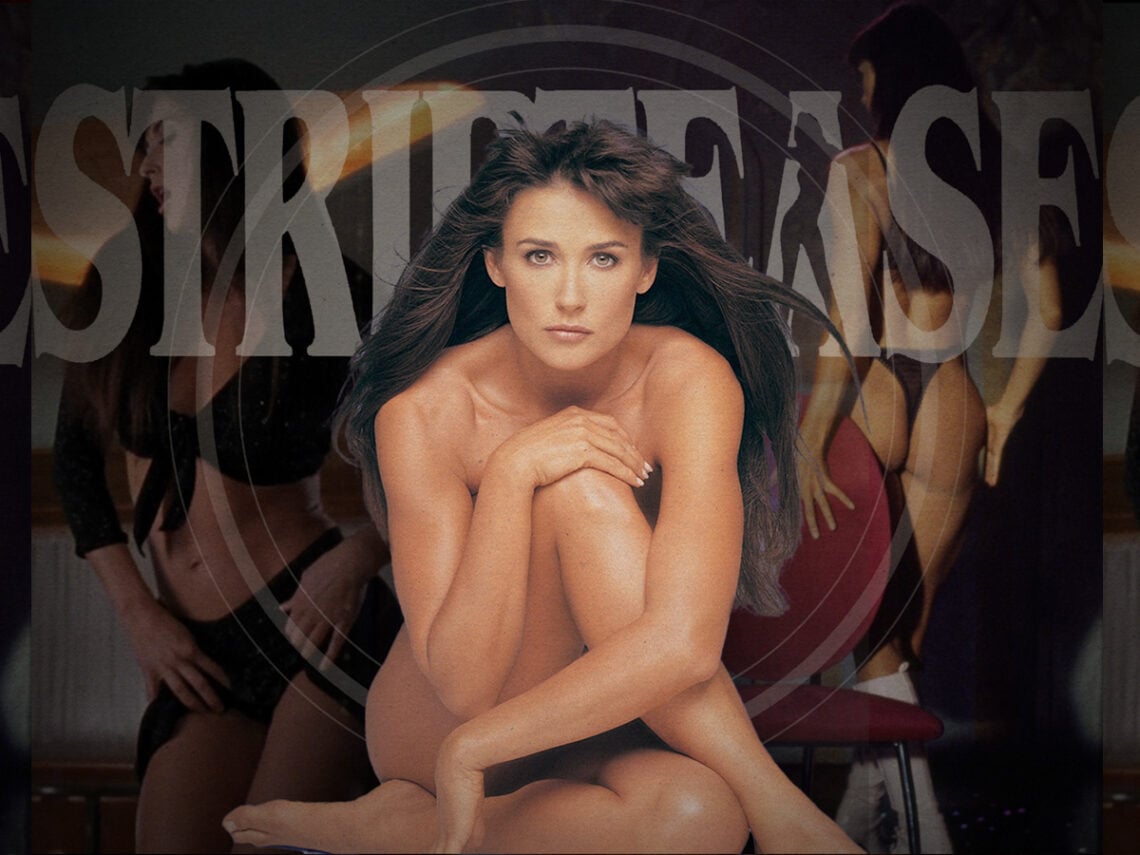
‘Striptease’ at 30: So bad it’s good, or a movie “tinged with real malice and misogyny”?

In 1996, Demi Moore made headlines when it was revealed that she had been paid the highest salary in Hollywood history (at least for a female actor) for the movie Striptease.
It wasn’t the first time an actor had been given such a large pay cheque, but of course, the industry had only ever given such a large sum to leading men before.
The longstanding gender bias in Hollywood has meant that men have always been paid more than women. Even now, there’s a disparity between male and female stars of up to an average of 25%. So, while Moore left many people outraged when she was given $12million to star in Striptease, that same year saw Jim Carrey paid $20m for the forgettable comedy The Cable Guy.
Sure, this was a rather monumental moment, but it didn’t stir up as much controversy as Moore being paid so much for Striptease. “I think the interesting piece is that when I became the highest-paid actress, why is it that, at that moment, the choice was to bring me down?,” she questioned on The Interview podcast.
She explained, “I don’t take this personally. I think anyone who had been in the position that was the first to get that kind of equality of pay would probably have taken a hit. But because I did a film that was dealing with the world of stripping and the body, I was extremely shamed.”
The movie, directed by Andrew Bergman, followed Moore’s character, Erin Grant, as she navigated the world of being a stripper, despite her roots as a former FBI agent. She takes on the job to make quick money in order to pay for an appeal to get her daughter back, who has recently been taken out of her custody, and she soon proves to be the most popular stripper at the joint.
With its black comedy tone, Striptease seems to tow this line of poking fun at its outrageousness, while also totally giving in to it. Is this a film that is aware of just how heavily it plays into the male gaze? Or is it a film that, rather, thinks its awareness of such voyeurism and exploitation is acceptable purely because it is acknowledged?
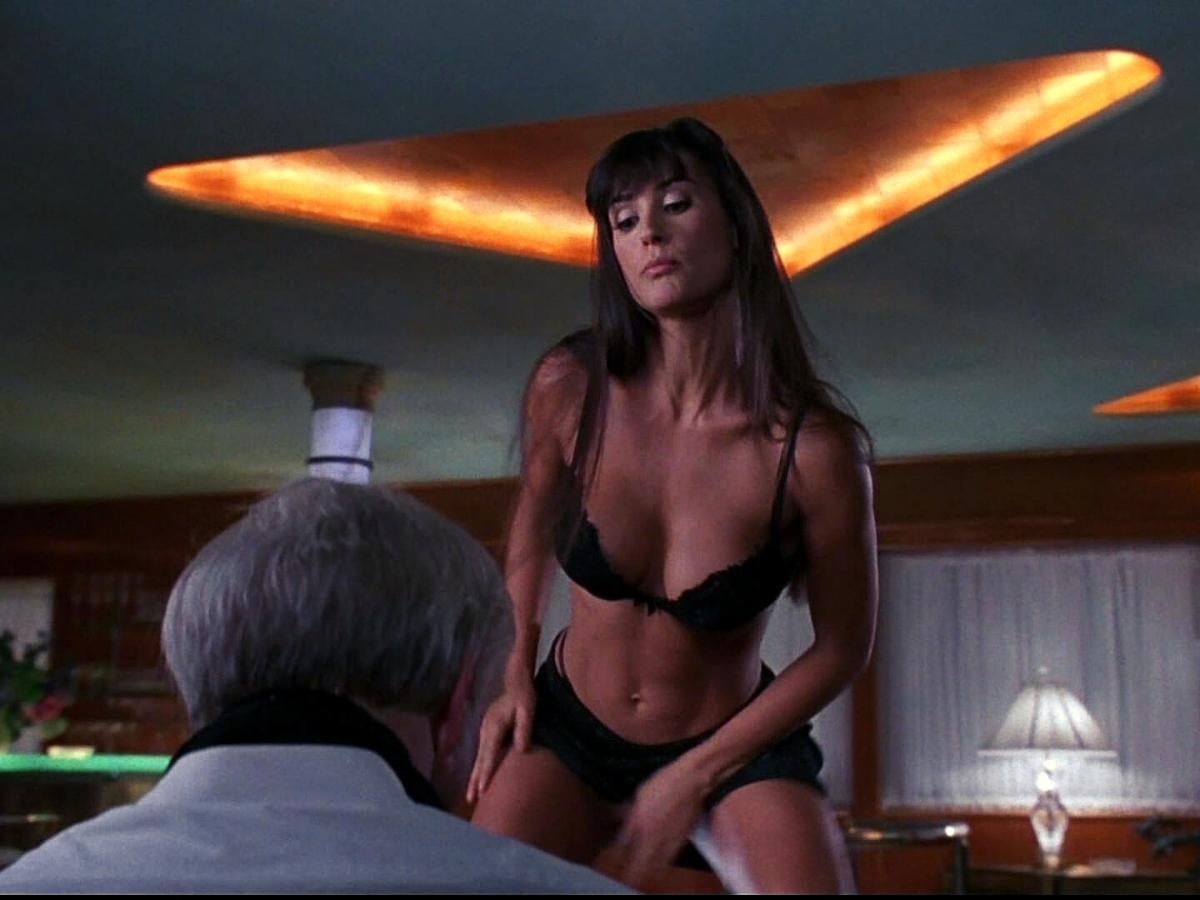
Log onto a site like Letterboxd, and you’ll predominantly find negative reviews from users, calling Striptease “the stupidest movie I’ve watched in a long time”, “ridiculously camp”, and “kinda cringe”. It seems like, for all the sexism, the excessive nudity designed purely to titillate, and the flimsy script, a lot of people can’t help but find it ‘so bad it’s good’. That kind of review is always going to come into play when there’s a campy element, accidental or otherwise, present.
To be frank, it’s not a good film. Striptease got Moore such a huge sum because it was an industry experiment in figuring out how much they were willing to invest in a movie that would put a mega star in such a daring role. The studio wanted to pay an actor enough to justify such graphic scenes, ones that would involve lots of pole dancing and stripping down to just a tiny piece of underwear.
But Striptease fails to say anything meaningful, relying on shock value instead of presenting characters with proper nuance. None of the other strippers in the movie is portrayed as particularly smart, and it feels like their only real currency is their bodies. Put a female director in charge, and perhaps the movie would’ve had a slightly less exploitative angle, but who knows? Striptease, with its insistence on showing audiences naked female bodies at every chance, always seemed destined to fail.
With that being said, the response that Moore received was incredibly unjust. “I was, again, dubbed an exhibitionist. On one level, I get it, of course: I was dancing around a pole in a G-string. Fair enough. But the ugliness with which people responded to that movie felt tinged with real malice and misogyny,” she once claimed, “The hate that came at me for choosing to do Striptease, and getting paid what I did to star in it, mirrored the disapproval the protagonist, Erin, faced for becoming an erotic dancer.”
So, life imitated art. Striptease had the chance to do something much more interesting, something that would make audiences think about the way women are treated and perceived for how they use their bodies. Yet, above all, it instead played into the male gaze with its incessant shots of Moore getting her kit off.
