


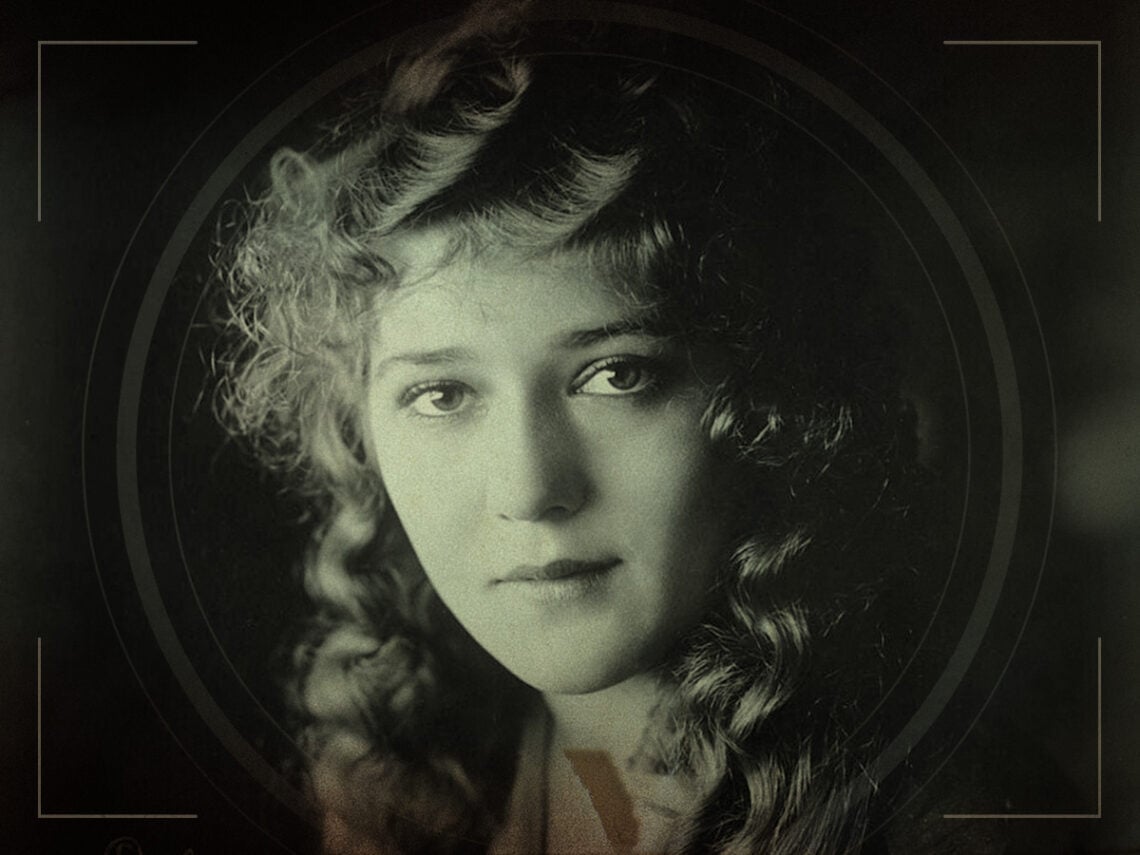
110 years after Mary Pickford became Hollywood’s first million-dollar female actor, how much has really changed?

In the early days of cinema, some of the biggest milestones were carried out by women, such as Alice Guy Blache, whose various groundbreaking landmarks included creating the first narrative film, as well as the first movie to feature an all-African-American cast.
Then there was Mary Pickford, whose acting chops soon landed her the title of ‘America’s Sweetheart’, becoming the first proper movie star and the first Hollywood millionaire. She even co-founded United Artists, playing a significant part in shaping the industry into something utterly massive and lucrative, but then patriarchalism soon got its way.
Sadly, over 100 years since Pickford, a true pioneer of the silver screen, emerged as the first millionaire in Hollywood, women are still being shortchanged compared to men. The industry remains one of the most glaring examples of the deep-rooted gender disparities at the heart of our society, festering away in spite of the endless protests and movements that women have enacted against such blatant sexism and oppression.
Pickford certainly paved the way for women to become huge stars, but as long as there are enough men in charge, women are always going to face pushback. It’s systemic; sexism is so intrinsic to the way many people view the world, and the innate biological differences between men and women seemingly determine many people’s opinions of whether a woman deserves to have power or to earn as much money, which is frankly ridiculous.
But Hollywood has routinely paid men more than women, even today. We’re living in a world that has already seen various waves of feminism, including increasingly intersectional debates regarding race and sexuality, and we’ve even seen many movements centred around workplace inequality and abuses of power, like #MeToo (which came to take on particular resonance in Hollywood). Yet there are still glaring gendered differences in Hollywood, and the issues regarding unequal pay are just the tip of a very deep iceberg.
A study carried out by The London School of Economics and Political Science, published in 2019, found that there was an “unexplained” 25% wage gap in Hollywood that has barely changed since the 1980s, even with the increase in star salaries since then. “The unadjusted results show that female stars earn $2.2 million (56%) less per film,” wrote Sofia Izquierdo Sanchez.
“When we adopt a standard specification where salaries per actor and film depend on the actor’s background characteristics and current film specifications, approximately half of the gap can be explained by our controls; however, we still find an unexplained gender gap of around $1.1million (around 25%) per movie.”
So, why is there still such a striking gap between how much male actors get paid compared to their female counterparts? There really isn’t a valid reason, other than pure systemic misogyny. It’s not just Hollywood that has these issues, of course, but with it being such a front-facing industry filled with fame and celebrity, we can’t really ignore these glaring disparities. With Hollywood’s prioritisation of male-led stories in more lucrative genres like action, there’s a lot that needs to be done in the real world if we want to see any genuine change on the big screen.
Genres typically associated with women, like romance, have long been given smaller budgets, with studios seeing them as holding less appeal. All this comes down to the historic othering of women’s interests and stories, which have long been taken less seriously. There’s clearly a long way to go if we want to see women paid equally to men and given as much power in the industry. It’s just crazy that 110 years after Pickford’s rise to fame as the first Hollywood millionaire, women are still demanding their voices to be heard and for their talents to be equally rewarded.
