


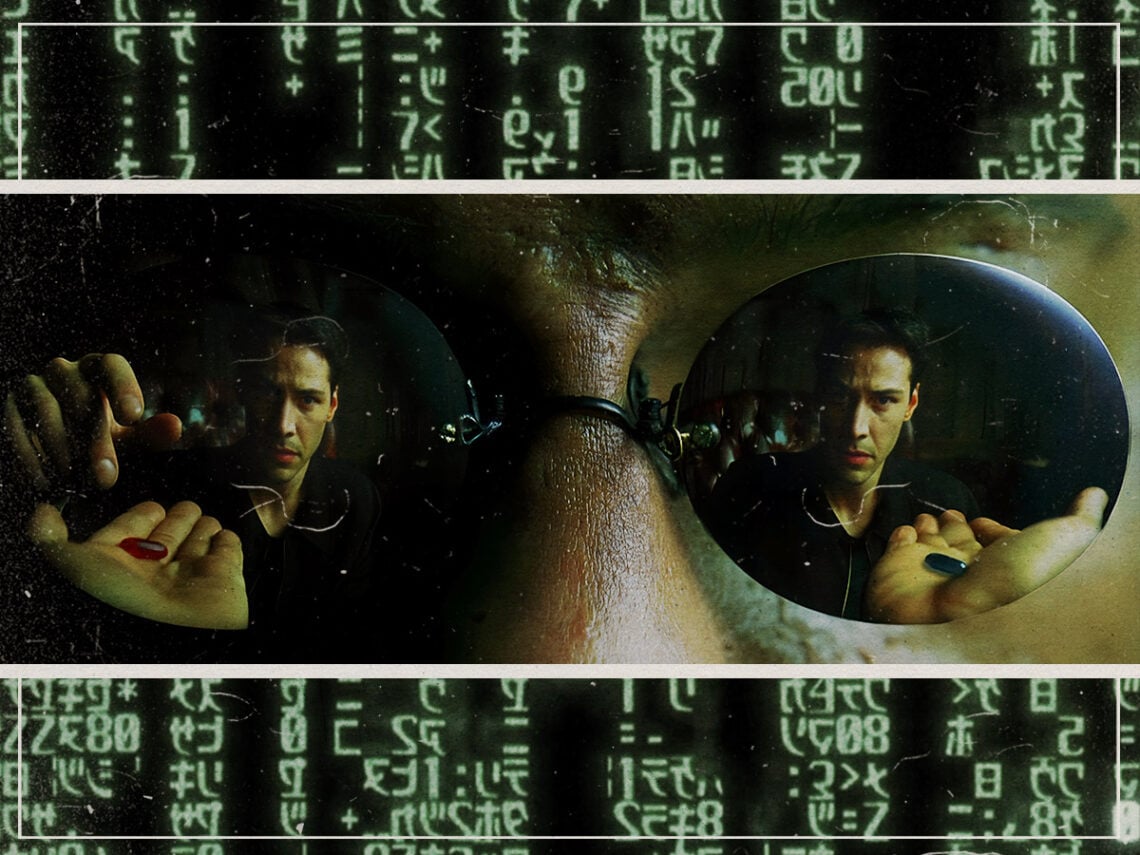
The strange story of the woman who ‘successfully’ sued ‘The Matrix’ directors for plagiarism

In Hollywood, accusations of plagiarism are ten a penny, with very few of them ever amounting to much. However, for years, a rumour persisted that a disgruntled writer had sued the Wachowski sisters over similarities between a script treatment she wrote in the 1980s and their all-conquering 1999 sci-fi masterpiece The Matrix. From 2005 onwards, it was even reported that she had actually won her court case and been awarded millions of dollars in damages. Was this entirely accurate, or was the real story much stranger than that?
In 1983, eccentric Bronx native Sophia Stewart worked as a paralegal while trying to forge a career as a writer. She was never short of belief in her abilities, even telling The Los Angeles Times, “I’m the kind of master writer that comes once upon this Earth.” So, when she completed work on a manuscript called The Third Eye, she was pretty convinced it was a work of genius. Much to her chagrin, she was unsuccessful in finding a publisher for her work, but she saw an opportunity in 1986 when she laid eyes on a fateful magazine advert.
Stewart claims this advertisement came from the Wachowskis, who put the feelers out for sci-fi story ideas they could turn into comic books. She alleges that she sent them everything she had, including a screen treatment and a document including a synopsis, character biographies, and illustrations. Stewart says she never heard back from the Wachowskis, and her materials were never returned to her.
Imagine her shock, when she sat down in a cinema 13 years later to watch The Matrix and, with dawning horror, said to herself, “I wrote this.” She recognised characters and themes from her unpublished work and became convinced the Wachowskis had blatantly stolen her work to be repurposed for their own ends. In June 1999, she filed a copyright infringement claim with the FBI, and in 2003 filed a lawsuit against the Wachowskis. Interestingly, though, by this point, she was also convinced that James Cameron had pilfered her ideas for The Terminator franchise as well, so he was also included in the suit. Make of that what you will.
Things would jump up several notches when, on October 28th, 2003, the Salt Lake Community College Globe published a story entitled “‘Mother of The Matrix‘ Victorious.” In this article – written by a second-year communications student – it was claimed Stewart had won her case and was primed to receive one of the biggest payouts in Hollywood history. This is where the idea that Stewart had toppled an evil Hollywood behemoth first began to take hold, and this version of events was still being reported as truth as late as 2013.

Unfortunately, in this case, the truth isn’t stranger than fiction. Stewart didn’t win the lawsuit, and court documents state, “plaintiff Sophia Stewart [will] take nothing by way of her complaint against defendants.” In fact, she reportedly failed to show up for her day in court, and the judge ruled her lawyers “had not entered any evidence to bolster its key claims or demonstrated any striking similarity between her work and the accused directors’ films.”
Interestingly, Stewart never claimed that she won her lawsuit against the Wachowskis, so she can’t be accused of spreading that mistruth. However, she did claim to have won a $150million judgment against her attorney, and court documents back that up to an extent. You see, while she is credited with winning the judgement, the astronomical payout has been disputed.
Either way, as of 2013, Stewart was now seeking $3billion in damages, although she maintains money is not her ultimate goal. “The judge took it upon himself to say I had to tally up the damages. I’m not seeking damages. I’m seeking for someone to go to jail.”
In the end, the story of Sophia Stewart and her plagiarism case against the Wachowskis is a strange one. Certain corners of the internet hailed her as a wronged creator who had landed a striking blow against the creatively bankrupt hordes of Hollywood, while others dismissed her as a raving crackpot. In truth, her effort to be taken seriously wasn’t done any favours by the fact she never reproduced the supposed magazine advertisement placed by the Wachowskis in ’86, and the directors denied ever doing such a thing. They also rightly pointed out that, even though they did break into the comics industry in the early ’90s, at that time, they were 18 and 21-year-old university students.
Still, Stewart doesn’t seem like the kind of person to let this lie, and it wouldn’t be surprising to see her case rear its head again in the future. Her website TruthAboutMatrix.com, which details all her claims in great detail, is still live. She also told Time magazine in 2013, “I won that judgment, and those judges are going to give me my money, and Warner Bros is going to pay it.”
