


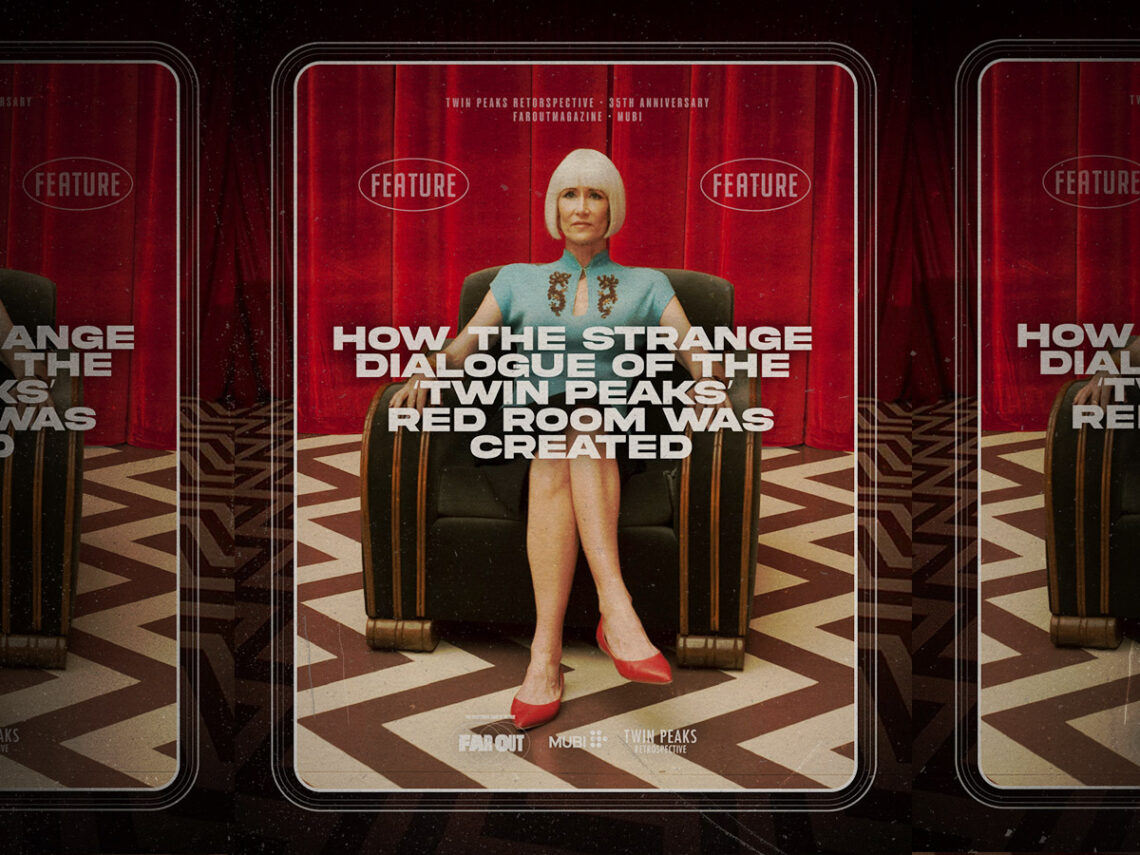
‘Twin Peaks’: how the strange dialogue of the Red Room was created

Throughout his career, David Lynch conjured the bizarre and surreal in a manner unlike any of his contemporaries. While films like Mulholland Drive and Blue Velvet certainly tap into the darker recesses of the human psyche, Twin Peaks, which could occasionally have its lighter moments, featured some seriously strange instances that induced fear and anxiety in the audience.
Among the most iconic and mind-bending facets of the series is the Red Room, particularly its peculiar mode of dialogue. The sinister liminal space is defined by a haunting, unsettling atmosphere, a place where time and space are bent out of shape and otherworldliness casts a long and dark shadow over those who enter.
Lynch always embraced the avant-garde and experimental, which played nicely into his habit of injecting slices of cinematic brilliance with outsized eccentricities. Alongside co-creator Mark Frost, both were keen to imbue Twin Peaks with heavy lashings of dreamlike surrealism, which helped create an atmosphere of confusion and terror the likes of which the small screen had never seen before.
At the forefront of the Red Room’s inherently foreboding nature is the way the dialogue is heard between those trapped in its maw. Each sentence arrives disjointed and scrambled in the mouths of those who speak them, and the words are arranged in ways that, on first viewing, appear to make no logical sense. That meant that Lynch, of course, felt compelled to add subtitles so the viewer could understand what was going on.
Of course, eschewing the traditional – and natural – structures of speech created a disorientating effect on Twin Peaks‘ captive audience, whereby the Red Room itself became a glimmer of a haunted fever dream, where things elude the very nature of understanding. This sense of unease made these scenes some of the show’s most memorable, but how exactly was the effect created?
The answer is fairly simple, albeit incredibly Lynchian. In order to create the desired effect, Lynch had his actors speak their lines backwards phonetically. When Laura Palmer says, “Hello, Agent Cooper” to Kyle MacLachlan’s FBI agent, Sheryl Lee recited “repooC tnegA, olleH” on the set, which was then reversed digitally so that the spoken reversed syllables arrive in the correct order, only they sound completely off-kilter.
The actor Michael J Anderson, who played The Man from Another Place in Twin Peaks, had been particularly adept at talking backwards to his friends when he was a child, so he had a natural knack for performing the difficult dialogue in his scenes. That’s likely why Lynch cast him in the peculiar role and had him speak so often in the backwards, reversed effect.
The dialogue in the Red Room is stuttered with deliberate, disjointed pacing, which adds tension and anxiety to the already admittedly offbeat narrative of Twin Peaks as a whole. There’s also a thematic importance to the language in that the mystery of the series, which constantly evades being fully revealed, is indeed kept secret in this cryptic conversation style.
By locking the mystery of Laura Palmer’s death in a strange in-between world like the Black Lodge and its enigmatic Red Room, Lynch increased his audience’s intrigue and desire to uncover its secrets. He then created a truly bizarre manner of speech to instil a sense of fear in that very audience, as though to scare them aware of the truth that lay in front of the red curtains and atop the black-and-white chequered floor.
All episodes of Twin Peaks launch on MUBI on 13 June in the US, UK, Latin America, Germany, Turkey, Italy, Netherlands and India.
