


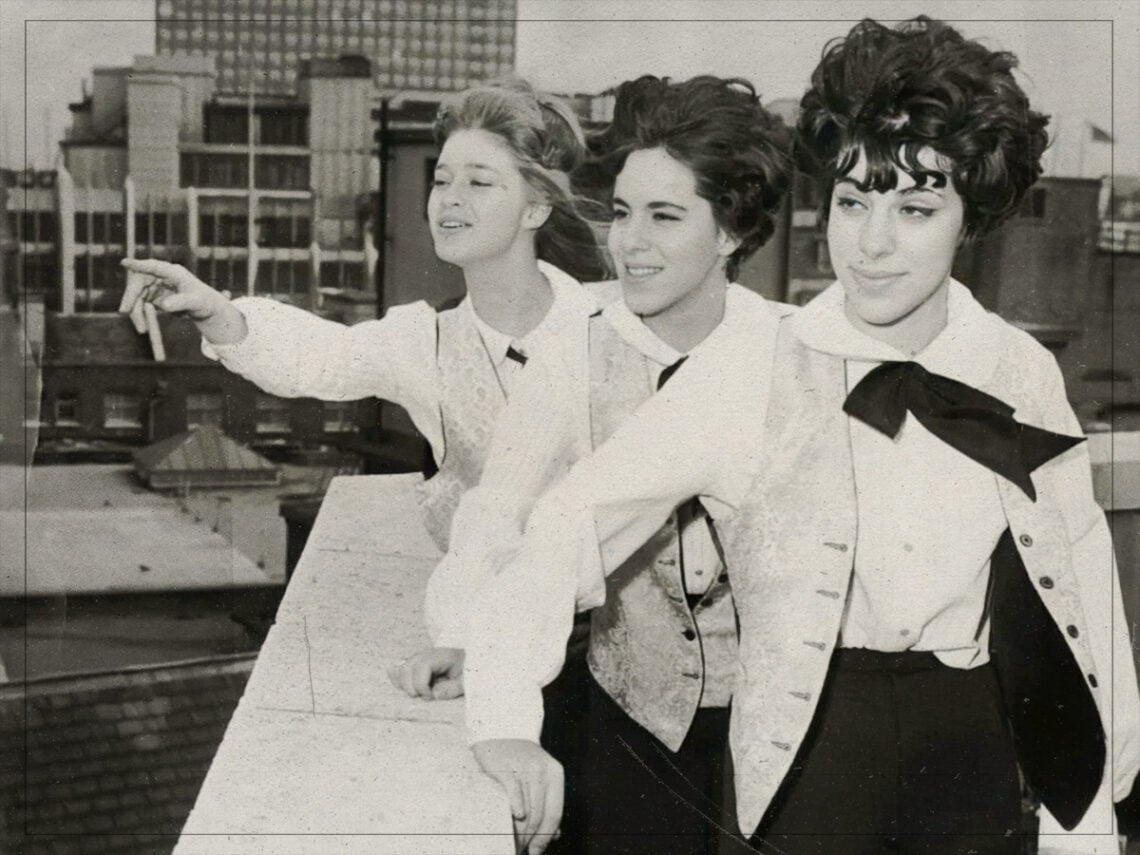
The Shangri-Nots: The strange case of the fake Shangri-Las

Attend any local music venue, bar, or second-rate pub on a regular basis, and you will inevitably come across a deluge of tribute acts; musicians who, instead of writing and recording their own material, have devoted themselves to cosplaying as much more renowned and successful artists.
For the most part, though, these pretend pop stars at least have the decency to opt for a parodistic name, rather than masquerading as the real deal. If you went to see 1960s girl group sensation The Shangri-Las during the 1980s or 1990s, though, I have some bad news for you.
One of the defining girl groups of the 1960s, The Shangri-Las typified the Red Bird sound, earning themselves a multitude of hit singles during the mid-point of the decade, including the likes of ‘Leader of the Pack’ and ‘Give Him A Great Big Kiss’. Like many other girl groups of the era – The Supremes or The Ronettes being notable examples – The Shangri-Las aimed to reflect the melodrama of teenage life through their recordings but, unlike their contemporaries, the Red Bird group fostered a much more rebellious, hard persona, largely owing to their roots in Queens, New York.
The music industry moved at an incredible pace during the 1960s. Despite their early hits, The Shangri-Las became lost in the shifting sands of the industry, as attention moved towards the emerging world of counterculture rock. Red Bird Records folded in 1967 and, in the midst of declining relevance, The Shangri-Las had a brief period with Mercury Records, before folding in 1968. Each of the band members embarked upon very different lives after the dissolution of the band, rarely reuniting to perform.
Mary Ann Ganser, for instance, became embroiled in drug addiction during the late 1960s, eventually dying of a heroin overdose in 1970. Her sister, Marge Ganser, returned to her studies, landing a job at a telephone company in New York and eventually passing away in 1996. Mary Weiss, the perceived leader of the band, worked for a variety of businesses after The Shangri-Las, predominantly based around architecture, furniture, and interior design. Meanwhile, her sister Betty Weiss started a family in 1964 and is currently the only surviving member of the band.
How the Shangri-Las lost their name to a fake tribute act
Although the Shangri-Las briefly returned in 1977, spurred on by the adoration of the band within the emerging punk rock scene, the reunion was short-lived. What’s more, the legal issues which enmeshed the band back in the 1960s largely prevented the members from recording or performing. Nevertheless, a band operating under the name The Shangri-Las, performing those iconic tracks from the Red Bird days, sprang up during the 1980s.
This incarnation of the band looked the part, bedecked in 1960s gear, and certainly sounded the part when performing anthems like ‘Leader of the Pack’. However, they had no connection whatsoever with the original band. As was discovered in 1989, when the original members reunited for Entertainment Tonight, this pseudo-Shangri-Las was actually the invention of a New York promoter called Dick Fox.
Resulting from the various legal battles the band were involved in around the time of their dissolution, the trademark for the band name The Shangri-Las was lost. Fox, sensing an opportunity for profit, bought the trademark and quickly set up a tribute group masquerading as the real deal. “Why should you have to [defend your name] when you are who you are?” questioned Marge Ganser upon discovering this fraudulent girl group. “We put in the work, we did all the one-nighters, staying in lousy hotels…we’re famous, and we still are.” Betty Weiss added, ”We’re not teenagers anymore, and we don’t have to take it anymore…and we’re not.”
Initially, the band acquired a cease and desist order from the court, preventing the Shangri-Nots from performing under the band name. However, a judge ultimately ordered the band to lease the Shangri-Las trademark to Fox indefinitely, allowing the bizarre tribute band to continue performing. The original incarnation of the band – minus Mary Ann Ganser – performed for the final time in 1989, but the fraudulent outfit continued to perform on the oldies circuit around the United States for many more years.
