


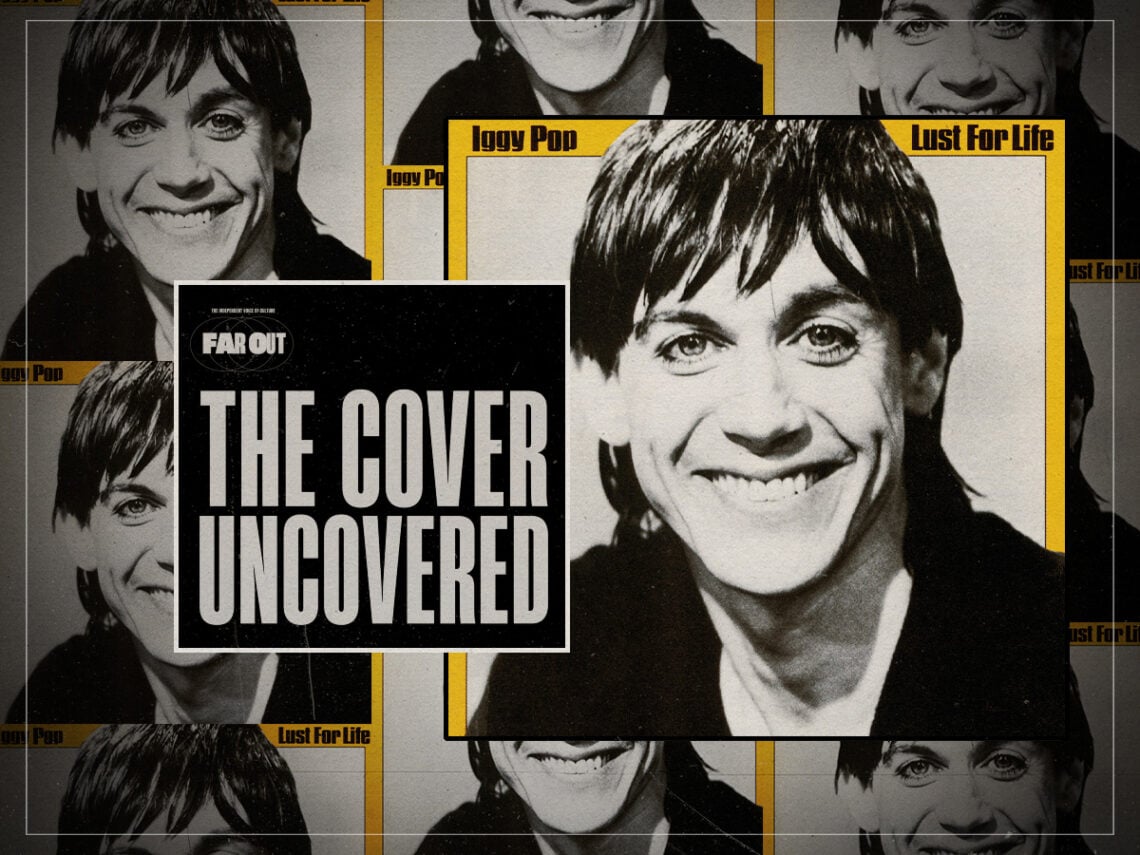
The Cover Uncovered: Iggy Pop’s ‘Lust for Life’ and Andrew Kent’s capture of “Jimmy”

Iggy Pop’s smile on the cover of his 1977 album Lust for Life is one of those unforgettable iconographies, the ideal capture of Pop’s revived spirit that lives up to the album’s title.
Pop had persisted through a dark period of drug addiction, joining David Bowie on tour in 1976 and later, following him to Europe in pursuit of sobriety. This period produced Pop’s redemption in the form of The Idiot (also released in 1977), his reintroduction to music after the breakup of his former band, The Stooges. That album, in contrast, shows Pop on the cover, striking a pose intended to be similar to the German artist Erich Heckel’s painting, Roquairol, arms jagged in a statuesque dance. (Bowie would later mimic the painting, as well, on the cover of Heroes.)
“[The Idiot was my] album of freedom,” Pop explained, as quoted in Joe Ambrose’s 2004 book Gimme Danger: The Story of Iggy Pop, “I’m not saying that it’s a great album or some fantastic work of art, but I love it, and it means a lot to me.”
The black-and-white image was captured by photographer Andy Kent, who also extensively immortalised Pop and Bowie’s time in Europe. He joined the two musicians on Pop’s tour for The Idiot that same year, where the Lust for Life image was taken in Pop’s dressing room, while he was preparing to speak with an interviewer during the tour’s run across the UK.
“It was a lucky great shot,” Kent remembered, as quoted in Paul Trynka’s 2007 book Iggy Pop: Open Up and Bleed, “This was Jimmy. The nice guy, a guy you’d like to hang out with”. In contrast to The Idiot, depicting a man stuck in time and striving to break through, the Pop we meet on Lust for Life is optimistic, his large smile, dimples and wide-eyed stare lingering with a welcome persistence.
Pop recalled the recording of Lust for Life as a period of haste, venturing into the studio soon after The Idiot was produced. “David and I had determined that we would record [Lust for Life] very quickly, which we wrote, recorded, and mixed in eight days,” he recalled, quoted by Ambrose, “and because we had done it so quickly, we had a lot of money left over from the advance, which we split.”
The image of him adorning the cover of Lust for Life mirrored much of the album’s contents. In further contrast to The Idiot, the album had more of a pop sensibility than anything that Pop had done before, favouring less experimentation. With lyrics that were largely improvised, sonic notes of Pop’s punk and garage rock roots seeped through, heard on the likes of ‘The Passenger’ and ‘Some Weird Sin’. The title track had a raucous upbeat energy that reverberated across the album, heard in Bowie’s instantly recognisable riff.
Lust for Life’s promotion was severely limited, falling victim to the aftermath of Elvis Presley’s death two weeks earlier and the subsequent reissuing of his catalogue. When it debuted on September 9th, 1977, the first pressings were all that the record stores received; once they were sold, the album was gone for good. The album received little coverage and performed less favourably than expected, but Pop managed to hold a spot on the UK albums chart.
Truly one of rock’s greatest images, the cover of Lust for Life has since become more than a fleeting moment captured in a dressing room. Kent managed to see through the façade of ‘Iggy Pop’ and discover James Newell Osterberg Jr, the man determined to maintain his artistry despite the odds that were stacked against him. If the overall timelessness of the record, in both imagery and sound, is any indication, Pop achieved what he set forth to do.
