


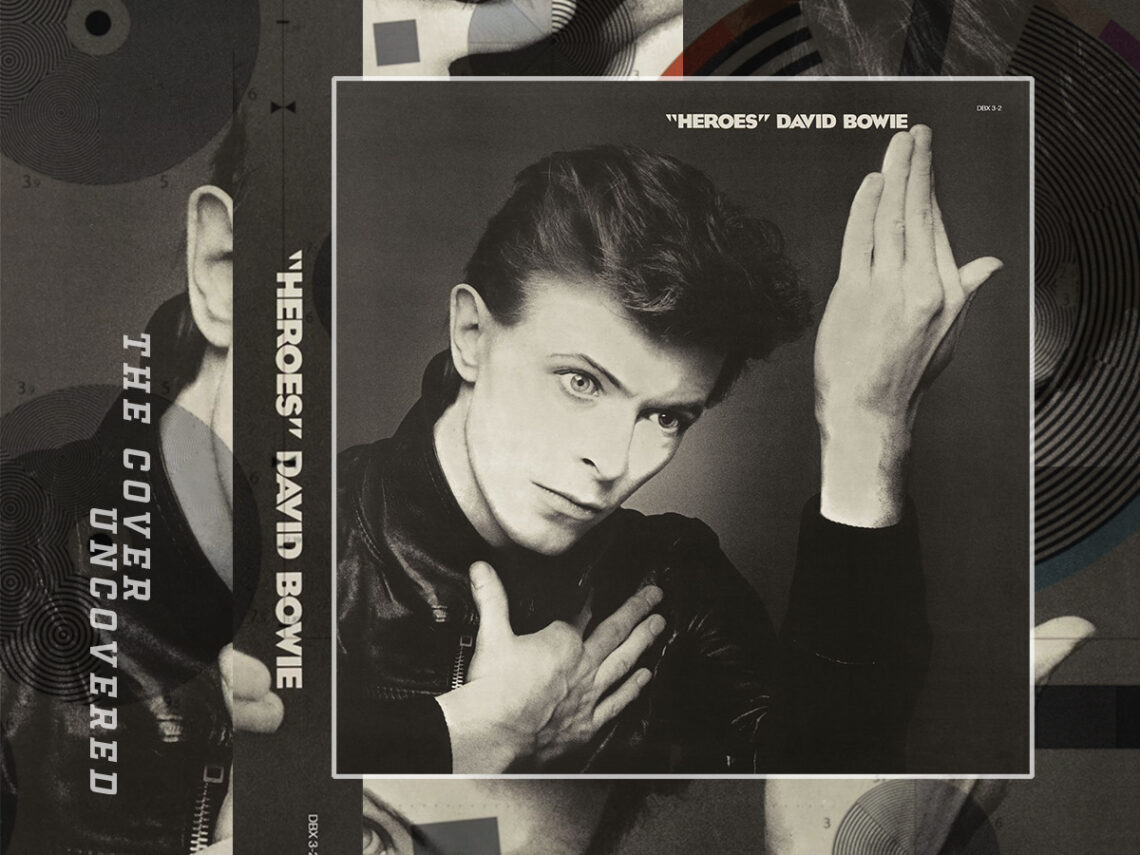
The Cover Uncovered: David Bowie embraces anguish and German expressionism for ‘Heroes’

He may have been a musical legend, but throughout his illustrious career, David Bowie made a few questionable decisions when it came to selecting the artwork for his albums. There are, of course, plenty of records that have sleeves with immediately recognisable and iconic imagery such as Ziggy Stardust and Aladdin Sane, but then on the other end of the spectrum, there are cases to be made that Diamond Dogs is hampered by its hideous design and his 2003 album Reality is the sort of thing a ten-year-old might make with clipart.
The thing is, his musical output was of a consistently high enough quality that these album cover atrocities were never called into question to the same degree that a bad album with dreadful artwork might receive. In addition to this, you’ve got to understand that even if the record cover isn’t appealing to your tastes, there’s usually always a story behind it that helps justify the decision.
The late 1970s signify a period in Bowie’s career where he was arguably at his creative peak, with this run of exceptional albums beginning with 1975’s Station to Station. While it may have been a troubled period with regards to his personal life, with a cocaine addiction consuming his life to a debilitating degree, his worsening mental state led him to move to Berlin in order to turn his life around and rehabilitate alongside his friend and occasional collaborator, Iggy Pop.
Berlin may have been a divided city at the time, with the Cold War and the aftereffects of the Second World War still raging on in both West and East Germany, but the capital was a place that was rife with culture. While Bowie was living there, he developed a fascination with 20th-century history and rebellious art movements that had emerged from the country, with a particular interest in expressionism capturing his attention and imagination.
One artist whose work he was particularly enamoured with was that of Erich Heckel, a founding member of ‘Die Brücke (The Bridge)’ art movement at the start of the 20th century. His style mixed neo-romantic influence with the emerging expressionist ideas that artists such as Edvard Munch and Egon Schiele were adopting, and his often warped and deformed portraits were something that Bowie was fascinated by. While experimental artistic values characterised the music on the three albums he wrote and released during this ‘Berlin Period’, the artworks of these releases were significantly influenced by it too.
Heckel’s 1917 painting, Roquariol, features a portrait of fellow expressionist artist Ernst Ludwig Kirchner in a depressive state, with his contorted limbs and pained expression being the standout features of the haunting image. Bowie became fascinated by this image, and it resonated with him due to his own struggles at the time. While he would photograph Iggy Pop in a similar pose for the cover of The Idiot, he asked Japanese photographer Masayoshi Sukita to collaborate with him in creating a similar snapshot for his own album, Heroes.
The end result is perhaps the most stark album cover of Bowie’s entire catalogue, and the expressionless look on his face and awkward posture reflect the emotional turmoil expressed by Kirchner in Heckel’s painting to an intense effect. Bowie as the subject is emotionless, yet the true intention behind the piece is burdened by intense pain and solemnity, and the defiant nature of the music that was inspired by the flourishing art but austere surroundings of Berlin only adds to the wonderful story behind Bowie’s creative masterpiece.
