


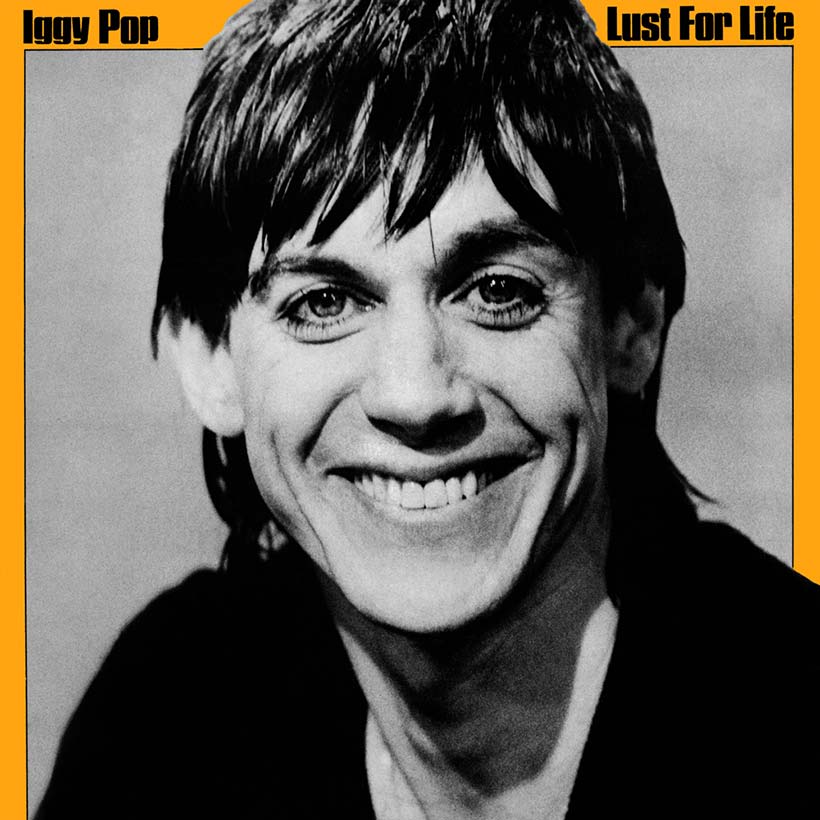
Iggy Pop album ‘Lust For Life’ turns 45

Iggy Pop was working fast, but this time it was all natural. After spending his formative years slumming it around Detroit with his band of proto-punks, The Stooges, Pop was now taking Europe by storm. A brief reunion with The Stooges soon broke apart, leaving Pop addicted to drugs and needing serious direction. A stint in a mental institution didn’t help, but one of his only visitors offered him a path to the future.
The importance of David Bowie to the story of Iggy Pop’s survival and thriving solo career is either widely overhyped or completely necessary, depending on how you interpret it. Bowie did get Pop out of the asylum (by force, allegedly) and brought him along on his ‘Isolar Tour’ in 1976, providing Pop with the inspiration to get his own career back on track. Bowie also was largely responsible for the material that made up The Idiot, Pop’s first solo album. When it came time to tour behind The Idiot, Bowie decided to forgo his own tour behind the more successful Low to be Pop’s keyboardist.
But Pop was adamant about taking control of his next record. The tour for The Idiot saw Pop branded as Bowie’s sidekick, something that frustrated the singer. Pop needed to shed some of the art rock pretences Bowie had saddled him with to establish himself fully. His music needed to return to Pop’s sound’s gritty rock and roll roots. Bowie was still heavily involved, but Pop came into the sessions with his own songs and his own ideas about what he wanted to do.
The result was Lust For Life, Pop’s definitive musical statement. Featuring an exuberant blast of early new wave and classic hard rock, the album was Pop at his absolute apex. For 40 minutes of nonstop energy, Pop leaves no part of his voice uncovered, stretching out his range to include shouts, croons, guttural bellows, and an impressive amount of melody. He sounds comfortable and confident through it all, ready to take his spot as a rock and roll legend.
Recorded in just eight days at the Hansa Studio by the Wall in Berlin (the same studio that Bowie used to record “Heroes” a month later), Lust For Life still resonates with the same vitality it had when it was first released 45 years ago. Featuring two of Pop’s most beloved songs, ‘Lust For Life’ and ‘The Passenger’, plus a large collection of his best deep cuts like ‘Some Weird Sin’, ‘Success’, and ‘Turn Blue’, the album continues to be the essential cornerstone to Pop’s impressive musical legacy.
Bowie and Pop gathered an impressive band to help bring the album to life. Holding down the rhythm section were bassist Tony Fox and drummer Hunt Sales, the two sons of children’s entertainer Soupy Sales. Pop was heavily influenced by Sales’ simplicity of words as a child, as he explianed in the documentary Gimme Danger, so the ability to work with Sales’ offspring likely added a strong connection to their relationship. Bowie must have been impressed, too, considering how both Sales brothers were eventually drafted into what eventually became Bowie’s 1990s industrial band Tin Machine.
Along for the ride were also longtime Bowie guitarist Carlos Alomar, Bowie associate Ricky Gardiner, and singer Warren Peace, who helped contribute to the writing of ‘Turn Blue’. With a relatively modest group of collaborators and the freedom to call the shots, Pop crafted a tight batch of songs that celebrated his own newfound vibrancy and vitality.
The only people who couldn’t seem to catch on were executives at Pop’s label, RCA. Just two weeks before the release of Lust For Life, Elvis Presley kicked the bucket, causing RCA to go into overdrive with reissues and brand management. The same company that put a strong promotional push behind The Idiot did comparatively little for Lust For Life, and the album only topped out at number 120 on the Billboard album charts.
Lust For Life did better on the UK Album Charts, peaking at number 28. However, the real momentum behind Lust For Life came when Pop went out on tour. Having built a European audience of curious Bowie freaks and devoted neo-punks, Pop could finally match his legendary live performances with a worthy batch of songs. That didn’t translate to major record sales, but it did help cement Pop’s reputation as a boundary-pushing artist.
Tangible success from Lust For Life would have to wait until the mid-1990s when the title track was prominently featured in the opening to the film Trainspotting. By then, Lust For Life continued to garner praise as an under-appreciated gem. Once it became a part of pop culture, the song and the album would permanently entwine themselves with Pop’s legacy.
That’s good because Lust For Life remains Pop’s most fully realised album. Its collection of tracks doesn’t seem to age, having been mostly spared from the generational keyboard sounds that would swallow up his albums throughout the 1980s. There’s a reason why Josh Homme was drafted to give Pop a kickstart on 2016’s Post Pop Depression: he needed to get back in touch with his rock and roll guts, the same ones that were on glorious display throughout Lust For Life.
