


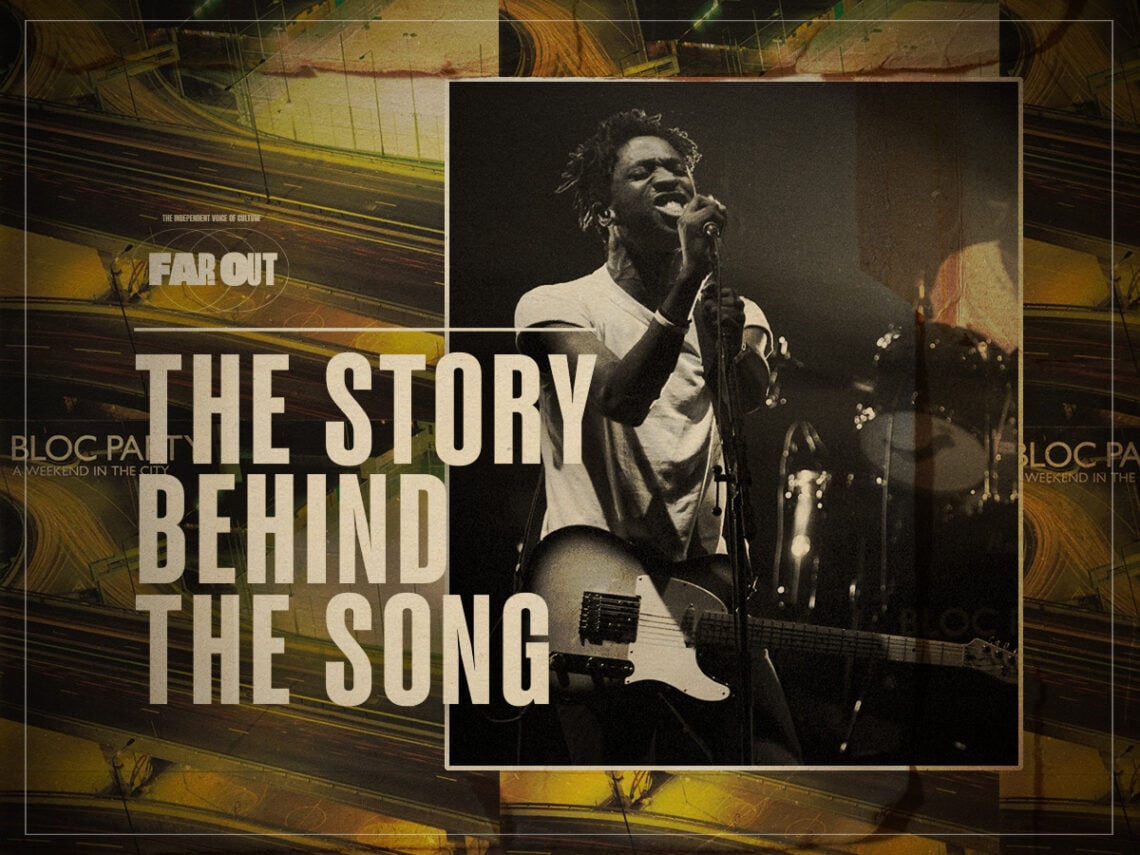
The Story Behind The Song: The queerness of Bloc Party’s ‘I Still Remember’

A few months ago, a fairly distressing thought wandered into my head. I first started paying attention to music properly around 2005/2006. Deep down, I still feel like the likes of Silent Alarm by Bloc Party, Employment by Kaiser Chiefs and Demon Days by Gorillaz are relatively recent releases. My alarming realisation is that talking about those records now is what it must have been like talking about Meat Is Murder by The Smiths, The Head On The Door by The Cure and Hounds of Love by Kate Bush in 2005.
The point of this is not merely to make my fellow thirty-somethings feel every second of their age but to view the mid-2000s as a ‘Different Time’ (capitalisation intended). Note that the 2000s are now as far away as the 1980s were in the 2000s. While we thought that the first decade of the 21st century would be a time of actual progress, looking back is a strange reminder of how far we’ve come and how little we’ve changed.
Growing up queer at that time was not fun. Section 28 had been repealed a mere two years previously, so I grew up in a time where the very idea of queerness was just beginning to be taught by teachers who, at best, had no idea how to broach the subject and, at worst, had no desire to. I was lucky enough to have the incomparable Ellie Barnes coordinating the LGBTQ+ curriculum in my school. Even with that ace up our collective sleeves, it was still a traumatising experience.
If you stood out from the norm even slightly, you were going to be the target of homophobic bullying; honestly, saying you weren’t would never stop anything. Then you had the likes of me and my friends. We didn’t have that defence, and it was pretty obvious we didn’t. Its not much better today but at the very least, if a queer kid now looks into the pop charts now there’s a chance they’ll feel seen. Not so much back then.
While there were acts like Sufjan Stevens, Anohni and Sigur Rós releasing classic albums, they were absolutely not making a mark on the schoolkids of that mid-2000s era. Instead, you had one of the whitest, straightest and most overtly macho periods of guitar music ever colonising the charts. If you ever look at Sam Fender and feel that he’s being a little generic in his social commentary, take a look back a couple of decades, and you’ll understand that for a period of time, Hard-Fi were considered the next The Clash.

Among The Wombats, Klaxons and the cursed, agonising exercise of psychological torture that was The Pigeon Detectives, however, was one band that seemed to dig a little deeper. Bloc Party carried themselves as a collective who took their station deadly seriously. They wanted to matter, and were clever, talented and ambitious enough to make a decent fist of it, especially on their debut album and bona-fide masterpiece, Silent Alarm.
This record is shot through with expressionist, metaphor-clad lyricism, where, with their second effort, 2007’s A Weekend In The City, they went for a more specific lyrical style. Their attempts to do that often veered straight into clunky sixth-form political commentary, though. “The Daily Mail says the enemy’s among us / taking our women and taking our jobs” is a first draft lyric at best. However, when things get personal, the whole album comes alive.
There are moments of intense beauty on A Weekend in the City. Closer ‘SRXT’ is a deftly handled, deeply moving depiction of losing the will to live in the prime of your life, while ‘Kreuzberg’ is a stadium slaying take on opening yourself up to love and being loved in return. However, the moment that left the most indelible mark on me as a teenager desperately trying to figure out what in God’s name was going on in me was ‘I Still Remember’.
What was different about ‘I Still Remember’ by Bloc Party?
It was a love story, tenderly and delicately depicted in stark contrast to the shotgun blast subtlety of how the rest of the album portrayed its themes. The aforementioned ‘Kreuzberg’ does end with the toe-curling line, “Concerned mothers of the west / Teach your sons how to truly love”. However, ‘I Still Remember’ is the complete opposite. Kele Okereke suddenly deployed a novelist’s eye for some telling details, the kind that contains an aching longing for a half-remembered, half-imagined past and the person you spent it with.
Legitimately, hearing lines like “And I can see our days are becoming night / I could feel your heartbeat across the grass” and “Every park bench screams your name / I kept your tie” changed me in ways that I couldn’t really put my finger on at the time. Then, the more I started reading about the song, the more I saw people put forward that Okereke wasn’t singing about a girl here.
At first, details like “leaving our trousers by the canal” and mentioning ties raised questions. Even at the time, they were neither here nor there, though. What really marks this as a queer song is that beautiful, terrifying uncertainty. Of looking at someone and being fairly certain that they feel the same way, yet still being terrified that the other shoe will drop and they’ll never speak to you again. “You should have asked me for it / I would have been brave.”
Those lyrics, combined with the lush guitar hooks that Russell Lissack does so well, left more of a mark on me than basically any other song on the record. Then the strangest thing happened. The more I began reading about the record and people’s responses to it, the more I found that people really didn’t like ‘I Still Remember’. At best, it was a bit of radio fluff. At worst, it was the band turning fully U2 and leaving behind the edgy, vital post-punk lilt they had on their debut.
The worst part of it was yet to come. You might have realised that this ‘Story Behind the Song’ article doesn’t have much of the actual ‘Story’ in it. This is because the band never, ever talk about it. They’ve barely ever played it live. Whenever the song is mentioned in interviews, you can almost hear the groans and rolled eyes.
In an interview with The Guardian on the release of the record, Okereke was asked point-blank whether ‘I Still Remember’ was autobiographical. The typically forthright Okereke is deeply noncommittal in response, saying, “Not really. I guess, partially. Can we call it a gay love story? Yeah, but is it a love story? It’s one person longing for somebody they can’t really have. But it’s not consummated. It’s not a mutual thing.”
He seems dead set on the story being simultaneously queer and yet also as straight as a love story between two boys can be. He goes on to say, “The idea of two straight boys having an attraction, or there being an attraction that’s unspeakable—that was the idea of that song. When was the last time you heard an interesting pop song that actually tried to give you a different perspective on desire?”
This attitude rubbed off on the fanbase, too. This is circumstantial evidence, but I saw this first-hand. I vividly remember seeing Bloc Party in 2008. The audience was baying for the band to play Silent Alarm B-side ‘Skeleton’ for most of the second half of the gig. When it became clear the audience was forcing the issue, the band returned for a second encore and Okereke played a bit of pantomime with the audience, asking if there were any other songs they’d like to hear. The audience roared their request before bassist Gordon Moakes went up to his mic and said, “’I Still Remember’?!” The boos that met that jibe were vicious.
Even long after the song was released and the fanbase began coming around to the song, its creators still baulked at it. Okereke spoke about the song in an interview with Riot NYC in 2018, and, even then, he was down on it. “I guess I wish we hadn’t released ‘I Still Remember’ from our second record,” he said. “I liked the idea, I liked the imagery, I just don’t think it was a very good song. We don’t really play it now, and we haven’t really played it for a while. That sort of thing always changes. Maybe one day it won’t seem so distant.”
I suppose that’s why I brought up the time difference to begin this article. Sure, we have a lot of queer music in the charts at the moment and more power to it. The brief moments where guitar music flirts with any real mainstream success, though, are as straight and white as they ever were. Perhaps they took stock of what happened the last time the queer, Black frontman of one of the country’s biggest rock bands wrote honestly and beautifully about his queerness.
That’s just it, though. I can’t have been the only one inspired by the song, and here’s hoping that someone can pick up the baton and make the world of indie rock a genuinely inclusive one. No matter how badly prior attempts have landed.
