


Chasing the dragon: Stewart Copeland’s ‘Spyro’ score

No other artists of the new wave reached such stratospheric commercial heights as The Police. Their pleasing blend of reggae dub and pop won them an army of fans that didn’t care much for punk, and by the time the 1980s rolled around, they were selling out stadiums off the back of monster LPs like Ghost in the Machine and Synchronicity.
Disbanding not long after their mammoth hit ‘Every Breath You Take’, singer Sting saw further success as a global name in the adult-contemporary singer-songwriter world, and guitarist Andy Summers indulged in his second love of photography and holding exhibits around the world.
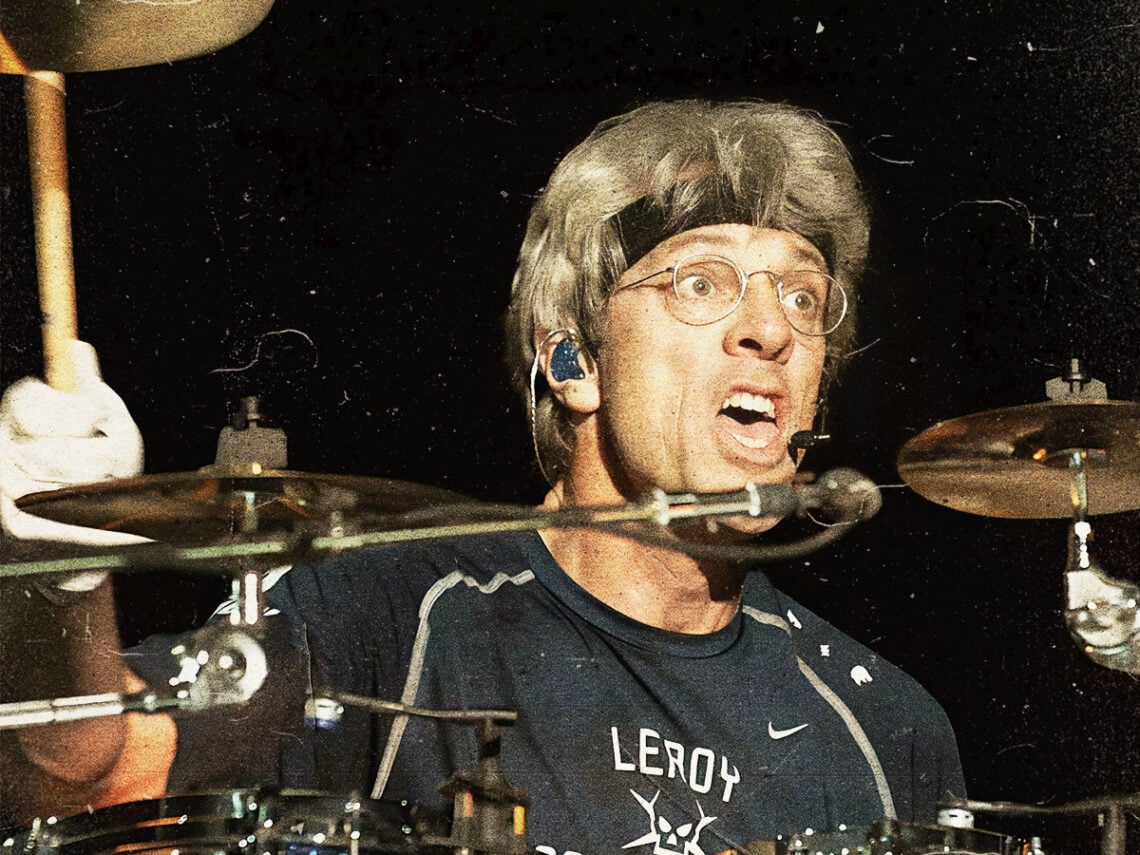
Drummer Stewart Copeland built a respectable day job for himself as a composer for film and TV, scoring a diverse array of work from Wall Street, Ken Loach’s Riff Raff, and Highlander II: The Quickening. One of the first mainstream musicians commissioned to a video game after Michael Jackson‘s uncredited production for Sonic the Hedgehog 3, Copeland stepped up to the task of scoring the first four entries of the Spyro the Dragon series, crafting tracks he considered some of the best of his career.
Concerning the titular dragon’s adventures in a fantasy world and encountering the myriad enemies smattered across the floating worlds against pink-tinted skies and glittering starscapes, the interactive medium, coupled with the evocative imagery, demanded both a high turnaround while maintaining a creative energy.
Speaking to Screen Rant last year in celebration of the game’s 25th anniversary, Copeland recognised the useful discipline of video games musical peripheries: “I just had to churn and burn. There was so much music required; it was like doing a quadruple album of backing tracks every summer for four years. It was deeply engrossing, but I had to just move so quickly that I discovered something interesting about composition and probably other artistic endeavours as well, which is that pressure increases the quality. I had to produce such quantity that I could not stop for a minute, I couldn’t evaluate, couldn’t judge just had to churn and burn.”
He did his homework. Playing the levels with the help of cheat codes provided to him by the developer, Copeland sat through the game, noting down details of the worlds he was navigating, sketching ideas he’d flesh out for the score. Reportedly, to get into the musical headspace, he had to complete the level first before attempting to tinker with his Kurzweil K2500x keyboard and its orchestral samples.
Despite such lofty work with The Police and Hollywood, Copeland places Spyro the Dragon among his best works and instrumental in his practice as a composer, plus his own personal byword for musical eureka moments: “Looking back, it turns out that that music produced under those harsh conditions actually are some of the best tunes I ever wrote – some of the best basslines, some of the best chord progressions, some of the little three-note tricks”.
Concluding, “And now when I’m writing my big gigantic symphonic works, I go back to Spyro for that little trick there, that little idea that came when I was desperate, offering up my soul to the Muses, ‘Please just give me a riff!'”
