


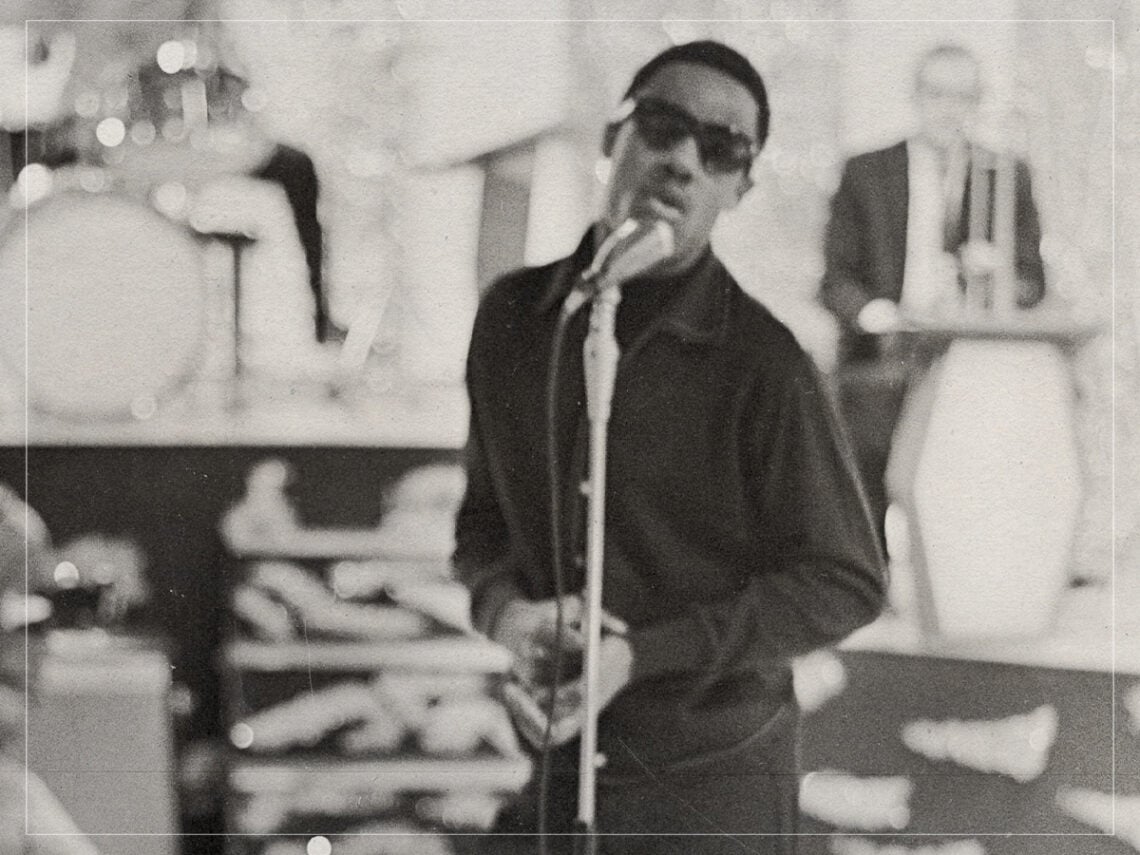
Stevie Wonder’s earliest memory of music: “Syrup and biscuits”

The life of a musician is not one long, continuous saga.
In most cases, it is a series of defining moments, and in the case of Stevie Wonder, those defining moments have never really been in short supply. However, the world might never have known Wonder’s name were it not for his first musical awakening during his childhood back in Michigan.
Wonder’s childhood was, by anybody’s standards, unconventional. Born prematurely, he was blinded as an infant, which immediately provided the future songwriter with a unique set of challenges not faced by many of his peers. On top of that, his parents divorced when Wonder was still very young, with the family upping sticks and relocating to Detroit. Throughout it all, he sought solace in the realm of music.
It was in 1961, when Wonder was just 11 years old, that he signed along the dotted line of Berry Gordy’s Motown Records, rechristened from Stevland Hardaway Morris to Little Stevie Wonder, and set off a chain reaction that would eventually see him become one of America’s all-time greatest cultural exports.
By the time he joined the ranks of Hitsville USA, the gifted pianist had already written dozens of songs and devoted himself to the mastery of multiple instruments. The reason for this constant obsession with music was clear: he spent the majority of his childhood glued to the radio. Asked for his first musical memory during a 1984 interview with David Breskin, he promptly responded, “Johnny Ace”.
“I remember xylophones,” he added alongside the R&B pioneer. “And saxophones of some sort. Syrup and biscuits. Guitars, I guess Wes Montgomery. You know, I didn’t know who it was, but the sound.”
Explaining, “This is when I was two or three. Radio. This guy used to come on this station in Detroit, named Bristol [Bryant], Senator Bristol [Bryant] they called him, came on in the morning on WJLB in Detroit.”
Seemingly, the world has Bryant – who ended up becoming obscure enough to have his name misspelt as ‘Brian’ in that original interview – to thank for providing the first ounce of musical inspiration to a young Stevie Wonder, introducing him to the world of R&B, jazz, and soul.
He also namedropped WCHB Radio as being the first Black-owned radio station in Detroit, which also had a major role to play in the musical development of the young pianist, filling his mind with the infectious sounds of gospel and soul. With that kind of musical education, it is no surprise that Stevie Wonder quickly found himself attracted to the realm of Motown Records.
After all, Motown represented the pinnacle of Black music throughout the 1960s, dominating the pop charts with its plethora of R&B and soul excellence, as well as bringing global attention to the vibrant sounds of Detroit in the process.
Little Stevie Wonder was always at the epicentre of that R&B rebellion, but as he grew older, he was allowed to explore the vast range of influences he had soaked up during those rainy childhood afternoons, obsessing over the medium waves.
