


How old was Stevie Wonder when he signed to Motown?

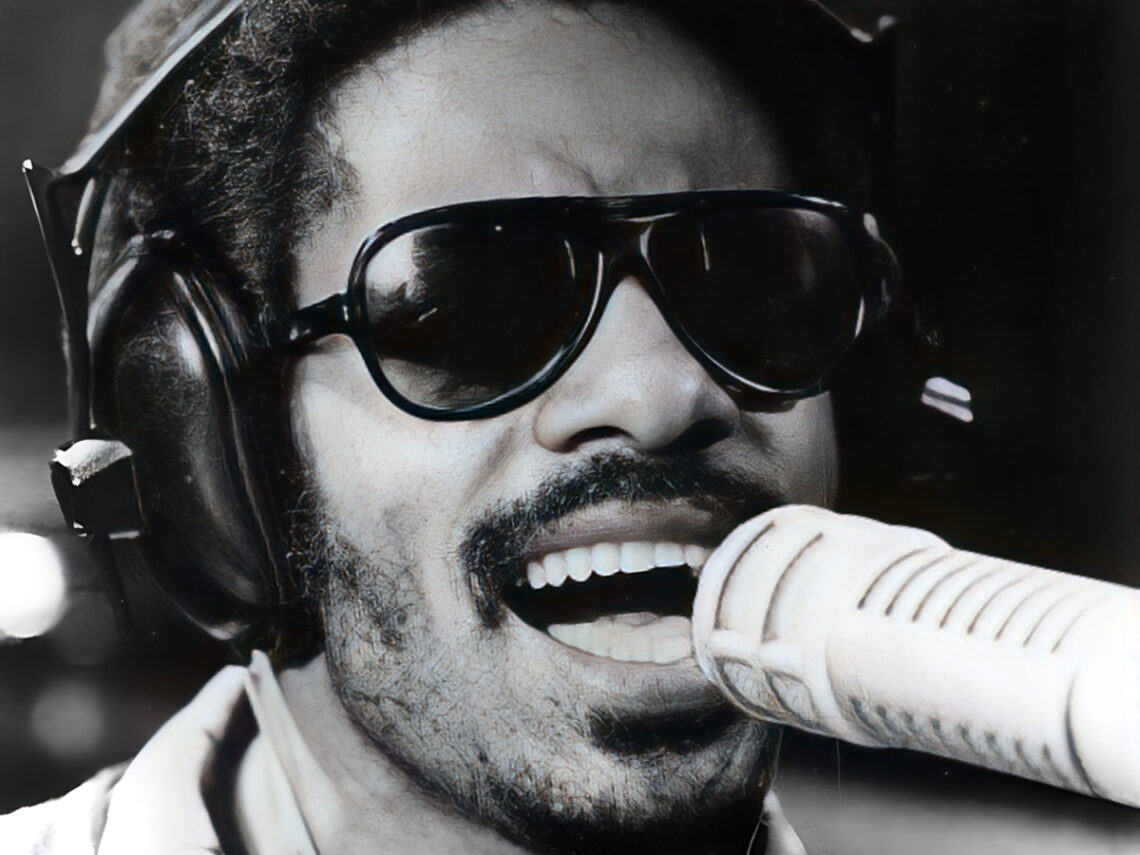
In today’s mind, it’s easy to think that Stevie Wonder is some sort of immortal musical force who’s been around since the dawn of time. In fact, he’s only 74. But this sense of omniscience speaks to the fact that Wonder’s influence on music has been and remains overwhelming, having single-handedly defined the sound of a century and spearheaded the evolution of multiple genres, including R&B, funk, jazz, and pop.
It’s a lot to pack in, and so with a talent destined for superstardom, his management had the ingenious foresight to get him started early. Wonder had an in-built musical aptitude from birth, it seems because he had mastered the ability to play the piano, harmonica, and drums, as well as sing, from being a young child. However, it was a performance of one of his own compositions, a song called ‘Lonely Boy’, to Motown legend and Miracles singer Ronnie White that forever changed his life.
Wonder was just 11 years old at the time, but based on that performance, White took him to be signed to Motown’s Tamla label. It was here that the stage name ‘Little Stevie Wonder’ was coined by two of Motown’s founders, Berry Gordy and Clarence Paul, and set the child prodigy on the path to world domination.
Although Wonder was no doubt an inimitable talent, even from this early age, the successes still didn’t start rolling in overnight. Two albums – one of Ray Charles covers and another purely of instrumentations – were recorded prematurely before being superseded by ‘I Call It Pretty Music, But the Old People Call It the Blues’, his debut single written by Gordy. It failed to chart in the top 100, and the two albums released following this also didn’t attract much acclaim, so Wonder was placed on tour with the Motortown Revue.
Within two years, Wonder had scored his first number one hit with ‘Fingertips’ and became the youngest artist to achieve the feat. You might think this would have rocketed him to the status that he has since been enshrined in, but his following productions still struggled to keep the ball rolling, and label executives even considered dropping him from Motown. On one last chance, Wonder ditched the name ‘Little’ and with it, the child’s image – and eventually, his fortunes – began to turn.
By the end of the 1960s, he had begun gaining traction for still beloved hits, including ‘For Once in My Life’ and ‘Signed, Sealed, Delivered, I’m Yours’, from which he never looked back. By the age of 25, Wonder had two ‘Album of the Year’ Grammys under his belt, millions of adoring fans and sold-out shows, and he had also started to experiment with synthesisers in his tracks, a trademark on which his musical legacy is heavily associated with. Little Stevie Wonder had grown into a cultural behemoth just 14 years after his initial signing and humble beginnings, which were unrecognisable compared to the life he would go on to lead.
Wonder is, of course, an idol to many a musician across the musical spectrum for his seismic success and influence. But it is perhaps his early tenacity we can learn the most from; after all, even though it seemed he had caught a break at a young age, it took a lot of grit and determination to actually make it work. Obviously, it all eventually paid off tenfold, but Wonder only has his 11-year-old self to thank for that.
