


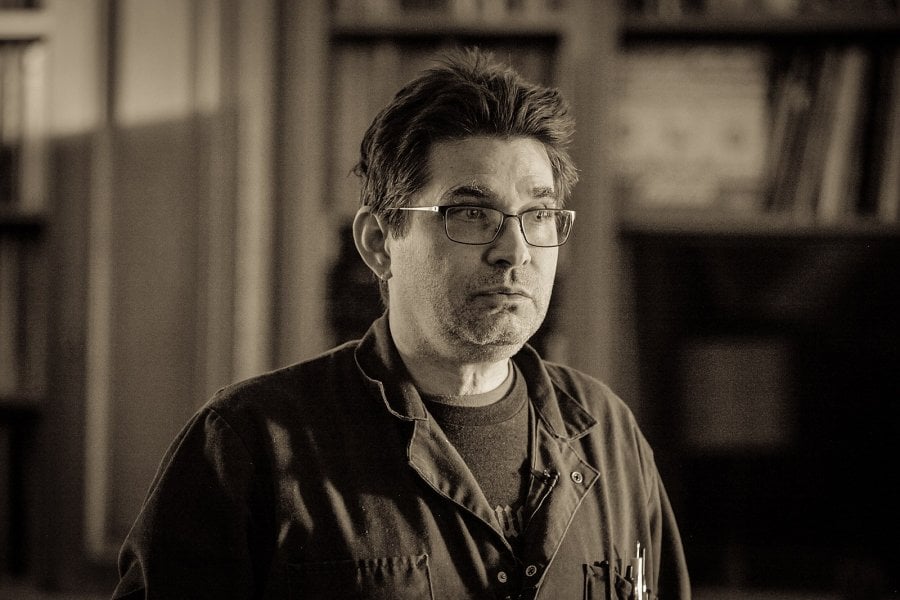
Steve Albini, iconic producer and musician, dead aged 61

Steve Albini, the iconic producer and musician who famously worked with acts such as Nirvana, PJ Harvey and Pixies, has died aged 61.
Albini suffered a heart attack at his recording studio, Electric Audio, which caused his sudden passing. In recent months, the musician has been working on the forthcoming album, To All Trains, by his band Shellac. The project is set to arrive on May 17th and marks their first record in a decade.
News of his death was first reported by Pitchfork, who were told of his passing by staff who work at his recording studio. As of yet, no statement has been released by his family regarding the death of the underground rock icon.
As an engineer, Albini worked on thousands of records throughout his storied career and despite achieving mass acclaim thanks to albums such as Surfer Rosa by Pixies and In Utero by Nirvana, he continued to choose to work with countless unsigned acts.
Albini first courted attention in the 1980s with punk rock outfit Big Black, who released two albums before parting ways. He then went onto form Rapeman, who released Two Nuns and a Pack Mule in 1988, and Albini later shared his regret over their band name. Since 1992, he has been a member of Shellac.
With Shellac, who are the heaviest of all bands that Albini was involved in, he released five albums and their sixth record is set for release posthumously later this month.
Throughout the entire of his professional career, Albini constantly worked with other acts on the side as a producer and engineer. While he was incredibly successful in this regard, helping transform the Pixies from obscurity into household name status with Surfer Rosa, Albini refused to sell out on his principles and detested the major label system fiercely.
While speaking at the Face the Music conference in Melbourne, Australia, in 2015, Albini remarked: “I don’t feel like I’m part of the music industry, the music industry meaning the corporatised business structures where you have people who are in the lower level, people in the upper level, people in administration, and people making legal relationships between all those people.”
He continued: “All of that has always really bothered me. When I think about it, it makes me angry that it exists as a parasite on the music scene, which is the fans, bands, shows, and the people who help them. That all feels very organic to me, fraternal and comfortable.”
Most notably, Albini produced Nirvana’s third and final album, In Utero, released in 1993. At the time, the Seattle group were the biggest rock act in the world, and Kurt Cobain viewed Albini as the perfect person to help them return to their punk rock roots. While he’d typically not work with a band of that stature, he made an exception for Nirvana after they agreed to his strict conditions.
In a four-page letter addressed to the band, which later surfaced, Albini wrote: “I think the very best thing you could do at this point is exactly what you are talking about doing: bang a record out in a couple of days, with high quality but minimal ‘production’ and no interference from the front office bulletheads. If that is indeed what you want to do, I would love to be involved.”
In Utero was a phenomenal success, which should have made Albino’s demand increase further. However, strangely, his approach made major labels run scared, and smaller bands feel he was too big to work with them, landing him in a perilous financial position.
Thankfully, in 1997, Led Zeppelin duo Robert Plant and Jimmy Page came to the rescue when they recruited him to serve as an engineer on their album, Walking into Clarksdale. This LP put his career back on track, and proved his versatility as an engineer, who was capable of stepping out of the punk rock scene.
In recent decades, Albini worked with a wide range of acts such as Code Orange, Black Midi, Laura Jane Grace, The Cribs, Metz, Sunn O))), The Breeders, Fuzz, Ty Segall, Jarvis Cocker, Manic Street Preachers and The Stooges.
Outside of his vast musical achievements, Albini was also a celebrated poker player and won over $100,000 at the World Series of Poker in 2018. Four years later, he bettered this tally by taking home $196,089 at the same competition. He is survived by his wife, Heather Whinna.
This is a developing story and is being updated.

Never Miss A Beat
The Far Out Music Newsletter
All the latest music news from the independent voice of culture.
Straight to your inbox.