


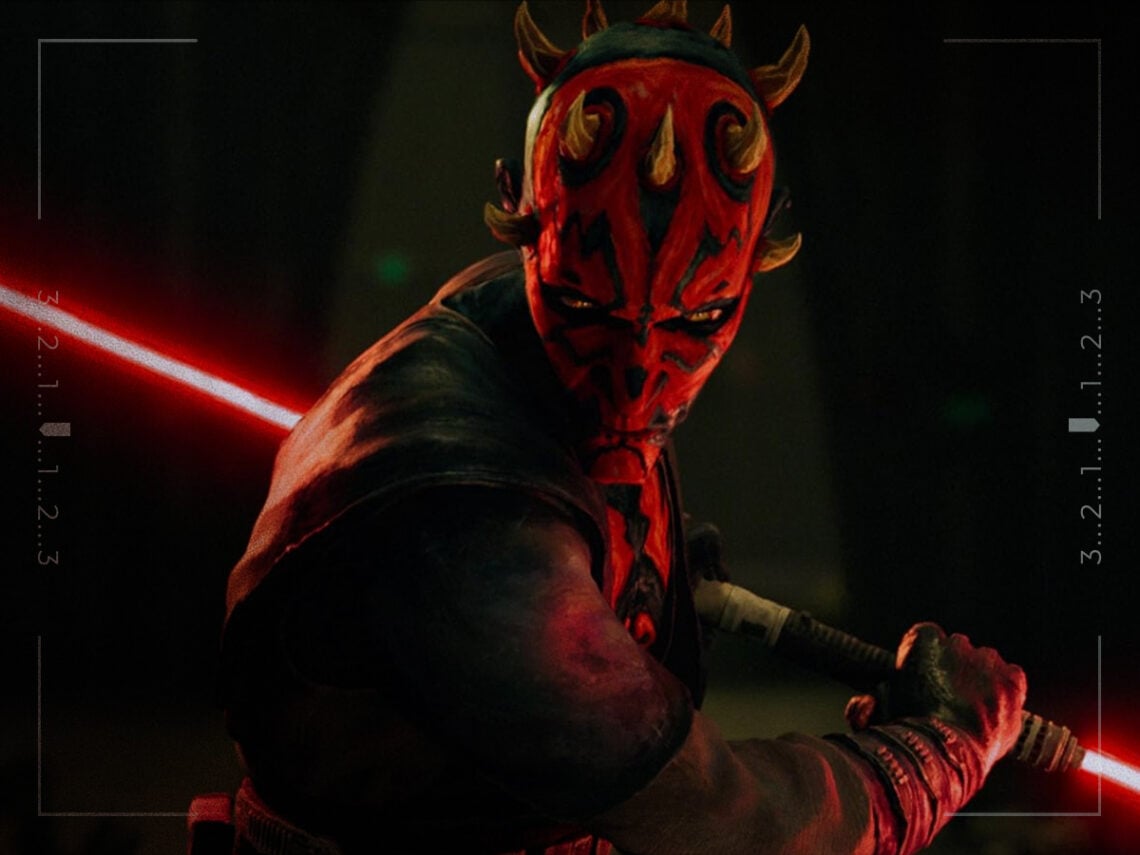
‘Star Wars: Maul – Shadow Lord’ review: A more mature thriller set in the galaxy far, far away

The latest Star Wars streaming series proves Dave Filoni’s vision for the universe works best in the animated realm.
Prior to the acquisition of Lucasfilm by Walt Disney Studios in 2012, the Star Wars franchise had been growing relatively strong, thanks to the success of the animated series The Clone Wars, developed by George Lucas with Dave Filoni as its showrunner, and while the former has since retreated from the saga after the announcement of a sequel trilogy and the cancellation of The Clone Wars in 2013, Filoni has continued to have a dominant influence on the future of the franchise.
Filoni was the creative force behind Ahsoka and co-created The Mandalorian with Jon Favreau, and was named as the new president of Lucasfilm in 2012, but his work without Lucas has suffered from many of the same issues; while he is enthusiastic about developing character arcs over time, Filoni often spends so much energy foreshadowing and alluding to payoffs that his work can become a bit of a drag. There’s also a habit he’s maintained of inserting his characters from the animated shows into nearly every corner of the universe, where even though the first season of The Mandalorian was approachable for a non-Star Wars fan, the subsequent seasons of the show were virtually inexplicable for those who hadn’t caught up with The Clone Wars and Rebels.
Filoni has been out of his depth with live-action, as evident by the bland visual style of Ahsoka and the disappointing direction that The Mandalorian and its spinoff, The Book of Boba Fett, went, but he has still clung on to remnants of what he achieved with The Clone Wars, which coincidentally was both his crowning work and what Lucas was most involved with. One of the most controversial decisions under Lucas was to revive the character of Darth Maul, who was seemingly killed by Obi-Wan Kenobi in Star Wars: Episode I- The Phantom Menace, and although he served as a thorn in the Jedi Order’s side throughout Clone Wars, the latest Disney+ original Maul – Shadow Lord picks up with the Dathomirian former Sith after the Galactic Empire has taken over.
While Clone Wars was an anthology series and Rebels had a much more family-friendly audience in mind, Maul – Shadow Lord is the first Star Wars animated show that captures the same gritty sensibilities of Andor, and not just because they are set within the same window of time. Maul, voiced once again by Sam Witwir, has seemingly lost everything because he was betrayed by his master, Darth Sidious, and his criminal syndicate has now collapsed.
Although he was depicted in The Phantom Menace as nothing but a weapon, he has transformed into a charismatic leader who wants an apprentice of his own, and in the wake of the death of his brother, Savage Oppress, Maul has set his sights on the Jedi apprentice Devon, played by Gideon Adlon, a Twi’lek who has survived Order 66 alongside her master, Eeko-Dio Daki, played by Denis Haysbert.


The show benefits from being a tight, serialised thriller that retains its focus on a small number of characters, with the events of the show constrained to the backwater planet Janix, which has become a hive for criminal activity because it has not yet been overtaken by the Galactic Empire. It’s here that the series is able to explore the lawless nature of the Star Wars underworld, while also offering insights into the ways that both Jedi and Sith have retained their values.
While Daki wants to teach Devon to serve the galaxy, he knows that anything significantly heroic could bring them unwanted attention, and Maul may have convinced himself that he’s on a mission of revenge that will once again face him against Sidious, but he’s been forced to pit rival gangsters against one another in order to advance his own criminal enterprises.
The exploration of the tricky alliances forged by survivalism is a fascinating conceit for a Star Wars show, as the franchise has always relished the idea of unlikely allies, but a farm boy like Luke Skywalker teaming up with a smuggler like Han Solo is far different from the circumstances in Maul – Shadow Lord, in which the core enemies of Jedi and Sith must form a truce. The reality that becomes apparent once the Empire steps in is that fascism makes victims of everyone, even if Maul, Devon, and Daki have ideological differences. At the heart of the series is the battle for Devon’s soul: while Daki wants to complete her Jedi training, Maul encourages her to take vengeance against the regime that executed her order.
When compared to the wooden, bland early style of The Clone Wars, the animated show is a step up in every way, with textured environments and true expressions on the characters’ faces, where even Filoni’s trademark realism is halted in some incidents for more stylised animation. Even if the show falls into the same issue of having a bit too much lightsaber action, it’s a style of combat that works better animated than it did in live-action Star Wars shows like The Acolyte, where the constant jumping and slicing began to feel silly. Filoni may not be suited to tell the grand, unifying Star Wars stories, but Maul – Shadow Lord succeeds because it is set on the edge of the civilised universe, and unlike the lazy resurrection of Palpatine in The Rise of Skywalker, the return of Maul has opened up the saga to new creative opportunities.
