


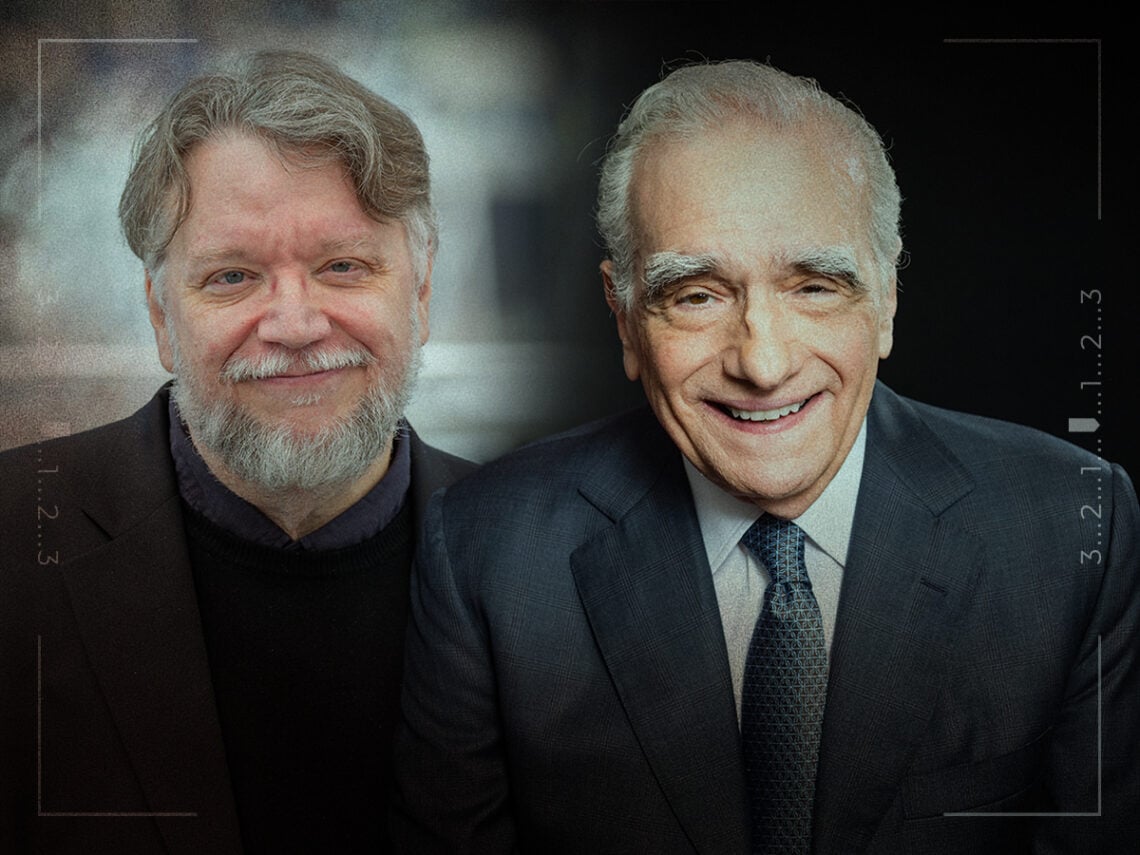
The “pinnacle” of filmmaking that unites Martin Scorsese and Guillermo del Toro

How do we define the ‘pinnacle’ of filmmaking, an is there even such a thing? Over the years, certain movies have been canonised as the most influential, the most sublime, but really, doesn’t it all come down to personal preference?
If you were to ask Martin Scorsese to pick out his ultimate list of movies that he believes everyone should familiarise themselves with, I’m sure he’d have all the classics on there – even something as controversial as The Birth of a Nation – but his list would still have his unique stamp on it.
One of the quickest ways to identify a list of favourite movies as belonging to Scorsese is to look for The Red Shoes by Michael Powell and Emeric Pressburger. Scorsese might be best known for gritty crime dramas, but this musical dance film is, to him, the absolute pinnacle of cinema, or, as he puts it, “one of the very greatest ever made”.
He once revealed just how deep his admiration for the movie runs in Sight and Sound, recalling the first time he ever saw it as a child, taken to see it by his father. The young Scorsese was “drawn to the mystery of the red shoes, the hysteria of the picture, the extreme close-ups of Moira Shearer’s eyes as she feels herself being borne to her death by the shoes, or is it by herself? This was shocking for me”.
It was a pivotal experience, and it’s interesting because, on the surface, you wouldn’t think that Scorsese would be all that inspired by a Technicolour movie about ballet, but it’s one of his biggest influences. In another interview, this time for the Criterion Collection, he gushed further: “There’s no other picture that dramatises and visualises the overwhelming obsession of art, the way it can take over your life. But on a deeper level, in the movement and energy of the filmmaking itself, is a deep and abiding love of art, a belief in art as a genuinely transcendent state.”
Art and obsession have played a recurring theme in Scorsese’s filmography over the years, from The King of Comedy to Hugo, but even when he is exploring wildly different things, the deeply cinematic approach that Powell and Pressburger took in making The Red Shoes so immersive will always be important to the filmmaker.
A director you’ll find in total and utter agreement with Scorsese on this subject is Guillermo del Toro, despite the fact that they make such utterly different films. The Mexican filmmaker revels in the realm of fantasy and horror best, while Scorsese is predominantly concerned with reality, but they are united by their love of The Red Shoes, a film that blends both their niches.



You can see why this draws del Toro, because even his most fantastical, seemingly mythical films, like Pan’s Labyrinth, are fully embedded in the harshness of reality, in this case, the Spanish Civil War.
Appearing in the Criterion Closet, del Toro said, “Black Narcissus and [The Red Shoes], to me, are the pinnacles of colour narrative”. Discussing his love of the ballet film, he called it a “parable of the passion of the arts destroying us all”. There is a truly otherworldly beauty to The Red Shoes, with its gorgeous blue and yellow hues, which has no doubt inspired del Toro’s use of colour, too.
Passion, obsession, destruction, and art, these are themes that come to a head in Powell and Pressburger’s film, and while they’ve spread their influence across cinema in the decades since, both Scorsese and del Toro believe that The Red Shoes is the ultimate example of such explorations. It’s a timeless masterwork that few films can come close to.
