


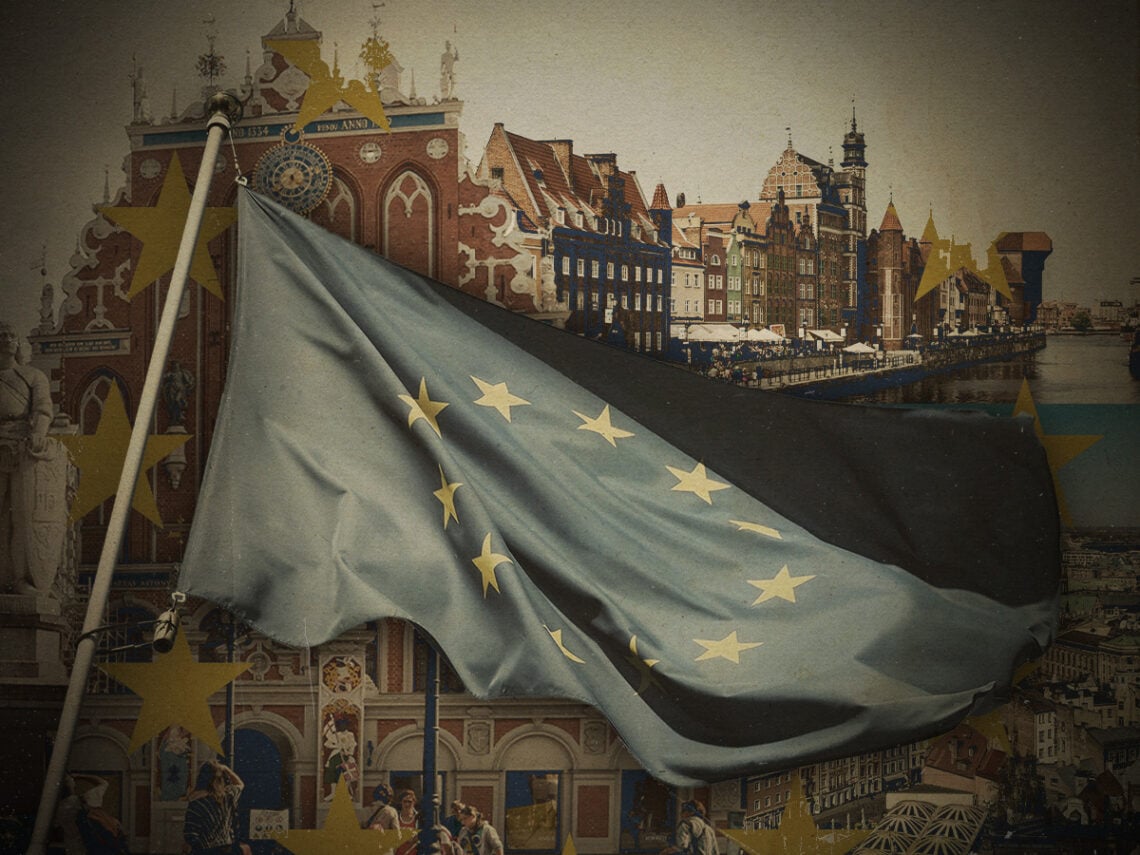
Sorry, but the EU has made Eastern Europe more boring

When it comes to holiday destinations, I’ve always been of the opinion that in Europe, you’re always far better off going east.
While Paris and Barcelona are incredible places in their own right, and are well worth visiting, there’s something that draws me, and plenty of others, to the Baltics, the Balkans and Eastern Europe.
Europe’s major cities are better known, well-polished and have been amongst the world’s best destinations for hundreds of years, making it hard to feel the authenticity and the rawness that you can feel further east. Sadly, after decades of funding, open borders and the slow creep of Western norms, it feels like the most thrillingly strange and exciting corner of Europe has turned into a slightly cheaper version of everywhere else.
So before we get started, a couple of caveats. I’m talking about the geographic east of Europe, which means lumping in the Balkans and Baltics, which aren’t technically Eastern Europe. So consider this, Poland, and everything to the right of that on a map. Secondly, and I cannot stress enough, this is about the experience of visiting these countries as a traveller. I’m almost certain that the European Union has improved the lives of people within the countries, which is clearly the most important thing.
My first visit to Eastern Europe was just over 20 years ago, when I landed in Russia as a 15-year-old, falling in love with it as I saw Moscow and St Petersburg, as well as the history around every corner, the grand old buildings, the statues and the balmy summer heat. A couple of years later, in the hunt for cheap pints, I ended up visiting a lot more countries in this part of the world, where the love affair began.
Piling into some dingy dorm room, in a hostel on the fourth floor of an old, cold, Soviet-style block, was always a joy. Daytimes spent soaking up the history and cheap lager, with ill-fated attempts to pick up some of the local culture. Then, as dusk fell, more beers, whatever the nation’s favourite food was, and shots of the local spirit in long-forgotten clubs, until the sun came up.
Sure, travel priorities alter as you get older, but now you can feel the change in the air, and a recent visit to Riga, some 15 years after my first, really highlighted this. It was beautiful, welcoming, serene and would be a great place for a romantic weekend, which is a long way from how it used to be, when it felt like the Wild West, and you’d hear rumours of organised crime running the nightlife scene.
To most people, that sounds like a change for the better, but there’s something sad about seeing somewhere so visceral and so alive become just another European city. Gentrification happens everywhere eventually, but ask anyone if SoHo used to be more fun, or even Stokes Croft in Bristol, and they’d all nod their heads.
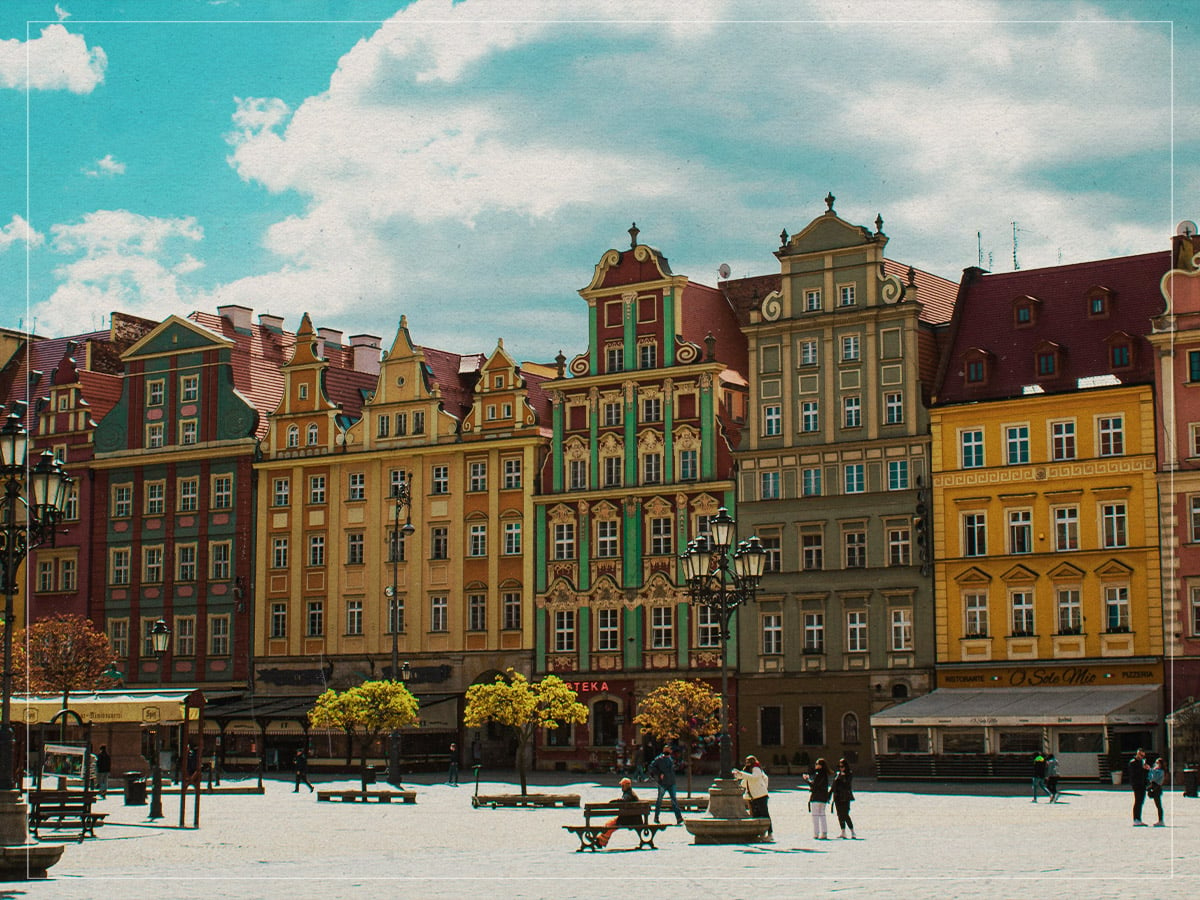
Money started funnelling into a large chunk of these states in the mid-2000s. That windfall from Brussels was unlike anything seen in history, in some cases even dwarfing levels of investment following World War II. From May 2004 to December 2023, there was a gross total of there was a gross total of €245.5billion given to Poland from the EU, which worked out as an equivalent of between two and 3.5 per cent of the country’s annual GDP.
The EU’s cohesion policy has great aims, and you’d have to be crazy to oppose modernising infrastructure and raising living standards. Life expectancy has improved across the board, as well as pleasing drops in infant mortality rates and poverty statistics. Those are all fantastic things, but it’s taken the edges of some of those places and created the sort of homogenisation that you’re used to seeing on the British High Street.
It’s totally understandable that countries would rather not be known as ghettos, but when a city turns from bandit country into somewhere befitting a romantic weekend, it’s fair to say that something has been lost.
Prague is no longer the city of smoky bars serving the best pilsner in the world; it’s a well-curated destination; Riga’s centre feels like a medieval theme park at Western European prices; Budapest has switched booze dens for street food markets, and Poland has gone from a mecca of wild, Tyskie-fuelled nightlife, into a place that looks and feels like its performing as well as the economy is.
This isn’t to romanticise poverty or suffering, and these places have changed for the better in most parts, but much like we’ve seen cities at home lose their vibe when they start charging sky-high rents and opening new branches of Gails, it feels like the same is happening in Eastern Europe.
There was once a time when travelling East would take you into another world, and in shedding the unjust stigma of being backward, these places have lost so much else: the strangeness, the roughness, the feeling of being somewhere so alien but with so much freedom. The cities that had been shaped by thousands of years of history and culture have now all become the same, identikit versions of everywhere else on the continent.
Interestingly, the best cities left for young explorers are now the ones that money hasn’t touched. Serbia has had some funding over the years, as it’s waited to join the EU since 2012, but it still feels raw. Perhaps that’s the anti-NATO sentiment scrawled all over the walls, but it has something about it. Then there’s Moldova and Chisinau, which is by far the most unique capital in Europe. It’s old Soviet-era buildings, pothole-filled roads, cheap vodka and most importantly, that sense that literally anything could happen at any moment.
The EU has given Eastern Europe so much and improved so many lives, and that deserves huge credit. However, it’s also accelerated the erasure of the quirkiest and weirdest parts of each nation’s culture. It’s replaced oddity and edge with safe and palatable, and taken away Eastern Europe’s soul in the process.
