


Always and forever: Sophie’s posthumous album reminds the world of her singular influence on modern pop

I was 19 when I first heard a Sophie song. The fizzy, fresh sounds of ‘Lemonade’ poured through my first-year student speakers and changed my life forever. The track was restless and ridiculous, but it also contained so much shimmering confidence bubbling beneath the surface. It was the sound of an artist who knew exactly how to push the boundaries of pop while keeping you on side, throwing in squelching synths and sipping sounds to test your endurance. Over five years later, I still haven’t heard anything quite like it. At least not outside of Sophie’s discography.
Sophie’s life-altering power extends far beyond my freshers pre-drinks playlists. She stopped so many unassuming listeners in their tracks with her metallic, otherworldly take on production, and she had the same effect on pop music as a whole. In tracks like ‘Vyzee’, ‘BIPP’ and ‘Ponyboy’, she pushed the genre to its very limits until it was almost unrecognisable, manipulating synths, pairing them with industrial sounds, and pitching vocals up as high as they could go.
Pop began to morph into something new, something textural and futuristic, and Sophie was in the driver’s seat. After years of anonymity, Sophie introduced herself with ‘It’s Okay to Cry’ before unveiling her 2019 debut, Oil of Every Pearl’s Un-Insides. It was a pivotal moment in the formation of hyperpop and in the development of our current pop landscape. Meanwhile, she pushed soon-to-be stars like Charli XCX and Shygirl into more experimental territory, linked up with PC Music artists like QT and GFOTY, and even co-wrote with Madonna.
Sophie passed away in early 2021, a loss that was felt across the electronic music sphere and far beyond, but her impact is still just as tangible as ever. It’s in the neon green sounds and stylings of Brat summer, in Charli’s tender tribute ‘So I’, and in the entire ethos of the album. It’s in the lifeblood of Caroline Polachek and Arca and Kim Petras and everyone in between. It extends itself across pop, electronic and experimental scenes, and it’s still there, pushing us to new sonic worlds.
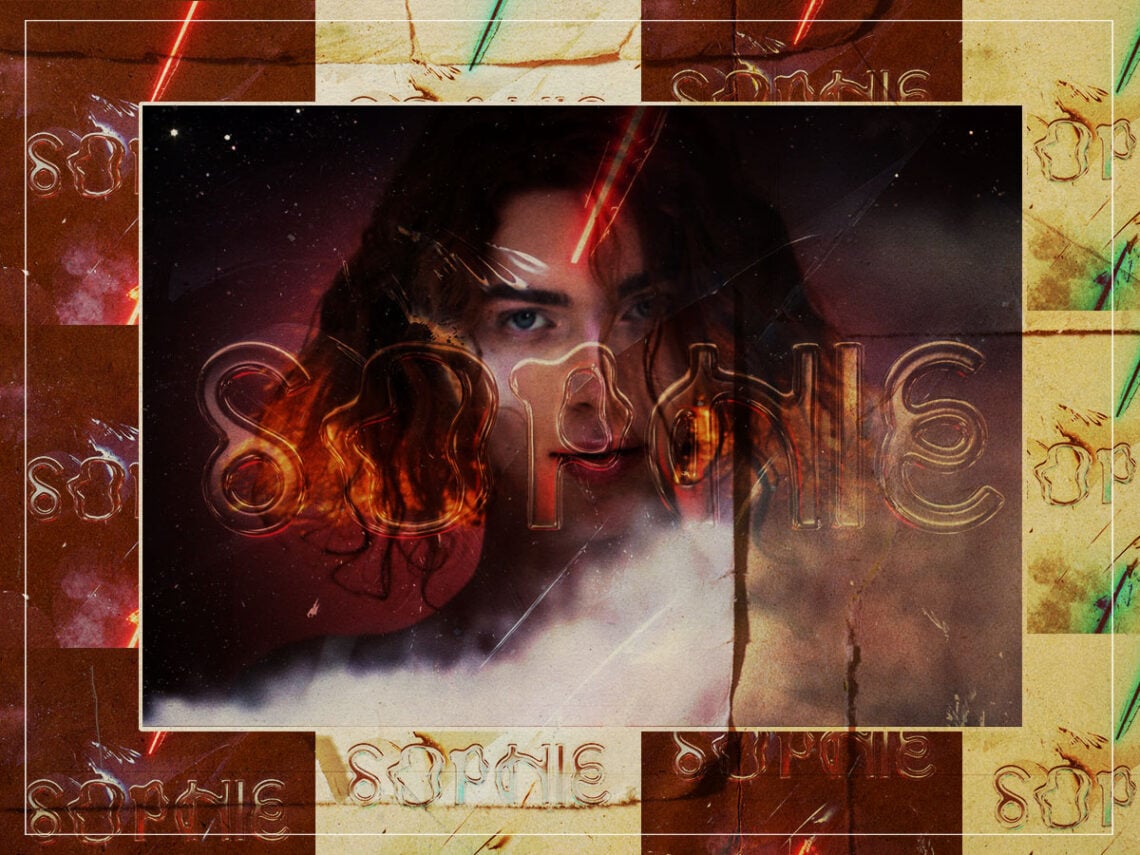
Sophie’s singular impact on pop is only further emphasised by her self-titled posthumous release, which arrives on September 27th. The collection of songs was almost finished when Sophie passed in January of 2021, intended as a sophomore follow-up to Oil of Every Pearl’s Un-Insides. Following her death, Sophie’s brother and studio manager, Ben Long, took up the task of finishing the record.
Sophie isn’t quite as concise and consistent as the producer’s debut. It stretches itself out over 16 songs and an hour of music, veering between sonic choices and thematic interests at will. The opening track ‘Intro (The Full Horror)’ is fairly subdued for Sophie, a cinematic, sci-fi-worthy soundscape that allows synths to swirl around one another in an unusually polite manner, but don’t let it lull you into a false sense of security.

The introduction is quickly offset by a rap-heavy track featuring Jozzy, which contains glimpses of Sophie’s heavy synth leanings but focuses more closely on the externally provided vocals. From there, Sophie drags us by the hand through pulsing club-worthy tracks that leave you desperate to dance, glitchy pop songs full of optimism and party girl prowess, and reflective spoken word sections underscored by skies full of synths.
‘The Dome’s Protection’ is an example of the latter. Nina Kraviz swaps her usual position behind the decks for a microphone, sharing wonderings about the world and humanity through an almost robotic delivery. “Humans have a unique ability for abstract thinking paired with a unique affinity for the past,” she ruminates over Sophie’s carefully curated synth soundscapes. It’s one of several songs that adds to the science-fiction feel of the record, but it doesn’t entirely commit to this vision.
Songs like ‘Plunging Asymptote’ and ‘Reason Why’ feel like more familiar territory, featuring close collabroators Juliana Juxtable, BC Kingdom and Kim Petras on vocals while showing off Sophie’s more industrial side. It’s pop music at its most intense, simultaneously sparse and spiky. There are references to confetti sprinkles, to the party ethos, to living your truth on the dancefloor.
Many of the songs feel more understated than Sophie’s previous work, either distilled down to pulsing club tracks or letting go of that industriality entirely, leaning into more nostalgic electronica or subdued pop. ‘One More Time’ is a highlight of this tendency, almost veering into Euro-dance territory with emotive pianos and synths that sound as if they’ve been played underwater.
Amidst the ever-changing soundscapes and rotating cast of vocalists, which serve to demonstrate Sophie’s wide-spanning impact on our contemporary culture, there’s a lyric on a track called ‘Always and Forever’, featuring Hannah Diamond, that cuts through the noise. Somewhere amidst the softened take on PC Music, the playful but subdued synths that surround Diamond’s rose-coloured vocals, she affirms, “Forever and always, we’ll be shining together, and as the years go by, you’ll still be by my side.”
It’s Diamond speaking to Sophie, but it’s also a touching tribute to the producer’s truly singular impact on pop, on electronic, on music as a whole, and on the world. As pop continues to shine and push itself beyond her death, as the years go by and more and more pop stars learn from her contributions to the genre, Sophie will always be by their side. Her memory exists in the charts and in the stars.
