


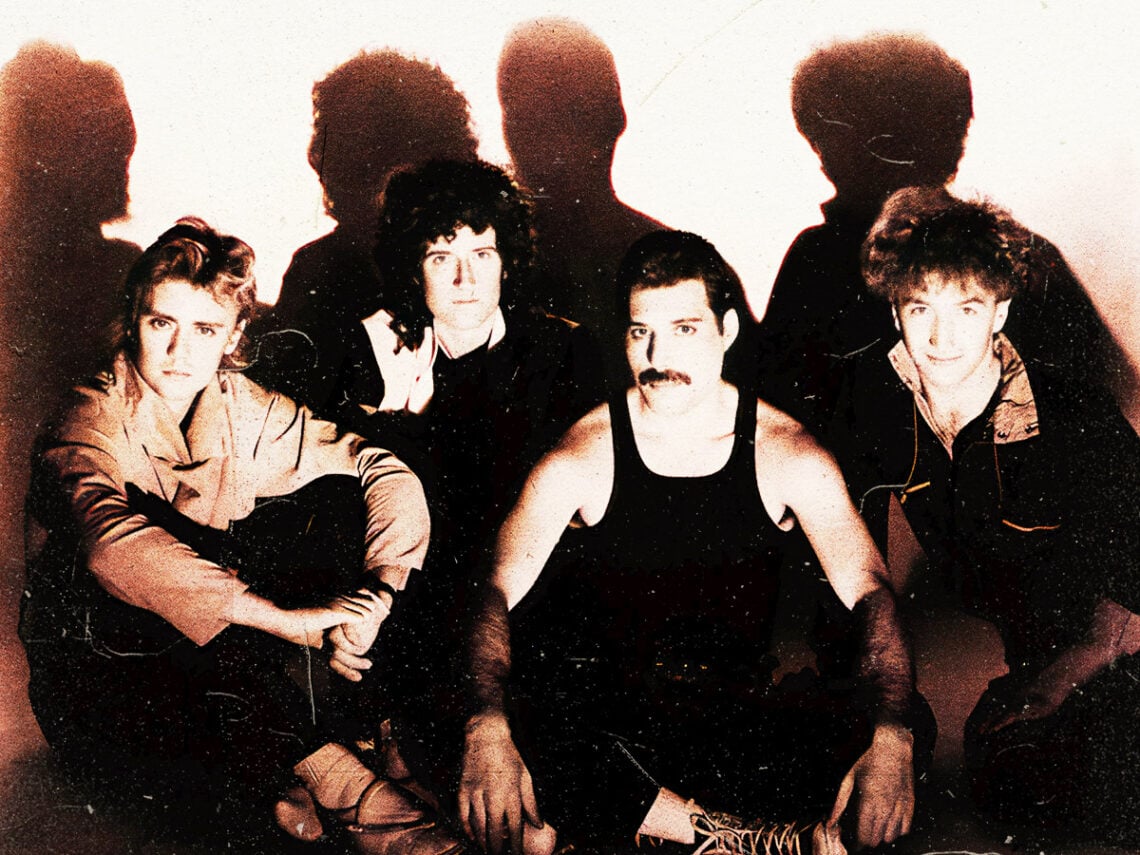
‘I’m In Love With My Car’: The song that almost broke up Queen

At the end of the day, a band is a business. While all groups start out bright eyed and bushy tailed, believing that they’re in it for the art and the art only, the second a level of success is earned, the matter of money cannot be ignored. But when that success becomes global fame, the matter is not only important but potentially fatale, as Queen found.
One of the things that has to be sorted out pretty quickly in a group is the issue of credit. Who gets the credit for what? How will the credit be split? Who will be counted as a songwriter – anyone who was in the room? Simply the lyricists? The entire band? At first, that can just be a matter of fairness and ensuring that each member gets their dues. But when record deals, releases and money come into play, it is immediately more than that.
Suddenly, it’s not just about celebrating someone’s work; it’s about compensating them for it. The division here is confusing, complex and changes band to band. For The Beatles, they decided that when it came to performances, whether that be money from concerts, radio, television, movies and so on, everything would be split equally four ways. But when it came to publishing royalties, meaning the specific money paid to songwriters and composers for their work, that was paid to, or split between, whoever wrote the song.
That’s pretty common. However, most bands generally agree on what constitutes a songwriter because it’s a tricky line. Does a guitarist become a songwriter when they suggest a riff? Or when a drummer adds a fill? Composition is just as important, so most bands have to figure out some kind of arrangement as to how each member of the band, even if they’re not a lyricist, will be compensated.
Queen’s arrangement was an odd one. For the majority of their time as a group, up until the end of the 1980s, the band had a deal – whoever wrote the lyrics got the money. According to Brian May, that’s how it had always been, but slowly, they began to wonder if it was right. He told MOJO, “None of us argued with that back then and it became the norm, but looking back, it wasn’t always very accurate.”
It all comes down to that exact point – what makes a songwriter. May said that the making of Queen songs was “always interactive”, explaining that someone, usually him or Mercury, would come in with an idea that “would get pulled apart, worked on and rebuilt by the whole group.” So already, the concept of the sole songwriter in that unit seems wrong.
But it was fine. Or it was fine until major money was at play. Slowly, resentment started to build. “This is what creates the most ill-feeling in a band – the realisation that the guy who wrote the song is making all this money and everybody else is enabling him by going on tour and playing it,” May said as this argument began to extend out into arguments about tour set lists, album tracklisting and, in one explosive moment, b-side choices.
The story goes that when it came to picking a B-side for ‘Bohemian Rhapsody’, Roger Taylor literally locked himself in a cupboard until the band agreed to let his track, ‘I’m In Love With My Car’, be on the other side of the single release.
At the time, the band loved ‘Bohemian Rhapsody’. They believed in the song, but no one else really did, so it was unclear how its release might go down. But when the song blew up, giving them number one slots worldwide as their biggest track to date, the band felt like they’d been played.
Regardless of it only being a B-side, technically, Taylor’s song sold as many units as ‘Bohemian Rhapsody’. So, he made just as much money as Mercury did for that monster hit. In May’s eyes, that was a “supreme injustice” as Taylor saw a huge payday simply for being on the flip side of Mercury’s opus, rather than writing a hit in his own right.
The argument was explosive in the way that fights about money so often are. But luckily, the group got through it. “It was a real sticking point for the band, and it’s good we got through it,” May said, crediting their bond as a group for surviving it, “I think our sense of humour saved us.” But still, the issue lingered, leading to the eventual change down the line as the guitarist admitted, “How long did it take me to get over it?… Oh, quite a while.”
