


The song Cat Stevens changed for his “possessive and jealous” wife

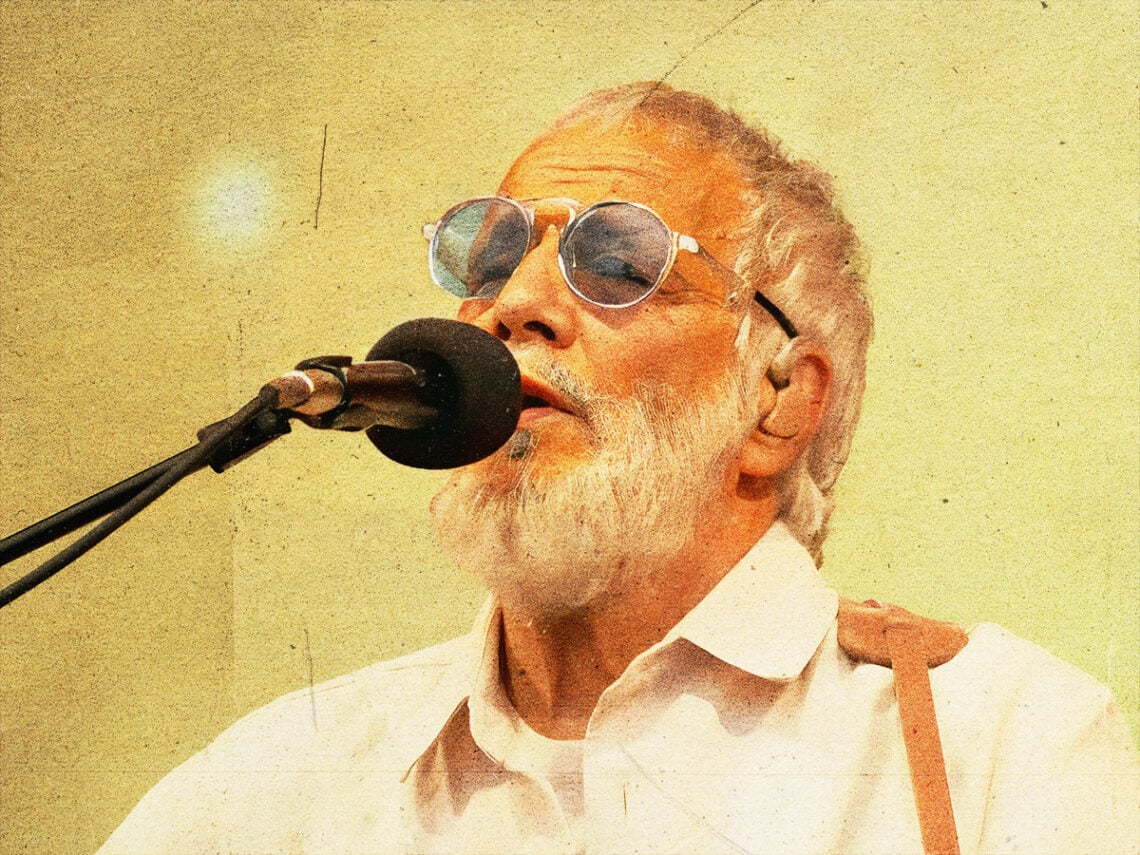
In his time, Cat Stevens has covered many topics, ranging from immediate personal matters to more intangible points of discussion. A cultural icon, it’s reflective of the musician’s status that he played the legends slot at Glastonbury Festival 2023, delivering a career-spanning set of classics.
One of the finest songwriters of his generation, Stevens showed everyone watching his historic set at Glastonbury that he can still generate magic. Regaling us with old and new songs, it was one of the most emotive exhibits of the weekend, as the power of his music and interactions with the crowd had a considerable volume of profundity not often seen in the live realm.
For instance, after playing ‘Tea for Tillerman’, Stevens touched on the 75th year of the NHS, saying: “Now, this is the 75th year of (the) NHS, and I must say. I’m one of the lucky ones, you know, it was like it was born only a few months before I was born. And so I’ve got to say, to you, a big thank you, and I think everybody here can join in, to all the doctors and all the nurses and everyone who serves the people and the good health of this country, please say a big thank you. Thank you.”
Whilst the set at Glastonbury was excellent, one notable exclusion was ‘Lady D’Arbanville’. An early classic, the song was released by Stevens in April 1970 and appeared on his third album, Mona Bone Jakon. Stevens was 21 when the song arrived, and it came as he was moving in a new folk-rock-oriented direction thanks to the influence of his producer, former Yardbirds member Paul Samwell-Smith.
Not long after completing his second album, 1967’s New Masters, Stevens contracted tuberculosis and suffered a collapsed lung. The health scare hospitalised him, requiring rest for a year to recover. During this extended downtime, the Londoner spent his hours writing over 40 songs, and after recovering, he signed to Island Records with Samwell-Smith as his producer.
As Stevens was coming to the end of his recovery, he attended a party that boasted some of London’s most exciting musicians, including the likes of Eric Clapton, Jimmy Page, Ginger Baker, and Steve Winwood. Significantly, one of the revellers was Patti D’Arbanville, an American teenager pursuing a modelling career who would later become a famous actor.
Stevens and D’Arbanville started dating, and she would stay with him whenever she was in London. However, after over a year, Stevens was ready to invest in a more serious relationship, but D’Arbanville wasn’t. On a trip to New York, she heard the song on the radio.
She later said: “I just have to be by myself for a while to do what I want to do. It’s good to be alone sometimes. Look, Steven [Stevens’ given name] wrote that song when I left for New York. I left for a month, it wasn’t the end of the world was it? But he wrote this whole song about ‘Lady D’Arbanville, why do you sleep so still.’ It’s about me dead. So while I was in New York, for him it was like I was lying in a coffin… he wrote that because he missed me, because he was down… It’s a sad song.”
The song would later cause an issue for Cat Stevens. After he converted to Islam in 1977, he faced a moral crisis, as many of his older songs were considered disrespectful to women, and in conflict with the teachings of the faith. Years after this quandary, he revealed that he had to change the track for his wife. He told The Sunday Times in 2009: “My wife’s a very possessive and jealous lady. She hates ‘Lady D’Arbanville,’ so I changed it for her. I wrote a song called ‘Angel of War,’ based on the melody. If I sang ‘Hard Headed Woman’ today, I’d say that’s about my wife.”
Listen to ‘Lady D’Arbanville’ below.
