


Six of the most misquoted movie lines of all time

As a society, we love movies. From Jaws to Star Wars, many iconic titles will be discussed long after we’ve departed this mortal coil. Complete with memorable stories, cinematography and performances, in many ways, cinema has eclipsed the novel and visual art as the primary means of getting the point across or telling a good story, as it is much more multi-faceted than the two aforementioned forms.
Cinema has delivered an almost endless amount of memorable moments that have advanced the art form’s proliferation but helped to change broader society. Many tropes are now so well worn that they are also ubiquitous in books and the theatre. The likes of Alfred Hitchcock and Stanley Kubrick made great strides to put cinema on the map as a worthwhile form in the eyes of the mainstream. As for the actors that have also had a significant impact, it is such an extensive list that it is worthy of a separate piece.
For around a century now, we’ve been lapping up films in both their silent and talkie iterations. They have given many moments that are now iconic in popular culture, including specific lines that help to define a title and crystallise its place in history books. However, as we as the consumer are not the powerful, all-knowing creatures we like to believe we are, mistakes are often made. Many of the most legendary lines from movies that are remembered in popular culture are wrong, which some attribute to the phenomenon known as The Mandela Effect.
From Dirty Harry to Snow White and the Seven Dwarfs, many of the famous lines we remember from films are incorrect. It’s something we all need to be aware of in the hope of stopping the mistake from happening again, but this looks unlikely.
Join us, then, as we list six of the most misquoted movie lines of all time.
Six of the most misquoted movie lines of all time:
Jaws (1975)
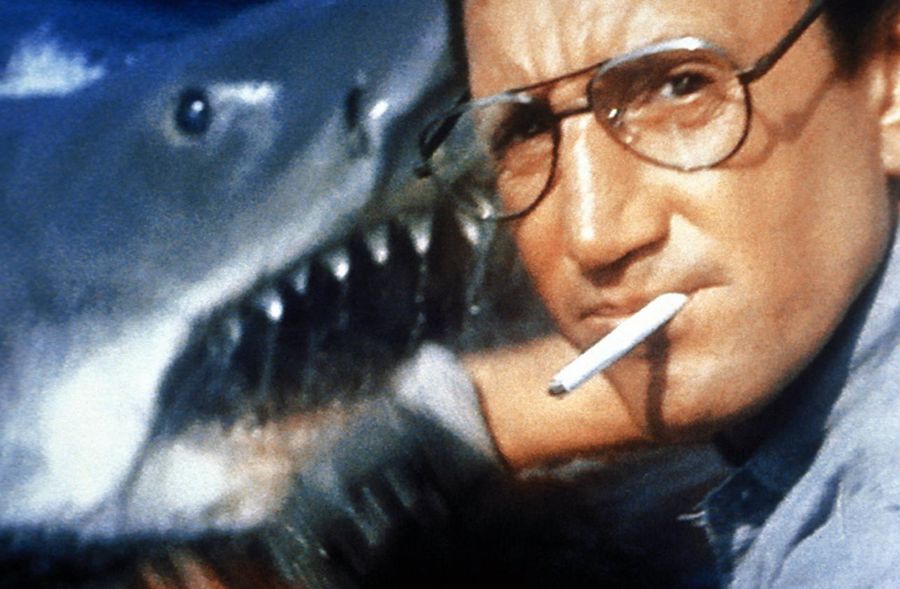
Where else but to start with Steven Spielberg’s legendary 1975 flick? Drawing on elements of Alfred Hitchcock’s style, it is one of Spielberg’s greatest outings, creating one of the scariest movie villains of all time.
Jaws is a strange case because we’ve always had the name of the murderous shark that terrorises Amity Island wrong, in the way that it is not called Jaws as many believe and that it doesn’t actually have a name.
Well, added to the wrong way that we remember Jaws is the scene where Roy Schieder’s police chief Martin Brody says to Robert Shaw’s Quint, “We’re going to need a bigger boat.” However, Brody doesn’t say that at all. He says, “You’re going to need a bigger boat.”
Dirty Harry (1971)
Dirty Harry is another one of the most memorable 1970s films. It was the first in what became a series featuring Clint Eastwood as the titular San Francisco Inspector ‘Dirty’ Harry Callahan. Drawing on the real-life crimes of the Zodiac killer, it set the standard for all police-based films moving forward, with Eastwood shining in the role as the no-nonsense, .44 magnum-toting agent of the law.
At the start of the film, Harry foils a bank robbery. After shooting one of the suspects, he holds another at gunpoint, where he gives him an unflinching ultimatum, which eventually forces him to surrender. People always remember the line, “Do ya feel lucky, punk?” with the image of Eastwood staring down the barrel of his .44 at the robber, but this is not what he said.
It is part of a more extended and slightly existential monologue, where Harry says to the suspect: “You’ve got to ask yourself one question: ‘Do I feel lucky?’ Well, do ya punk?”
Field of Dreams (1989)
A Kevin Costner classic, Field of Dreams is one of the standout films of the 1980s, even if it is just because of the story and career-defining performance of Costner. It follows the fictional story of Ray Kinsella, a farmer who builds a baseball field on his cornfield that attracts the ghosts of a host of baseball legends, such as Shoeless Joe Jackson, played by the late Ray Liotta. It was also the last movie to feature the great Burt Lancaster as Dr. Archibald ‘Moonlight’ Graham.
Everyone remembers the line “If you build it, they will come”, but unfortunately, it is a misquote. What is really said is: “If you build it, he will come.”
The Silence of the Lambs (1989)
The Silence of the Lambs is one of the essential psychological thrillers. Based on the Thomas Harris novel of the same name, the film is noted for the way it was the first time that Anthony Hopkins’ version of Dr. Hannibal Lecter was introduced to the world, an ingenious departure from that of Brian Cox’s in 1986’s Manhunter.
The interactions between Lecter and his quarry, Jodie Foster’s FBI trainee Clarice Starling, are so chilling that the first time watching the movie, the tense atmosphere of the hospital where Lecter is held is seared into my memory, courtesy of one line in particular. Long thought to have said “Hello, Clarice” in their first meeting, Lecter’s greeting is much less sinister. He says to Starling, “Good Morning”, giving credence to the argument of The Mandela Effect.
Snow White and the Seven Dwarfs (1937)
1937’s Snow White and the Seven Dwarfs remains one of the ultimate Disney animations and one of the most frightening, although it is 85 years old. Based on the 1812 story of the same name by the Brothers Grimm, it tells the story of Snow White and her battle for freedom from her wicked stepmother, The Queen.
At one point, the hubristic Queen asks her magic mirror who is more beautiful in the land, with the misquote being, “Mirror, mirror, on the wall, who is the fairest of them all?” Perhaps a slightly pedantic one, the vain ruler says: “Magic mirror, on the wall, who is the fairest one of all?”
The Empire Strikes Back (1980)
The second instalment in George Lucas’ original Star Wars trilogy is one of the most memorable in the series for many reasons, ranging from Luke Skywalker’s struggles on the frozen planet of Hoth to him being trained by the elderly Master Yoda and Han Solo being frozen by Darth Vader in carbonite. A true masterpiece, many believe this is the best in the franchise.
Of all the iconic parts of the film, none is more so than the segment towards the end where Skywalker meets Darth Vader. The Sith Lord urges his son to embrace the dark side and join him, and when he refuses, the big reveal is made that he is Luke’s father. Since the movie was released, people have widely believed that Vader says, “Luke, I am your father”, whereas he says, “No, I am your father.”
