


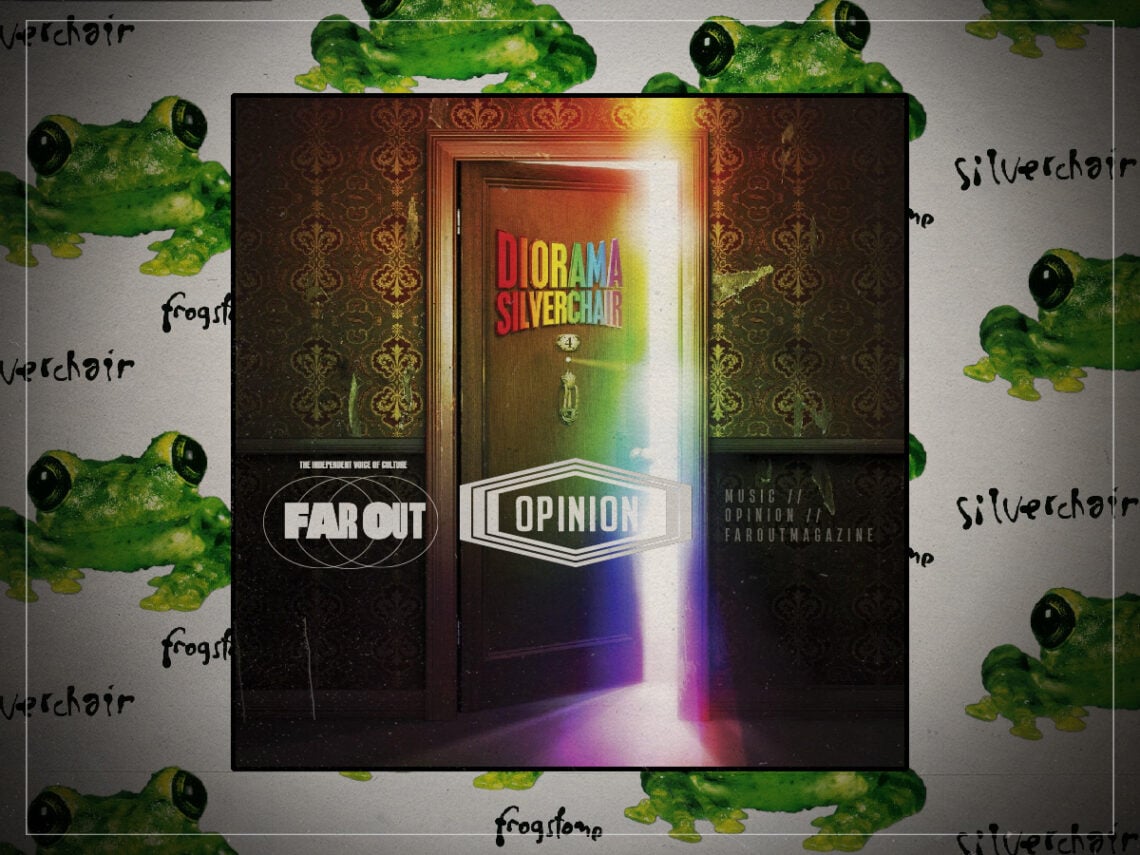
Hear Me Out: Silverchair’s ‘Diorama’ deserves the legacy of ‘Frogstomp’

When Silverchair debuted with Frogstomp in 1995, the trio of 15-year-olds were primed to be the saviours of grunge, a genre that was slowly crumbling in the wake of Kurt Cobain’s passing and the Seattle sound’s waning presence.
Frogstomp ushered in the post-grunge era of nihilism and angst, encapsulated by singer Daniel Johns’ lyricism, as it mirrored the teenage apathy and real-world tragedies and anxieties that surrounded him, amplified by his, bassist Chris Joannou and drummer Ben Gillies’ performance, intentionally recorded to mimic the sound of a live gig and thus, giving the album the imperfect sound of a studio recording while cranking the dial up to ten.
The album spawned from something of a happy accident: the three kids from Newcastle, New South Wales, Australia, won “Pick Me”, a national competition on the Nomad television series, in conjunct with Triple J Radio, in 1994. Their breakthrough single ‘Tomorrow’, written when Johns was 14 years old, won the young band a recording session at Triple J’s station, where Frogstomp came to life. ‘Tomorrow’ had all the ingredients for a breakthrough song: riffs you could mimic with a hum, Johns’ distorted vocals that harnessed the customary grunge wail and a drawn-out, singalong chorus that lingers in your mind: “You wait till tomorrow.”
With evident remnants of grunge’s sound weaving into each song with a raw approach, Frogstomp became a sensation of its own, propelling the band of literal children into stardom before they’d even finished school. Frogstomp peaked at 49 on the UK Albums charts and became one of 1995’s most lasting albums, heralded as a beacon of alternative rock over three decades after its release and defining Silverchair’s legacy. But their subsequent albums each showed a progression in artistic vision that unfortunately pales in the memory of their debut, and all equally deserve their flowers. Freak Show chronicles teenage anger. Neon Ballroom tackles anxiety and illness.
Then, in 2002, came their shining moment, with the release of Diorama, which displayed a new approach from Johns’ visionary mind: a rock opera that broke through the pressures of fame and personal strife with a radicalised idealism.
With Silverchair on a break in between albums, Johns was free to explore, sonically, what could come next. He bought a piano, despite having never played one before, and set out to write and compose their next album without the initial use of a guitar. He looked to artists like Salvador Dalí and silent films with the intention of “scoring” their work, influenced heavily by Baroque music he played on repeat.

On Silverchair’s previous three albums, Johns was writing his emotions into the lyrics with a brutal honesty that resonated with fans who were going through similar hardships, but such honesty came at a detriment to his mental health. When it came time to write what would become Diorama, he wanted to change the course of the narrative.
“Diorama was when I started going, ‘OK, if this is the impact I’m going to have on people, we might as well make them dreamers and make the world feel beautiful,’” he explains on his podcast series, Who is Daniel Johns? He explained his vision to his manager as an album that is “whimsical and overly-complicated, and to sound like it’s from the theatre rather than from a rock ‘n’ roll record.” In turn, they recruited composer Van Dyke Parks, known for his visionary work with The Beach Boys and his work across film and television scores.
Parks became a mentor to Johns and brought his concepts to life. Rounding up a cast of classical musicians, the pair led Silverchair into another dimension, one truly fit for an opera. Fantasy takes centre-stage on the album’s opener, ‘Across the Night,’ a lullaby brought to life with the swell of horns and piano, echoing the central cry of, “I don’t want to be lonely; I just want to be alone.” In the middle of the album comes ‘Tuna in the Brine’, a genuine masterpiece of a composition that conjures visions of a musical, brought to life. Johns’ vocals fluctuate as the orchestra does, travelling through light and dark.
The album leans into heavier moments, as well, like on (a personal favourite) ‘One Way Mule’, driven by a booming riff and drum pattern that brings a shadowy quality to Diorama’s dreamscape. “Defect memories in a cage by my bed,” Johns cries, “Viscid dreams stick to holes in my head.” They veer into metal territory on ‘The Lever’ with a Freak Show-era breakdown and oscillate from acoustic to electric on ‘Too Much of Not Enough’, while the album closes with ‘After All These Years’, a piano ballad.
Frankly, I could go on for ages about the beauty of Diorama, of its expansiveness performed with a unique, fantastical presence that only an artist as singular as Johns could dream of. Every song reverberates like a short film, going beyond a “concept album” and venturing into the unknown, coming out on the other side with a confident and stark vision that makes Silverchair one of the most fascinating bands in rock, deserving of endless praise.
“I remember feeling like I’d finally completed my life’s work, in a way,” Johns asserts of Diorama. “I’m doing what’s in my head. I’m going to represent my dreams. That was when I knew that I was a man: ‘I’m going to write a masterpiece. Fuck you.’”
Frogstomp may have introduced Silverchair to the world with an unforgettable collection of anthems, but Diorama proved that they were true artists, transcending expectations in pursuit of brilliance.
