


‘Frogstomp’: Did Silverchair put grunge out of its misery?

In 1963, a Stax Records session player named Floyd Newman recorded a funky little instrumental single called, for reasons unknown, ‘Frog Stomp’. More than 30 years later, a 15-year-old Australian kid named Daniel Johns stumbled upon the name of the track on the back of a CD compilation of ‘60s songs, and decided it had a fun ring to it. He called up his pals from his high school band and suggested they use it as a title for their soon-to-be-released debut album. This wasn’t unusual; the band had named itself Silverchair because Johns had similarly glanced over at the CS Lewis book The Silver Chair on a shelf.
By the summer of 1995, Silverchair’s Frogstomp had suddenly become the best-selling album in Australia, and, of more peculiar interest, a smash hit in America, reaching the top ten and eventually selling over two million copies. There was no mistaking what type of music this was. The lead single, ‘Tomorrow’—despite being recorded in New South Wales—sounded more Seattle than Seattle, and its accompanying video (re-shot for the US market) featured the familiar work of Mark Pellington, recreating some of the genre-defining visual tricks he’d put into the direction of the videos for Pearl Jam’s ‘Jeremy’ and Alice In Chains’ ‘Rooster’.
Silverchair certainly had a more youthful look than their influences, but they didn’t sound like a teen or Aussie version of the Stone Temple Pilots; they pretty much just sounded like the band as is, and in 1995, backed by solid follow-up singles like ‘Pure Massacre’ and ‘Israel’s Son’, that was good enough.
After all, for fans who’d boarded the grunge train back in 1990 or 1991, things were looking comparatively bleak by the time Frogstomp arrived. Kurt Cobain had been gone for a year; Pearl Jam had slipped into virtual hiding from the press; Alice in Chains hadn’t played live in nearly two years due to Layne Staley’s addiction battle; and Soundgarden were struggling to work on the follow up to Superunknown (they’d announce their break-up two years later).
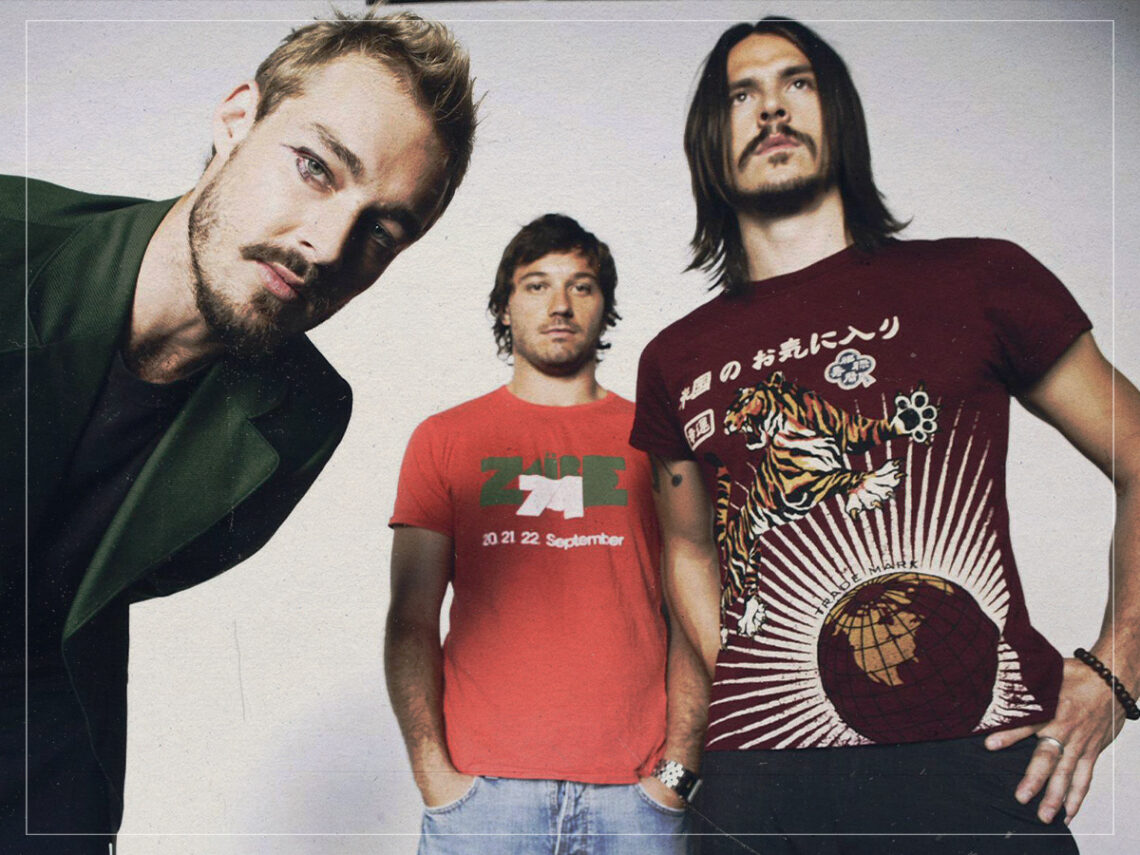
Entering this scene, Silverchair were, at first, mistaken for unwelcome acolytes of Bush; a sort of radio-friendly pop approximation of the grunge ethos, transplanted from the other side of the planet. At their worst, the trio of Daniel Johns (vox/guitar), Chris Joannou (bass), and Ben Gillies (drums)—all just 15 at the time of Frogstomp’s recording—were the diapered death knell for the once proud Seattle sound. It had been Xeroxed, misrepresented, spilt over, lost in the post, and copied again so many times that, in the span of five years, the flag had been left for only several clueless children to carry.
Watching the ‘Tomorrow’ video and being bombarded by the visual, lyrical, and guitar riffy clichés therein, this idea that grunge was dying before your eyes seemed plausible. But then again, something also compelled you to listen to the song the next time it came on the radio, and again and again. There was something there—not a world-weary wisdom characteristic of the Seattle bands, but an energy and refreshing curiosity.
The same spark that drew Daniel Johns’ eye to the name ‘Frog Stomp’ or CS Lewis’ book spine had drawn him to hip-hop in his adolescence, and eventually grunge in his early teens. He and his friends, like most 15-year-olds, were experimenting with their brand-new influences and seeing what they could manage to harness in their own garage. It didn’t matter whatsoever that they were living in Newcastle because they had no concept of how far away Seattle was, so they might as well reach for it.
Granted, Silverchair weren’t DIY warriors; they entered various band and talent competitions to get on the radar and parlayed their success in one Australian TV competition into their eventual record deal with Sony. By all accounts, though, Frogstomp was handled in almost Steve Albini-like fashion, as producer Kevin ‘Caveman’ Shirley made little effort to spruce up the boys’ visceral sound either in the studio or afterwards. It’s a key reason why, even decades later, the now fully grown-up members of Silverchair seem to proudly stand by Frogstomp as a time capsule of the band they were.
Was this the last relevant grunge album made by the last-born members of Generation X, or the first grunge album ever made by millennials? Is it, and I am being quite serious here, the best rock album ever recorded by a group under 16? Is it also, weirdly, the worst album Silverchair released in the ‘90s?
As the questions swirl, I can only confidently say that Frogstomp is, whether for good, evil or neutral intent, one of the defining records of 1995, when nobody knew exactly what had just happened or what was coming next.
