


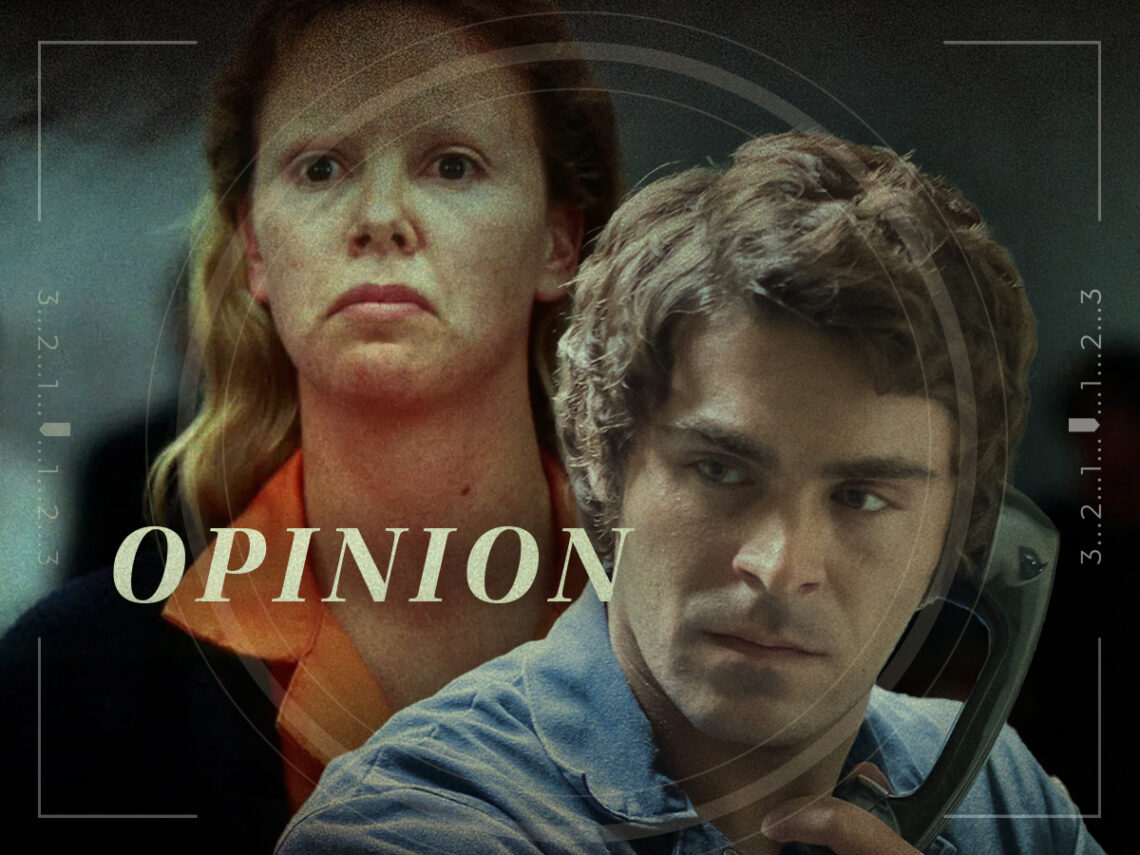
Pathos for the monster: Should a murderer movie have any kindness?

In Monster, Patty Jenkins’ 2003 biopic about Aileen Wuornos, Wuornos gets the last word. In fact, she gets the whole movie. The audience learns almost nothing of substance about the men she murdered. Instead, they’re given her reasoning, and, to a degree, encouraged to understand or even sympathise with her. It raises a simple yet complex question: Is that right?
Wuornos is labelled a serial killer – one of the most famous in history, largely because she’s a woman. Female serial killers are rare, especially compared to the long list of male mass murderers. But, as usual, people are obsessed with ‘evil’ women. The capacity for violence is seen as deeply unfeminine, something far removed from the realm women are stereotyped to inhabit. Taking a life, let alone many, pushes that even further. While male serial killers still attract intrigue, their violence is more expected. Female killers, by contrast, become a source of morbid fascination, often rooted in misogyny.
Jenkins largely denies the audience that. While the film is titled Monster, referencing how Wuornos has been labelled and treated, Jenkins refuses to portray her as one. There’s a lot of pathos in the film, complex, as it was always going to be. Charlize Theron’s Oscar-winning performance captures that complexity. Her portrayal is often unlikeable, presenting Wuornos as spiky, frustrating, and at times genuinely frightening. But in fully embodying the character, Theron also finds moments of tenderness and sympathy.
That comes through most clearly at the midpoint. After being raped by a client while working as a sex worker, Wuornos kills him in self-defence, her first murder. She’s completely rattled by the assault, an experience that 45–75% of sex workers face, and by her own violent reaction. The audience is rattled, too. When she quits sex work and tries to find honest employment to build a better life for herself and her partner, audiences root for her. But the world won’t give her a chance. She’s uneducated, has fled childhood abuse, and lacks qualifications or experience – realities that close every door she tries to open.
From that moment on, as she falls back into that work with no other option, there is a degree of understanding in everything. There’s a level to which you root for Aileen. Knowing her past and her trauma, there is undeniably a part of you that wants to see things work out for her, wants her to get away with her killings, and even, to an extent, understands why she’s doing them. Is that right? Should we ever be rooting for a woman who killed seven men?
There is a distinct difference, though, between the pathos in Monster and the way sympathy is used in other serial killer flicks. Another movie hit with controversy over how a murderer was presented, critiqued for the similar fact that the historic villain got the voice, not their victims, was Extremely Wicked, Shockingly Evil and Vile, a 2019 biopic about Ted Bundy. Before the film was even released, Joe Berlinger was under fire as the trailer had an almost humorous air. Casting Zac Efron as Bundy, they’d also taken the decision to make the killer attractive and alluring, focusing on the looks and charm he was said to have used to bring in his dozens of victims.
There is pathos in that film too, but in a different way. It’s not that Bundy has a traumatic backstory to feel bad about; it is simply that he’s charming. The movie, for the majority, plays Bundy off as an almost slapstick hero that you find yourself backing and liking. It keeps his crimes off the screen, letting the audience sink into this false sense of comfort around the man, only to rip that away in a visceral ending that makes the weight of his violence hit you. So there, pathos is a technique. It’s a bait and switch – does that make it better?
I’m asking questions because there is no clear answer. It is simply a debate that has surrounded movies like this since the first person decided to platform, to some degree, a villain and specifically, a real-life, historic villain. Is it ever right to afford sympathy, care or even likability to a person who committed heinous crimes? Or is the ability to afford sympathy, even to so-called monsters like Wuornos in particular, an impact and a deeply human part of looking back at these cases?
Does the ability to look at her case and see the complexity added in by her own attack, trauma and poverty play an important role in how society handles these figures, drawing attention to the fact that no morality is ever black or white. Or does a case like Ted Bundy’s change that, with a film like Extremely Wicked, Shockingly Evil and Vile that leans into and turns his manipulative charm into a legend, only serving to platform violence and disrespect the victims of crimes that weren’t even that long ago?
Just like the messy morality the debate brings up, the response is just as messy, bringing in considerations of art, law, life, goodness and evil and the way they all intersect.
