


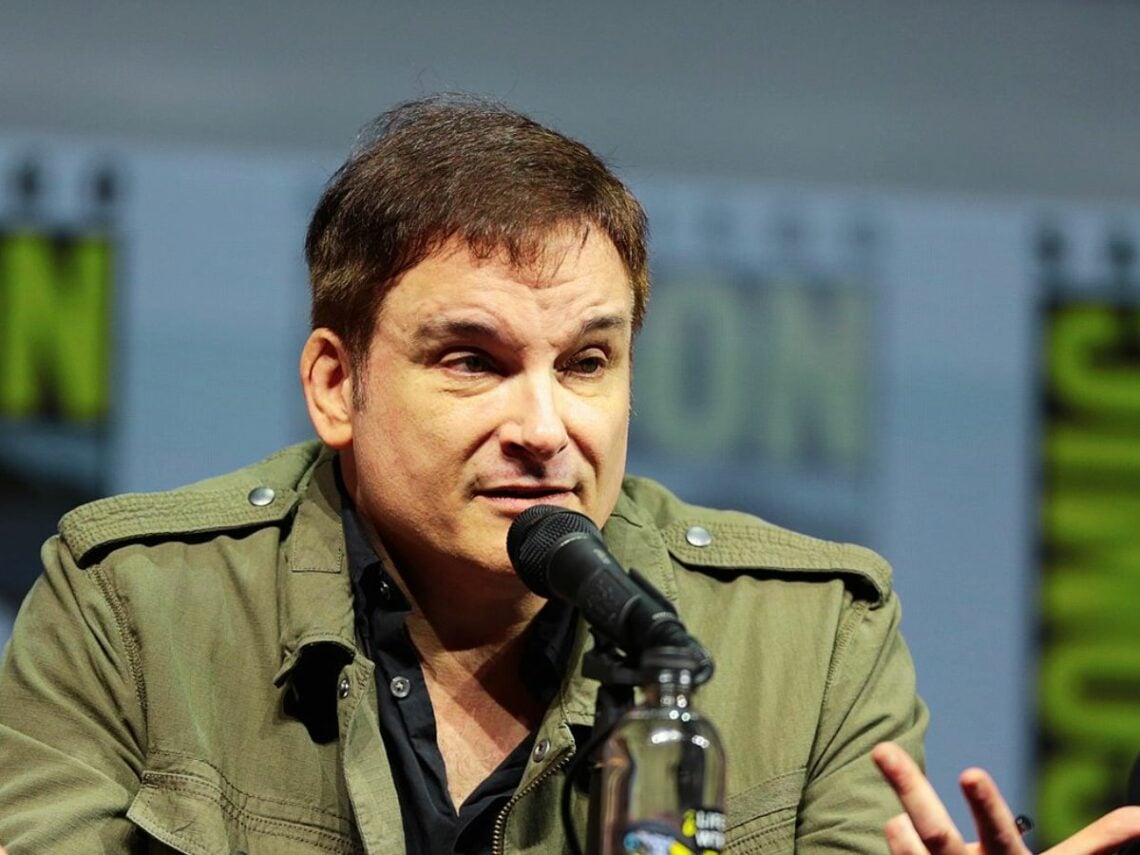
Shane Black: The genre-defining writer who can’t buy a hit as a director

He may not have originated the buddy cop genre, but Shane Black came significantly closer to perfecting it than anybody else, with his massively influential work setting the template that virtually every movie featuring bickering odd couple partners continues to follow to this day.
Rightfully hailed as screenwriting’s newest wunderkind, Black penned Lethal Weapon at the age of only 22, with Richard Donner’s classic actioner held up as the archetypal buddy flick in all the best ways. The rapid-fire dialogue, lived-in chemistry between Mel Gibson and Danny Glover, and a pitch-perfect blend of heart and humour being as pivotal to the film as its set pieces set a new standard.
48 Hrs. is generally viewed as the genesis of the buddy cop caper in the form it largely remained in for over 40 years. Still, it was Lethal Weapon that opened the floodgates to countless thinly-veiled imitators. It’s no coincidence that every single action-packed procedural to hit the big screen is compared to Black’s breakthrough script in one way or another.
After dropping out of the sequel, Black then became the highest-paid writer in Hollywood when he was paid $1.75million to pen The Last Boy Scout for Tony Scott, and shattered that record once again when he netted a cool $4m for The Long Kiss Goodnight, rewriting Arnold Schwarzenegger’s unfairly maligned Last Action Hero in between. None of them were runaway successes at the box office, but they each became firm cult favourites evocative of their writer’s singular and distinct style.
It would be almost a decade before Black returned to filmmaking, and when he did, he proved himself to be just as accomplished a director as he was a writer. Kiss Kiss Bang Bang delivered a fantastic festive noir, one that was so impressive it convinced Jon Favreau that resurgent star Robert Downey Jr was the perfect candidate to headline his in-development Iron Man. Unfortunately, it was a commercial bust that barely recouped its budget in cinemas.
Much the same can be said of The Nice Guys, a phenomenal buddy film with Russell Crowe and Ryan Gosling on electric form. Once again, the widespread acclaim to greet the 1970s-set mystery had little effect on its money-making prospects, marking yet another behind-the-camera flop that failed to turn a profit.
Returning to the franchise that gave him his first-ever acting role, Black was drafted in to write and direct The Predator. It couldn’t hold a candle to the original, though, and the grubby fingerprints of studio interference were there for all to see. It may have been the highest-grossing solo Predator movie, but it was also the most expensive, rendering the profit margins razor-thin.
The only outlier of the bunch is Iron Man 3, which earned over a billion dollars from cinemas after Black was hand-picked by Downey Jr to helm his final standalone outing as Tony Stark. Of course, there were buddy elements at play whenever the actor was sharing the screen with co-star Don Cheadle, but it’s not unfair to say that its status as the Marvel Cinematic Universe’s first release after The Avengers was the driving force behind its mammoth haul, especially when directors are hardly viewed as integral to the franchise’s process.
Including his screenplay for The Monster Squad, Black has been credited on ten features. Of those ten, Lethal Weapon is an inarguable great; its sequel is every bit as good, six of them are established cult classics in one way or another, and one netted $1.2 billion in ticket sales, leaving The Predator as the only notable misfire of the bunch.
And yet, outside of his one-time dalliance with the MCU, Black can’t seem to buy a hit as a director. It’s not as if his work has suddenly become subpar or been trashed by either critics or crowds, leaving it as a curious evolution of a career that’s provided greatness more often than not but without the tangible fiscal rewards to show for it.
Downey Jr thinks he’s a genius, and any self-respecting fan of action cinema would readily agree, but he’s yet to create anything from the ground up as a director that hasn’t bombed. Next on the docket is a reunion with his Kiss Kiss Bang Bang frontman for an entire universe born from Donald E. Westlake’s Parker novels, which at least has the benefit of being designed exclusively for streaming.
