


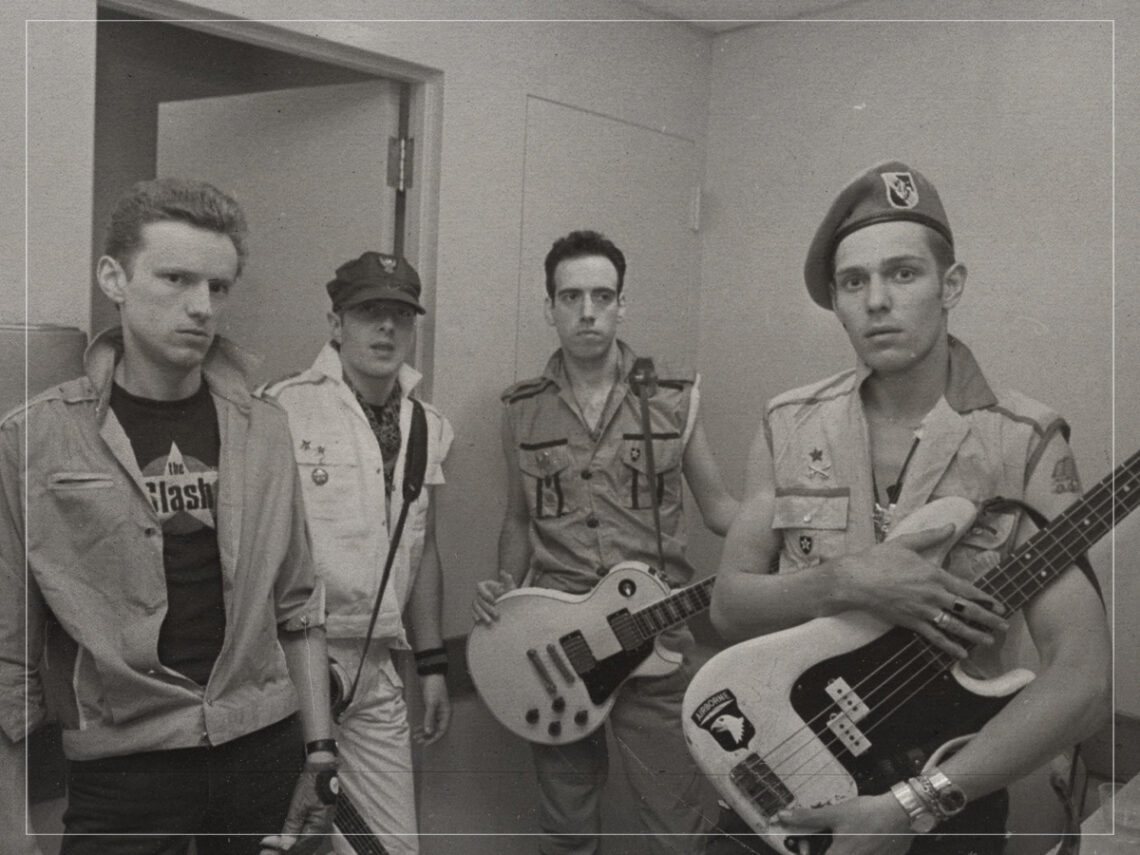
The sexually charged lyric that helped break up The Clash: “I really don’t know if it’s about me”

All it took was a little lyrical sexual suggestion to finally spell the end of The Clash’s classic era.
Tensions were running high into the early 1980s. Amid accusations of backstage surliness and unreliability concerning band duties swirled around a fatigued lead guitarist, Mick Jones, tired of the incessant touring schedules pushed by principal frontman Joe Strummer and bassist Paul Simonon. Then came the creative differences. Once 1982’s Combat Rock struck its MTV peak, Jones wanted to venture into the terrain of hip-hop and electronic music, at fierce odds with the rest of The Clash’s eagerness to return to their punk roots.
Jones would eventually be dismissed in 1983, going on to realise his artistic ambitions with his subsequent Big Audio Dynamite project, while the remaining Clash eked out 1985’s Cut the Crap, experimenting with drum machines and sampling with a lot less success. The writing on the wall for Jones, however, was set earlier when one of the band’s most classic tracks from his lyrical pen was messed with to his annoyance.
Once back from a tour of the Far East in March 1982, The Clash reviewed the material they’d accrued from the then-titled Rat Patrol from Fort Bragg sessions. It was a lot, as many as 18 songs that Jones was keen to issue as a double LP, afforded the songs’ extended mixes, which he’d personally overseen, the room to breathe. Such a weighty release was par for the course at this point: 1979’s London Calling, a two-disc album, and 1980’s Sandinista!, a whopping triple LP.
The rest of the band disagreed, arguing for a tighter, leaner record with shorter song mixes, narking Jones, who had put the work into the original studio versions.
In came Glyn Johns. The famed producer and recording engineer was brought in by band manager Bernie Rhodes to remix the material and shape up the eventual Combat Rock into a single LP release, corralling the band to his garden studio in West Sussex’s Warnham to oversee the new polishing job. Unfortunately for Jones, his last great song for the band would find itself square in Johns’ censorious crosshairs.
Riffing off the old R&B hit ‘Little Latin Lupe Lu’ from Bill Medley, ‘Should I Stay or Should I Go’ reeked of good old classic rock and roll, casting speculations for years as to its exact meaning, from a possible allusion to his sense of impending band dismissal to a dig at his fraught relationship with singer and actor Ellen Foley. Whatever the meaning, the sexual lyricism got up Johns’ nose, taking particular issue with the line “On your front or on your back.”
Johns argued that US radio just wouldn’t play it, forcing an infuriated Jones to record the line with the more sanitised “If you want me off your back”. Such censorship, mixed with the anger at his vision for the album being pulled from his set in motion his eventual disdain with The Clash and his eventual sacking, not long after drummer Topper Headon’s firing. Issued as a double A-side with ‘Straight to Hell’ in September 1982, ‘Should I Stay or Should I Go’ would top the UK charts but only make 45 over in the States, casting doubt on whether such anxious lyrical revisions were ever worth it.
Jones would remain coy about the song’s exact meaning, playing down ‘Should I Stay or Should I Go’s anchor to dramas within The Clash, as has Foley over the years. “I really don’t know if it’s about me,” she told Songfacts in 2021. “It’s a very good song though, whomever it’s about.”

Never Miss A Beat
The Far Out Punk Newsletter
All the latest Punk content from the independent voice of culture.
Straight to your inbox.