


Sex, death and the devil: Inside ‘The Death of Bunny Munro’

In 2009, Nick Cave wrote his second novel, The Death of Bunny Munro, and it’s unlikely that he pictured Matt Smith’s phantasmagoric face as the titular character, but a decade and a half later, the story has been adapted into a six-part Sky TV series with Smith at the heart of the ordeal.
On a non-descript day in October, I shuffled past the guards outside of a swanky London hotel and up a singular flight of stairs, on my way to interview director Isabella Eklöf and writer Pete Jackson about the universe built by Cave, the triumph of Smith’s performance, and everything in between.
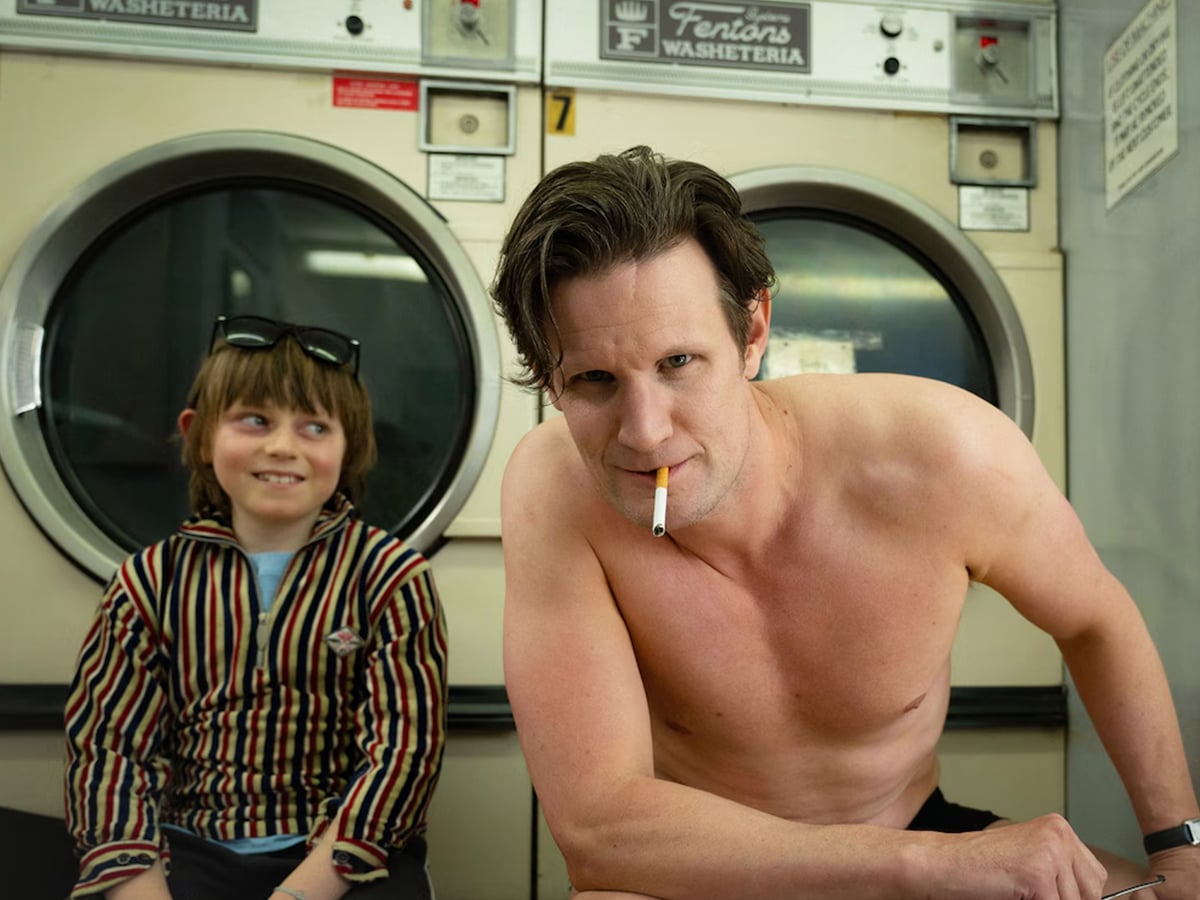
First things first: The Death of Bunny Munro follows a sex-addicted door-to-door beauty salesman, played by Smith, whose wife commits suicide. Forced to confront the various evils in his life, the titular character takes his son on a road trip around the South of England, grappling with masculinity, grief, sex, and death.
Off the bat, I ask Eklöf whether she set out to make the audience cry, because cry, I told her, is what I did. “I try not to have intentions for the audience,” she shrugs instead, “I want to make something that I find important and touching and beautiful”.
If she cries, surely others will, too, and it’s true that throughout the interview, Eklöf is often on the brink of tears. My nose twitches, too. It’s quickly evident that we have an incredible piece of art on our hands, one that connects us even in the most muted of hotel rooms.
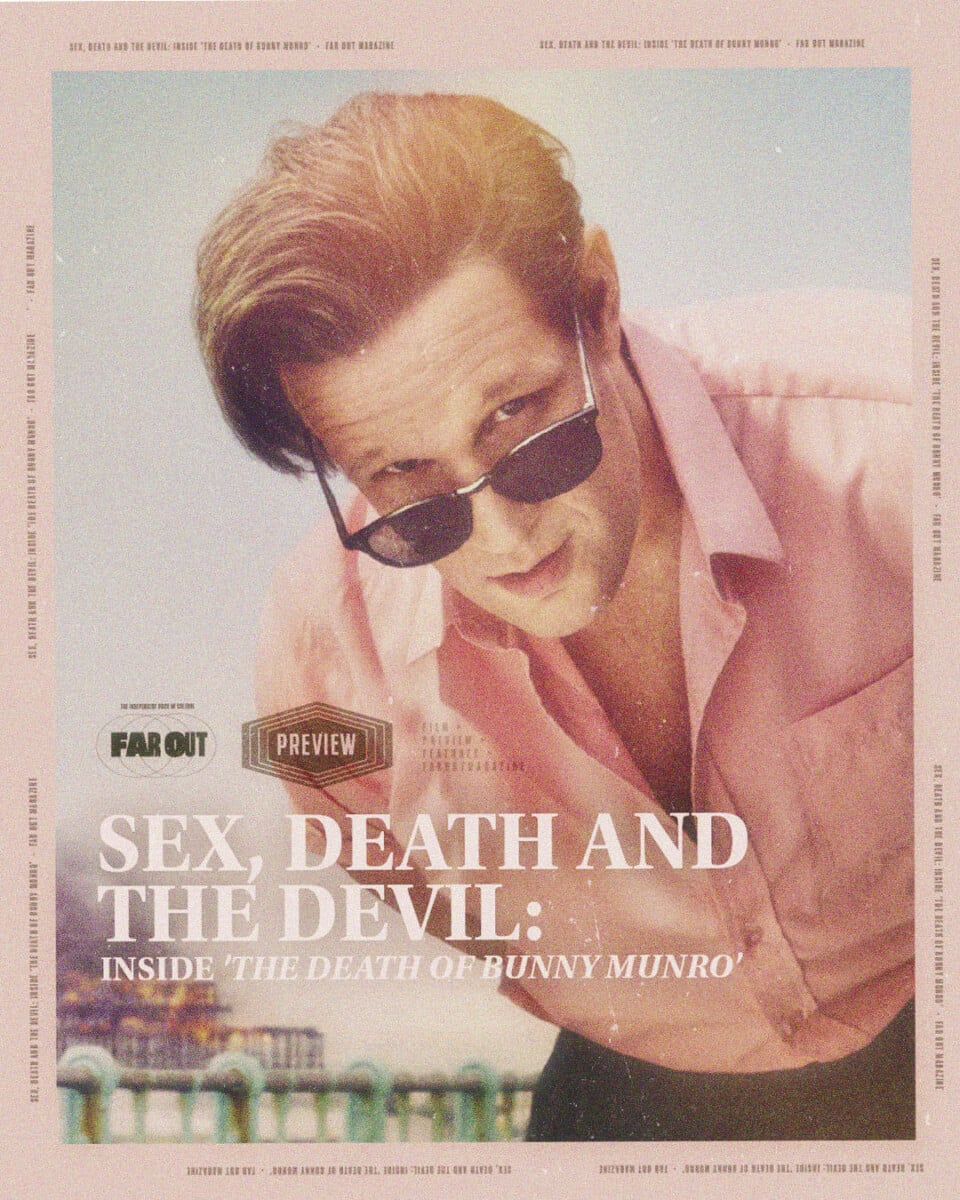
The Doctor to door-to-door salesman: Matt Smith unleashed
Smith’s career is one upholstered by respectable characters: The Doctor, Prince Philip, and Christopher Isherwood. At all times, he has been in control, until now. Playing a sex maniac was his chance to roll around in the dirt and watch the way it takes to his skin, and both Eklöf and Jackson showered praise upon the 43-year-old star.
“Matt Smith was a dream, a beautiful, intelligent, fun, hard-working actor, so, so invested in the project, and really excited to be allowed something more complex to bite down on,” the director told me. In comparison to otherwise “lightweight roles”, when taking on the complexity of Bunny Munro, “he was so excited to be allowed to unfold himself completely”.
A restless dichotomy lies at the heart of Bunny; as Jackson puts it, we should “love, hate, warm to and despise this character almost in the same breath”. This was only exacerbated from behind the camera, as Smith became his likeness: “[Matt Smith] has, like, 1000 faces, and every light hits him differently”.
When Smith steps away from the set, he’s nothing like the addled character he plays. “He’s not really sleazy, you know, he’s actually a genuine guy,” the director mused, “So there was this interesting juxtaposition. Also, he is genuine and earnest and charming and real. And I think that’s part of Bunny’s charm, too.”
He might be an all-round top bloke, but the fact is that he is a celebrity, and Eklöf needed someone like that, a figure already implicated in our culture of voyeurism: “In his world, he’s got to be the most charismatic person in the room, right? That’s how people like him operate”, or, as she put it elsewhere, “Matt Smith certainly isn’t hard to objectify”.
What about the women?
The allegorical heart of the series centres on male violence, perversion, and fatherhood, but Eklöf sees the female experience stamped all over the tale. Consider Bunny Junior’s perspective, she tells me, the nine-year-old whose father has forgotten to take him to school for months, his is “the perspective of someone who loves an abuser and a narcissist. And for me, a heterosexual woman, that was a very easy perspective to take on”. I couldn’t quite disguise my overjoyed laughter in time.
Eklöf grapples here with a culture obsessed with desire, playing out in the claggy charisma of Smith. But, interestingly, Cave has since revealed that the work was inspired by the biblical Gospel of Mark and Valerie Solanas’ radical assessment of maleness, SCUM Manifesto, while Eklöf comes in with her own perspective amid these crucial texts: “I had a very conscious dogma, that I objectify men in my work. I have a female gaze on men”.
“To photograph people is to violate them,” cultural theorist Susan Sontag once wrote, and the director agrees: “I think the camera is intrinsically objectifying. I think you cannot put a camera on a face without objectifying. We think of sex all the time, but the way to make it equal is to objectify men as well.”
In the series, sex just is. A masturbation scene is simply a woman slumped on her chair, rubbing: “You feel like you’re seeing everything, but you’re not. The magic of cinema”. Though she is accustomed to depicting genitalia in her other projects, this one was simply “too mainstream” and raised in her a need to pivot.
Eklöf references the character Yvonne, played by Alice Feetham, who viewers first see undressing in a pub, breasts exposed to the seedy, jeering men. But from there, there’s “nothing sexual about her whatsoever”. A woman can be more than promiscuous, and to both of us, this is a “relief”; while the men lose their innocence, the women retain theirs.
The Somewhere Boy writer references this episode, too, revealing that it wasn’t in the source material. It is our first totalising foray into the world of Bunny Junior, the point at which the entire perspective shifts. He felt the need to write it in, and to Jackson, Yvonne represents an “actual sort of real, quiet domestic love”. The ghost of Bunny Junior’s mother, played by Sarah Greene, can’t beat that kind of undeniable force.

Trump and AI on the shores of Brighton
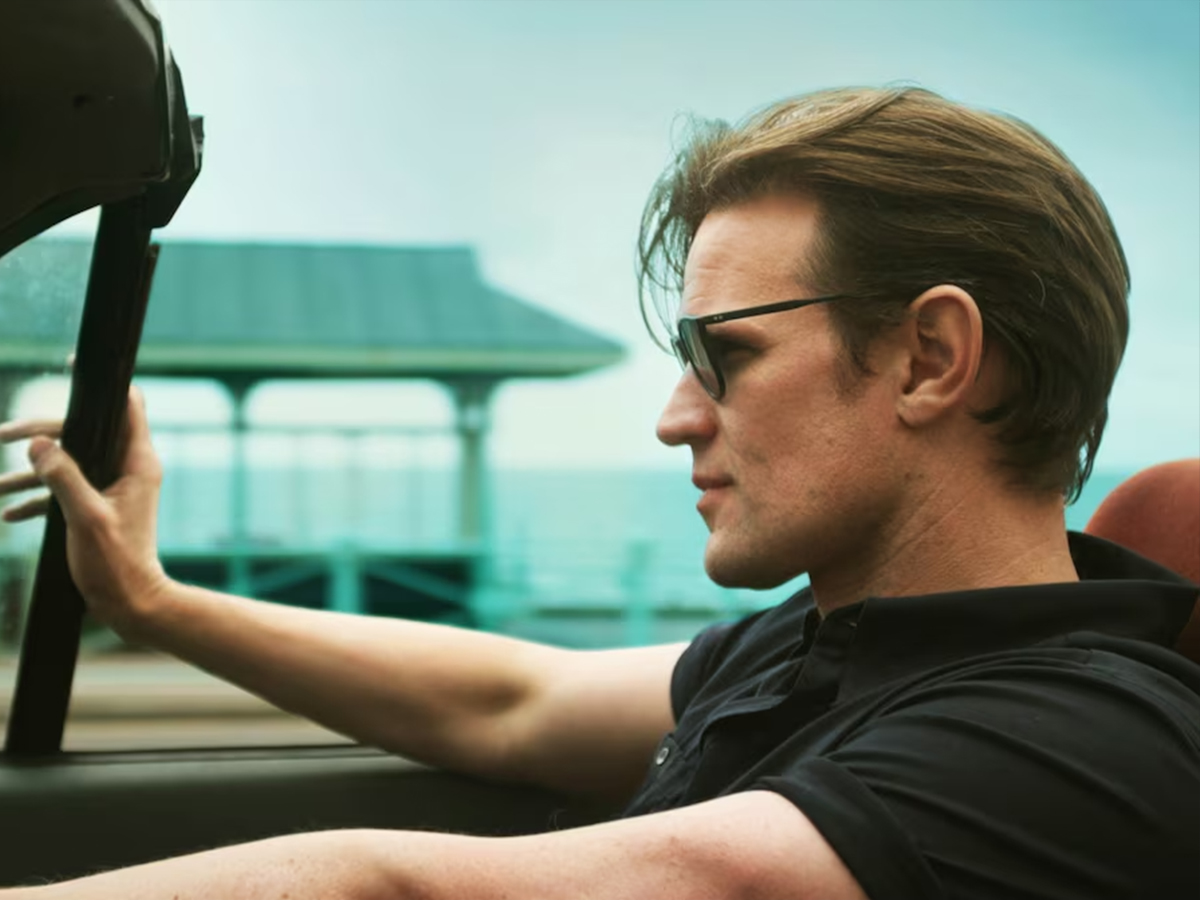
The Death of Bunny Munro begins with the real-life arson attack that destroyed Brighton’s West Pier in 2003, explosive and cataclysmic, starting as it means to go on, a frenzy building into the series’ crescendo.
Though they agree that the project is reckless and fiery, there are several things that Jackson and Eklöf seem to disagree on. In the process, Jackson was connected to the characters: the irked self-preservation of a father re-enacting the traumas he has faced, the heartbreaking swell of a boy’s fantastical illusions as a means of protection from the violent ills of society. In contrast, the latter zoomed out, teasing out the theoretical skeletons from the closet.
An example: I asked Jackson if he intentionally warned viewers off a consumerist-capitalist mindset, and he said no, not really. I asked Eklöf, and she gave me an eloquent explanation of the lures of capitalism, especially in Trump’s America: “I think the most dangerous thing that’s happening today is not climate change. It’s the increasing gap between the classes. The US, of course, is the horror story of how bad it can be.”
One of the meatier subjects in the current industry is the use of artificial intelligence on the screen. We haven’t quite moved past the controversy of Adrien Brody’s Oscar win earlier this year for The Brutalist, after it was revealed that AI was used to enhance his Hungarian accent, but the formidable director wasn’t afraid to admit, straight up, that AI has been used in the programme.
She caveated the confession first: “I don’t think AI is a real danger, because, by its nature, it’s middle of the road. It’s generic”. In terms of Bunny, the team used the technology only to depict women in makeup adverts, distorted through monitors in the final episode. Eklöf elaborated, “We have a wonderful sequence when there are videos in the background of women and lipsticks [which are] AI women and AI lipsticks. I think it’s perfect, because it’s supposed to be generic and horrible.”
“There’s no villains, you know, there’s no monsters. We’re all just people trying and usually failing.”
Pete Jackson
Political polarisation, the rise of AI: might these two things meet in the character of the devil? Again, the writer and the director give me conflicting opinions. The devil is “a serial killer,” Jackson said, “But what it becomes in Bunny’s mind is his conscience and his reckoning coming for him”. A pertinent message in an age of cancel culture and heightened accountability, thanks to the post-MeToo movement.
Eklöf, however, sees things differently. “It was really important to me that the devil really was the devil,” she insisted, “not a metaphor, not in Bunny’s head”.
They can at least both agree that punishment is coming for Bunny, for the horrific acts we are forced to watch and for the ones only shared through hearsay; it isn’t a matter of if, but of when.
In Nick Cave’s shadow
Nick Cave may have been “hands-off” during the nail-biting adaptation of his beloved book, but his dark, stately figure looms over the series. His influence is most evident in the gothic undertones, as well as the brilliant, beautiful, and surprising soundtrack, with Eklöf aware of his spectre at all times, noting, “I’ve loved his work since the 1990s. I am very conscious that we’re part of his universe, the universe that he created, and then I have a lot of love and respect for it”.
On the contrary, Jackson wiped all traces of Cave from his mind as he wrote the series: “I banned any mention of Nick Cave or any of his music from my house while I was writing the pilot, just because I didn’t want to be intimidated.” There are moments of unabashed surrealism in the series, yelp-out-loud twists, and a badgering, relentless threat that is always around the next corner. It’s breathless, but still, says Jackson, “we remain very close to the spirit and the tone” of the original novel. Just words on a page, and a musician, a man, lost in the weight of grief.
Despite the emotional weight of the project, Cave was all in. “Nick was a brilliant collaborator,” Jackson shares, “enormously supportive and helpful, and had some big notes and thoughts along the way and but enabled us and emboldened us to really go for it.”
Throughout our discussions, Jackson and Eklöf repeat the idea that they wanted, truly, finally, to take a big, hearty swing at something: sex, death, grief, desire. Thanks to the likes of Matt Smith and Nick Cave, The Death of Bunny Munro lands firmly on the bullseye; you’ll just have to wipe away a tear or two to see it.
The Death of Bunny Munro is available to watch on Sky and NOW from November 20th, 2025.
