Self Esteem soars, ‘Teeth ‘n’ Smiles’ sinks in wailing West End reboot

“We’d like to leave, please. This play is dated beyond belief, and really isn’t very good,” a soft, weathered voice croaks behind me. It’s the intermission of Teeth ‘n’ Smiles at the Duke of York Theatre in London, the reboot of David Hare’s 1975 rebel play, and it’s going down as well as a broken string during a headline set. The elder lady asking for accessibility assistance out of the venue knows it, and so do I.
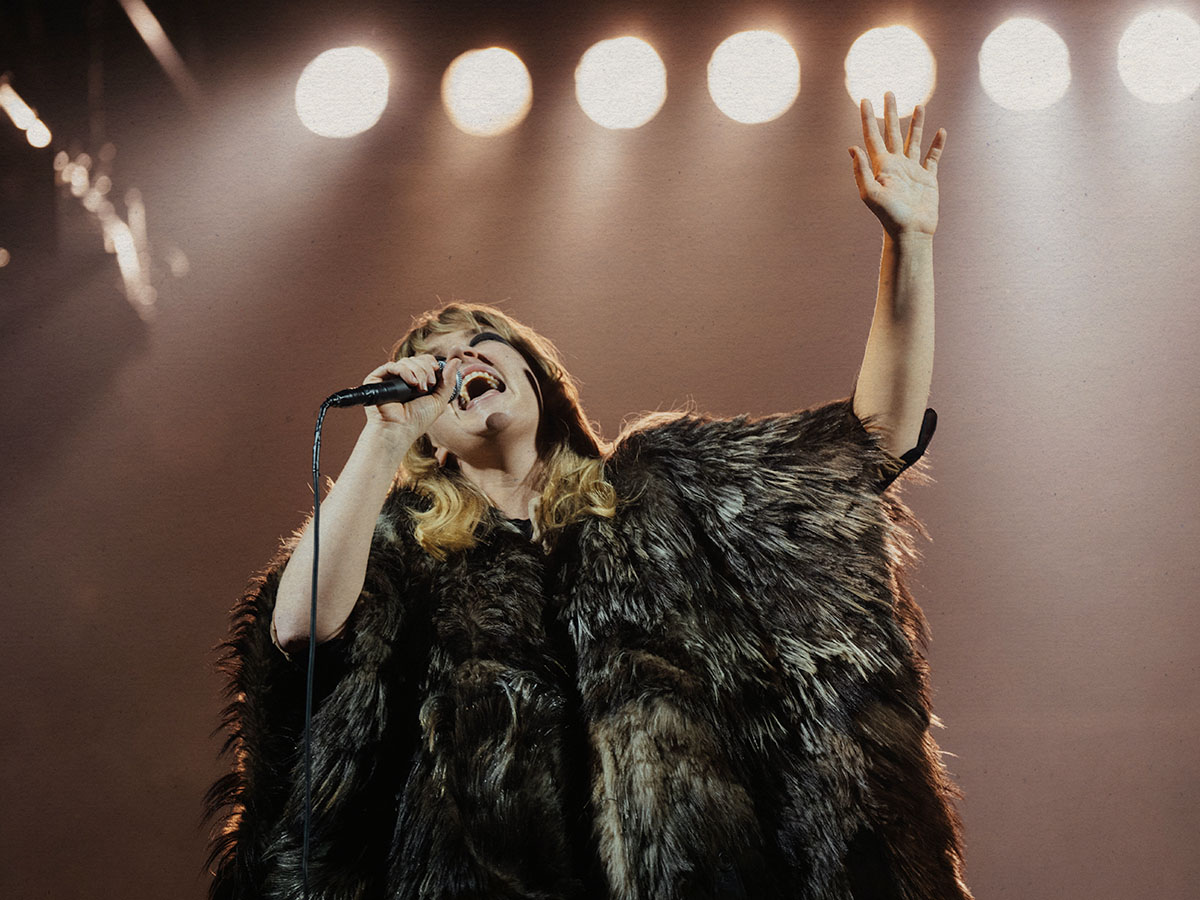
On the face of it, Teeth ‘n’ Smiles is a sure buy-in for the majority of theatre-goers in the British capital; at the helm, Rebecca Taylor, also known by musical moniker Self Esteem, injects a vivacious, voracious vehemence into Maggie Frisby, frontwoman facing the floundering decline of her rock band across a single night in June 1969 at a Cambridge college ball.
The audience is promised raunchy, sultry rock and roll chaos led by a generational voice, whose only other stage performance in Cabaret in the Kit Kat Club was extended due to her eye-watering popularity. However, Hare’s diabolical script and the cloddish ensemble work surrounding her drag Taylor into the depths of a retrograde revival that is, at best, a wince-worthy way to waste a weekday evening and, at worst, downright offensive.
The play begins with the star lumped in a bath somewhere, and the keyboardist filling in for lost time, playing a game of endurance with his bandmates (and the audience) through ostentatiously tedious games, such as naming the “most boring fact you know”. It’s a fitting lens through which to consider the entire production; meaningless statements thrown higgdy-piggldy into a melting pot of buzz words and heavy-handed references, as if Hare thinks that simply naming an idea, like “sadism”, “Jim Morrison”, or “feminism’ equates to meaningful hermeneutic examination.
It doesn’t. Eventually, with nowhere left to go, these references bog down the cast. “You want so much to be hip, but your intelligence keeps shining through,” Frisby tells her lost star-crossed lover, played by Michael Fox, a tortured artist type written so poorly that I felt more for Frisby’s first costume change than I ever did for him. Hare wants so badly for this to be the case for the performance, but it ends up being neither hip nor intelligent, but a third, worse thing: Drivel.
Unfortunately, the failure of this play extends beyond outdated ideals and clunky sequiturs; exoticised fetisisation comes into play, too, after Frisby references the strange memory of a Russian nun imploring her to remember how own potential: “In Russia, the people couldn’t think about the past without crying” Frisby remarks, and other dumbfounding, grandiose remarks that suggest Hare pointied off-chance at a map and filled in the rest with whatever was on the top of his brain.

Frisby is full of such futile phraseology. A bashful medicine student, played by Roman Asde, receives the full brunt of Frisby’s maddening incantations, which she recites triumphantly with a shriek, a slur, and a shiver. Who knows why Asde is on the stage at all?
His tactless character eventually becomes a victim of her predatory tendencies and insatiable need for attention after ingesting acid and being wheeled off-stage to the hospital. More jarring still is the use of dogs to saturate a police raid on their backstage bacchanalia, the plot device that spells fate for Frisby. In wanting to shock, the play leaves the audience cold.
As performances go, we are at least treated to Phil Daniels’ heartfelt, if heavy-handed, depiction of the band’s manager, Saraffian, who titters on aimlessly about his own post-war experiences to round out a feckless field report of an exploitative market. Taylor proves herself a worthy scene-partner to his poise.
Behind the grime of this top-level gauze, the wider ensemble makes the show no better to behold. As if Hare is aware the story is a dud, he makes each character perform a plethora of useless tasks and interject with a comment every ten seconds, so the viewer can at least always be tickled if they aren’t quite beguiled.
Take heroin addict Peyote, played by Jojo Macari, as a key example. If he isn’t yelling about horses, he’s warping his body into strange shapes, or wriggling on the floor with wide eyes as a constant reminder that the “acid dream is over,” and what we’re left with is this nightmare. Worse still, after running off for a blowjob, then a groupie fuck, he returns in a sparkly dress. Must this play really rely on such a cheap, outdated trick to amuse?
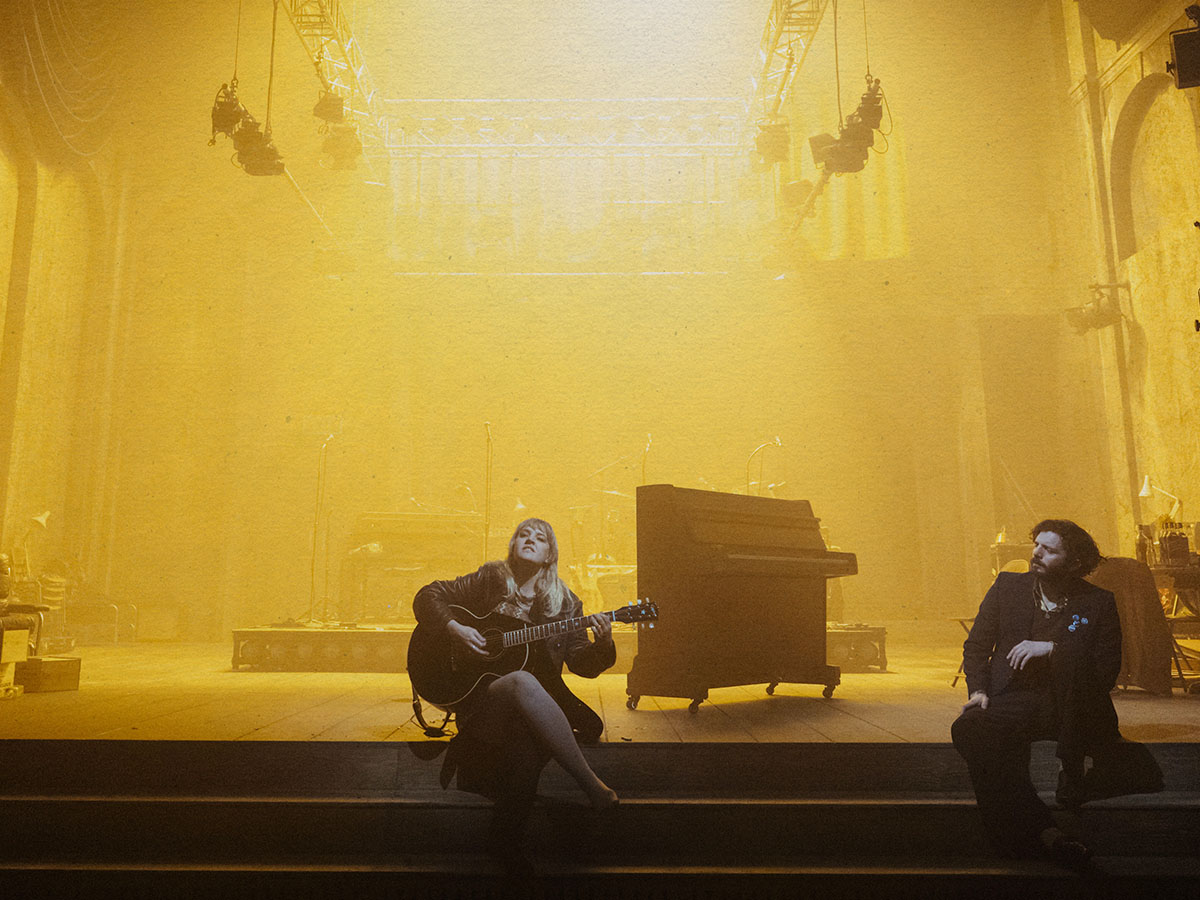
The stage design, at least, is stylistic and chic, sliding through use of a singular platform from backstage bastardisation zone to Cambridge concert hall fit with flashing lights. It’s a shame that the songs, like ‘Don’t Let The Bastards Come Near You’, and ‘Close To Me’, have all the keeness of a limp penis. Taylor’s own acoustic offering, ‘Maggie’s Song’, is a welcome exception to this rule.
Over half a century ago, Helen Mirren, Jack Shepherd and Antony Sher brought this play to life at London’s Royal Court at a time when rock and roll was splintering and the shards looked like gold-dust. Today, the decay isn’t radical, it’s oversaturated and outdated. Despite the name, there’s certainly nothing to smile about here.