


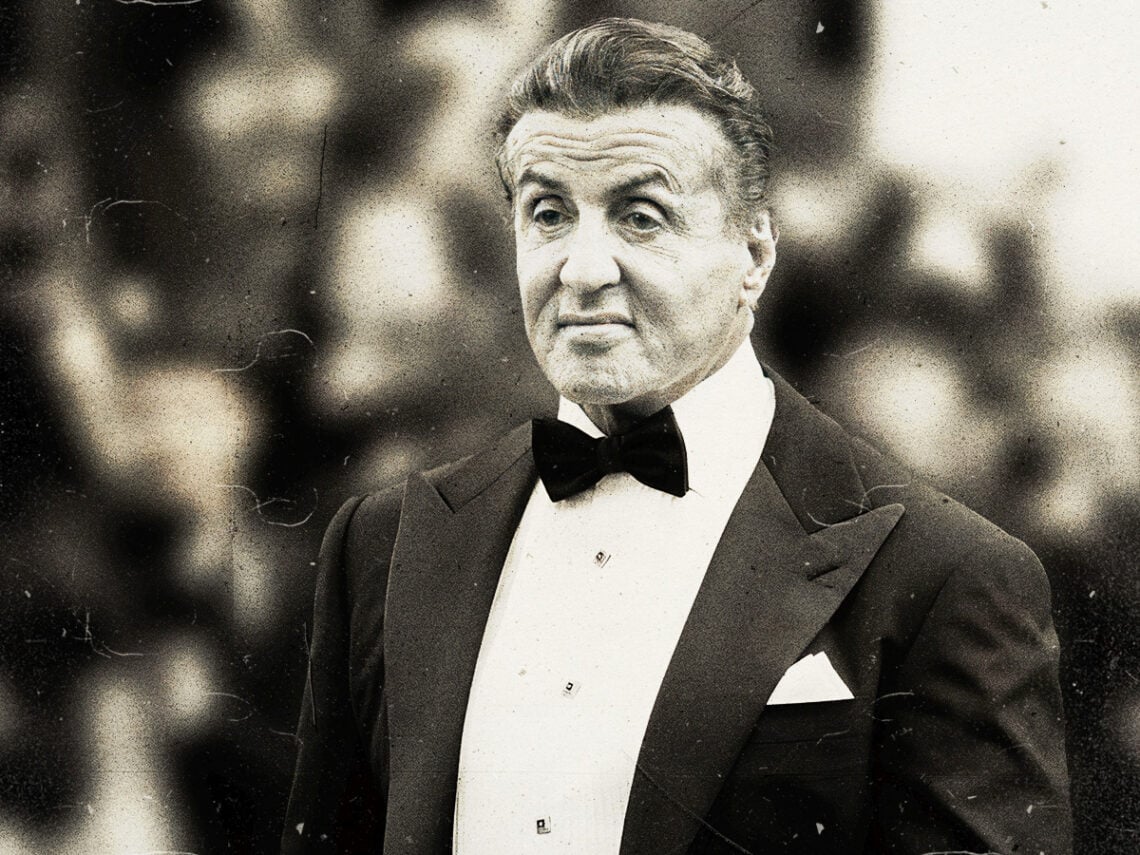
72 hours to be a legend: the script Sylvester Stallone wrote in three days

Everyone loves an underdog, to see somebody succeed who defies all the odds stacked against them, to make something from nothing. When Sylvester Stallone’s Rocky was released in 1976, it quickly became a cult classic for this very reason: a story of resilience, respect and redemption.
Perhaps the film was able to speak to the masses because Stallone himself was struggling to realise his own dreams of working in the film industry, providing authenticity and a heart that can only come from relating to the same challenge of having to prove your worth and earn your place.
Given the notoriety that comes with Stallone’s name and career choices now, it’s hard to imagine who he was before fame. And when it comes to many of the filmmakers and creatives that have shaped our creative landscape, it’s hard to imagine them as anything but that, even when we’ve all heard the classic talk show anecdotes of actors who wait tables and clean cars before they become who they’re destined to be. When Margot Robbie made her titular feature debut in Martin Scorsese’s The Wolf of Wall Street, everyone was amazed by her dazzling star quality, surprised by how quickly and suddenly she had skyrocketed to fame, to which she responded that this wasn’t the case. While her journey might’ve been invisible to us, she had been acting and pursuing her dream for many, many years.
We often forget this when examining the illustrious careers of those in the industry we admire, but this was very much the case with Stallone. On the long road to becoming an actor, Stallone was just as much of an underdog as Rocky, doing just about anything to make ends meet and sustain his creative passions. He worked in the Central Park Zoo cleaning lions’ cages, ushered at a movie theatre and starred in an adult film. The odds were stacked against him, and success wasn’t expected of him. He slowly began picking up small roles but had little success besides his part in The Lords of Flatbush, but not nearly enough to sustain himself, with only $106 in his bank account and his first child on the way.
But one day, after watching the infamous championship boxing match between Chuck Wepner and Muhammad Ali, Stallone had an idea and quickly began writing what we now know as Rocky. Perhaps this mixture of passion, dedication and desperation led to this story’s creation. To be taken by inspiration is a brilliant thing, but for Stallone, it was much more than inspiration – it was a lifeline, an idea loaded with possibility and promise for a better life for himself and his family. And so, after only three days of writing, his first draft was complete. And all that he needed was a chance to share it.
Stallone began the process of optioning the script with Hollywood producers, which was met with trepidation after Stallone explained that he wanted to cast himself (a relatively unknown actor) in the lead role. Rocky’s eventual producer, Irwin Winkler, recalled his first meeting with Stallone and how he kept looking at his watch and wondering how long it would be before he could ask Stallone to leave. Even after the studio agreed to produce the film, they partnered with United Artists, which couldn’t understand the idea of working with unknown talent, pitching Ryan O’Neal and Burt Reynolds for the part. Of course, these suggestions seem completely unfathomable now. But it was this determination and unwavering confidence in his own vision for the project that led to the film we know and love today.
Ultimately, the story of Rocky is a celebration of perseverance and hope, and the idea that any dream can be realised if you hold onto it for long enough. Perhaps we find the story and character arc of the underdog most satisfying because it reminds us of the potential within all of us, and that the biggest success can come from the smallest of beginnings.
