


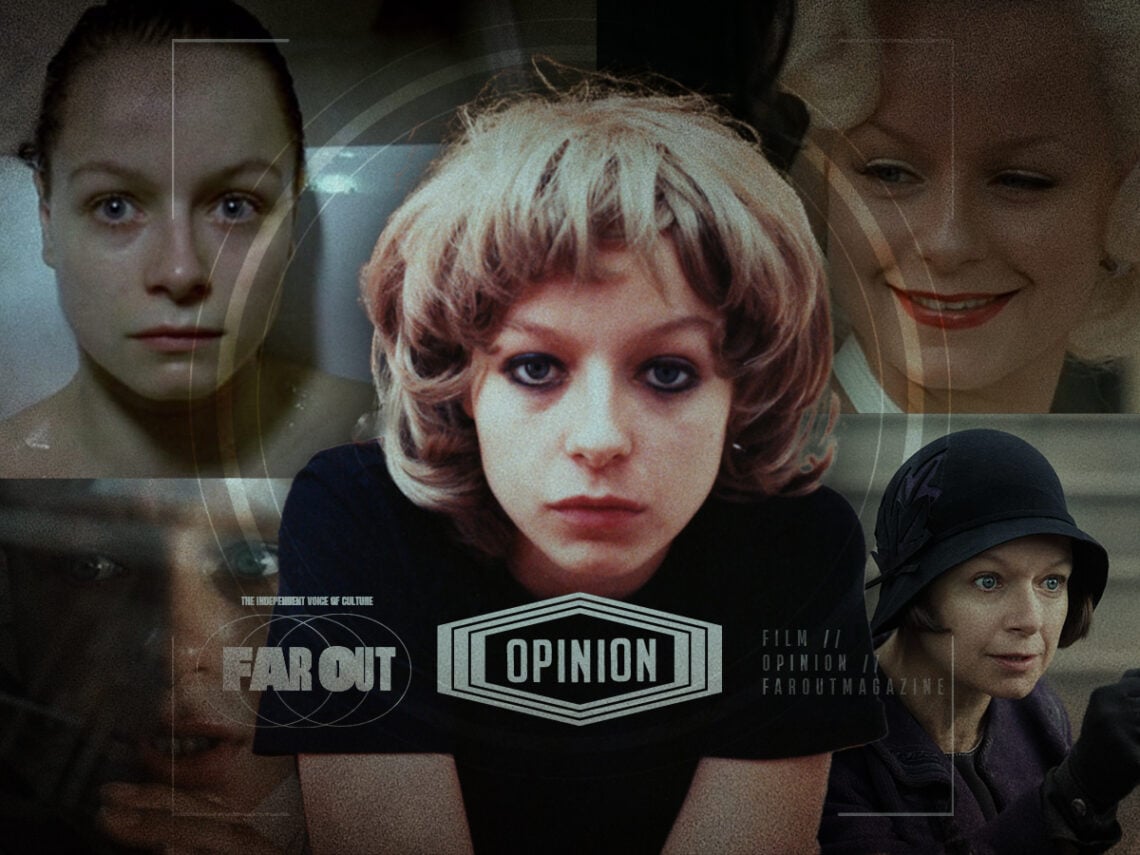
Samantha Morton has always been great

The must-see film of the summer is about one man’s decade-long quest to return home after war, but it’s a female actor who is earning most of the praise. Samantha Morton, who plays the goddess Circe in Christopher Nolan’s adaptation of The Odyssey, is only on screen for ten minutes, but it’s more than enough for her to steal the film from every other member of the blindingly starry cast.
“This was a massive film, and she is someone who comes in and changes the dynamic,” Nolan said of the actor. “In some weird way, the film lived or died over that character. She was the fulcrum.”
Her moment arrives when Odysseus and his men land on a remote island in search of food and supplies. Circe lives there in a crumbling castle, alone except for a menagerie of wild animals. When the crew asks her for help, she turns them into pigs instead. In a monologue dripping with bitterness, Circe condemns men and their appetites, arguing that she has simply transformed them into their true selves.
The plot doesn’t hinge on Circe, but Morton’s performance does crystallise something in the film about the presumptuousness and barbarity of Odysseus and his men, and it becomes one of the most haunting elements of the story. Did Nolan intend for it to be “the fulcrum” of the movie, or did it only take on that significance once Morton had delivered her performance? We may never know, but what is clear is that the director and his team knew exactly what to expect when they cast her.
For more than three decades, Morton has been one of the most electrifying and consistent actors of her generation. Until now, however, she has been the consummate “actor’s actor,” someone who, like Mark Rylance, has abilities that her more famous peers can only marvel at and make way for but who, despite earning two Oscar nominations, has never been a household name. Morton herself has suggested that this is because of her appearance.
“I think I was blessed because I was never seen as beautiful,” she said in 2024, arguing that it allowed her to be a character actor whose career wasn’t contingent on her age or appearance.
This isn’t true, though. Like Tilda Swinton, who can play any age or gender, Morton is a chameleon. In her early work in British independent movies like Under the Skin and Morvern Callar, she could credibly play working-class women who you wouldn’t notice if you passed them on the street, but who, on screen, are absolutely magnetic. In later movies and on the red carpet, though, she can be just as glamorous and luminous as any movie star.
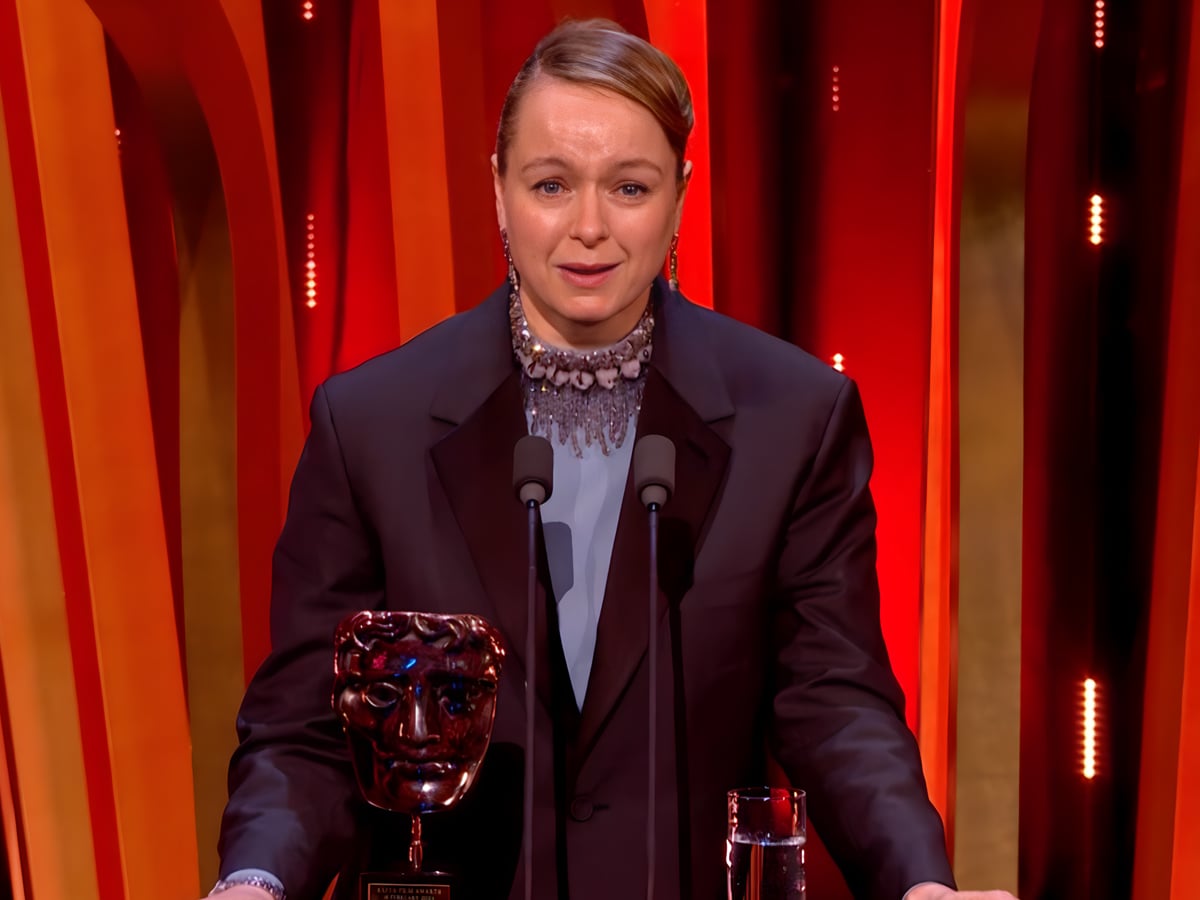
The reason Morton has never been a mainstream success is not to do with her appearance but with her skill and her choices. Movie stars are almost always themselves. Despite turning in one of the best performances of his career, Matt Damon is still playing a version of his usual on-screen persona in The Odyssey. So are Anne Hathaway and Charlize Theron. Morton, on the other hand, is never the same person twice. She gives performances that are so immersive for the audience that you leave the cinema wanting to know more about the character, not the actor.
One of the best early examples of her work is the 1997 film Under the Skin. Written and directed by Carine Adler, it follows two sisters, Iris (Morton) and Rose (Claire Rushbrook), who are dealing with their mother’s sudden death. While Rose is happily married and has a steady career, Iris is a live-wire, barely holding down a retail job and souring on her relationship with her long-term boyfriend. Following her mother’s death, she becomes unmoored, walking out on her job and seeking intimacy with a string of unscrupulous men.
It’s a role that could be unfathomable to the point of opacity. In another actor’s hands, Iris could even seem inconsistent or paradoxical. But Morton makes her a complex, mercurial, and wholly human character. In this and nearly every other performance, the actor doesn’t try to externalise every thought or feeling of her character; she simply imbues the script with humanity until she becomes absolutely believable. She never seems to be acting. Her characters simply exist as people, while everyone else on screen seems to be an actor.
There is one scene in Under the Skin in which the camera lingers on Iris’s face as she watches a church choir. She doesn’t start to cry or even change her expression, but there is something flitting across her face that tells a story unto itself. Morton’s performance in this movie is remarkably restrained and without vanity. For a character who behaves so erratically and lands at such a subterranean rock bottom, the complete lack of melodrama in her portrayal is so much harder than she makes it look.
It’s something that she has brought again and again to her work, taking characters who could easily be incongruous or stereotypical and turning them into the emotional fulcrums of their respective movies. It isn’t just about the relative merits of the script or director, either. Morton has done this in everything from big-budget blockbusters like Steven Spielberg’s Minority Report, to quirky indies like Harmony Korine’s Mister Lonely, in which she played a Marilyn Monroe impersonator. Over and over, Morton has demonstrated that she is the singular factor that can make a film work.
With The Odyssey, she is being introduced to a whole new audience, and despite her stellar career, she’s said that the experience was transformative. “It felt like a rebirth,” she recently told Variety. “I got to do what I do best for the best. To get the role felt like a second chance to be seen by the wider world.” If all the movie does is turn a new swathe of cinema-goers into Samantha Morton stans, it will have more than justified its $250 budget. Luckily for her new fans, there is an entire back catalogue of astonishing performances to get lost in.
