


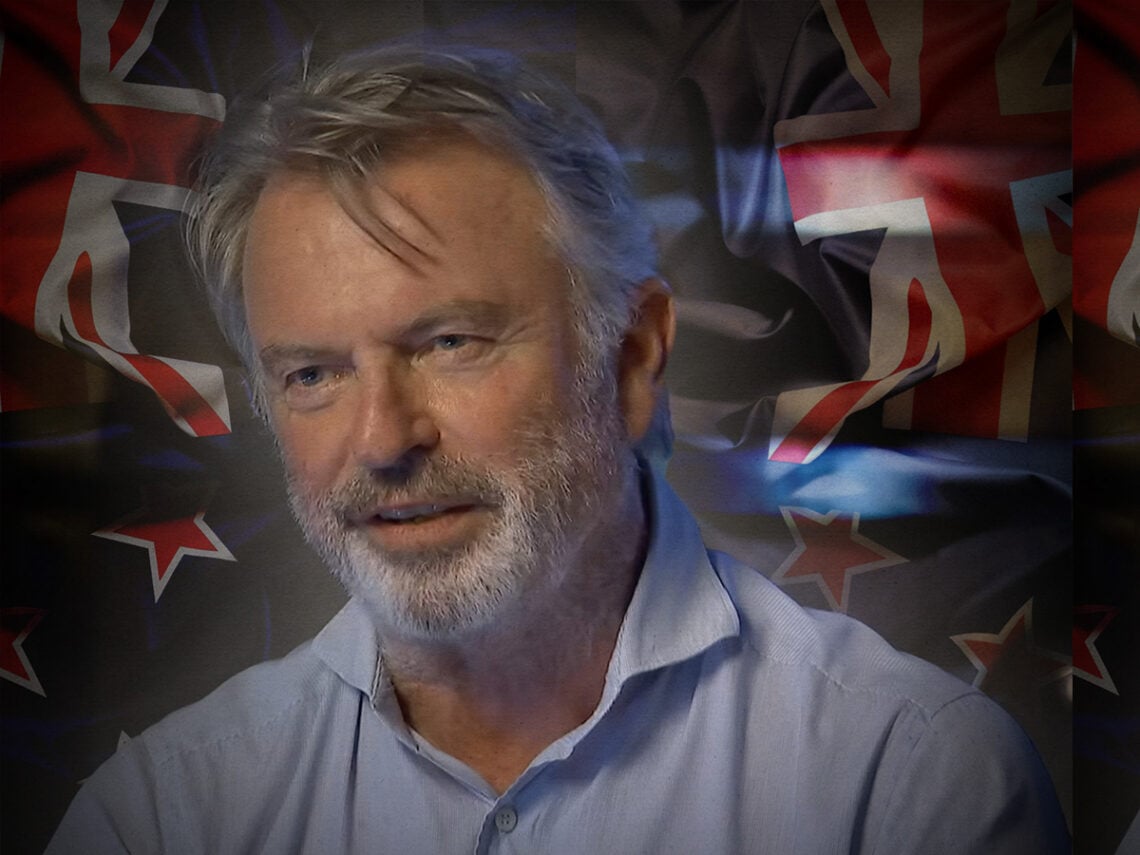
The band that made Sam Neill’s “heart swell” with New Zealand pride

Sam Neill was wonderfully skilled at playing surly, curmudgeonly characters, from Alan Grant in Jurassic Park to Uncle Hec in Hunt for the Wilderpeople and Major Campbell in Peaky Blinders. He even managed to pull off the vibe of the literal antichrist in Omen III: The Final Conflict.
Neill’s recent death at the age of 78, however, has helped remind a lot of people of just what an absolute teddy bear he was in real life. In a time when it seems like the vast majority of celebrity deaths include a minor reckoning with the various improprieties of the star’s past, Neill’s passing has been met with a massive wave of stories about his kindness and decency, both as a professional on film sets and as a friend.
A lot of those personal tributes have come from his fellow New Zealanders, from all walks of life, including former Prime Minister Jacinda Ardern, who called Neill “a thoughtful, curious, and decent person,” rugby legend and friend Justin Marshall, who described him as “a genuine, unbelievably nice guy,” and actor Karl Urban, who credited Sam as “as an inspiration for many who followed in his trailblazing footsteps; a beautiful man, a national treasure who gave so much to New Zealand and to the world.”
The Kiwi music scene was deeply connected to Sam Neill, as well, and he regularly and proudly served as an ambassador for many of the bands from his adopted homeland, including the cult-hero indie rock groups of Flying Nun Records and “the Dunedin Sound” that had developed in the town he’d grown up in. Back in 2001, when Neill managed to convince the producers of Jurassic Park III to host the movie’s Australasian premiere at Dunedin Town Hall, he hung around for the after-party, introducing the live band for the evening (The Chills), and telling the audience, “How cool is it to come from a city that produced The Clean and The Chills?”
Neill’s personal favourite Kiwi musical exports, however, were the Finn brothers, Neil and Tim, and their two chart-topping bands, Split Enz and Crowded House.

Over the decades, Sam became close friends with the Finns, and Tim Finn was among those to pay tribute to the actor after his death, posting a photo of the two of them together and writing simply, “Thank you, Sam, for being such a true friend.”
Over forty years ago, long before Sam Neill was acting in Spielberg films, he was an on-the-rise actor, newly arrived in London after a decade working mostly in Australia and New Zealand. It was 1980, and Neill’s upcoming starring role in the aforementioned Omen III had finally put him on secure financial footing in his early 30s.
“It was summer, for the first time in my life I had money in the bank, I had work and friends, and I was, unbelievably, in the movies,” Neill recalled in an essay he wrote for Grant Smithies’ 2007 book Soundtrack: 118 Great New Zealand Albums. “I couldn’t believe my luck. I was probably insufferable, but God, it was fun!”
Neill had reached out to Smithies when he heard about the book project and offered to contribute his thoughts on one specific Kiwi classic, free of charge. It was the 1980 Split Enz album True Colours, a record that hit number one in both New Zealand and Australia, and nudged its way into the Top 40 in both the US and UK, powered by the insanely catchy hit single ‘I Got You’.
“Some records, the best ones, are time machines,” Neill wrote, “portals to another place and another life. True Colours is that for me.”
Sam had been tipped off to the record by a friend from back home, but after acquiring the cassette, he didn’t get around to listening to it for a couple weeks. Split Enz were already famous in New Zealand, so much so that Neill had seen them live a couple years earlier and considered himself a marginal fan. What he didn’t yet realise is that True Colours represented a major tonal shift for the band, as younger brother Neil Finn was beginning to contribute more creatively to the songs, and the resulting sound was getting bigger, poppier, more brash, more danceable.
As it turns out, that was the exact sort of sound a suddenly “flush” 1980s version of Sam Neill was looking for.
“There was other stuff in the glove box,” he recalled. “I dunno – Eurythmics, Joy Division, Talking Heads, Police, The Cars – fun pop, and good loud, but somehow none of it meant as much or worked as well as Split Enz, and this record.
“I didn’t need music that was complex or arch or brainy,” he added. “I needed something that was full throttle. I needed to dance. I needed a record that felt like I did.”
When Neill put the True Colours tape in his car stereo for the first time, he literally had to pull over on Edgware Road and collect himself.
“What was this? Oh my God, it was wild and joyful, rip-shit-or-bust rock. This was it! More than that, it was ours; my wee New Zealand heart swelled with a little reflected pride, and beat at 180 bpm. It stayed that way, I think, all that long summer and into the next.”
For Split Enz themselves, True Colours represented a similar sort of joyous breakthrough. It was, in some respects, the culmination of almost a decade spent wandering through the musical wilderness, surviving countless line-up changes, financial disasters, and repeated near-break-ups.
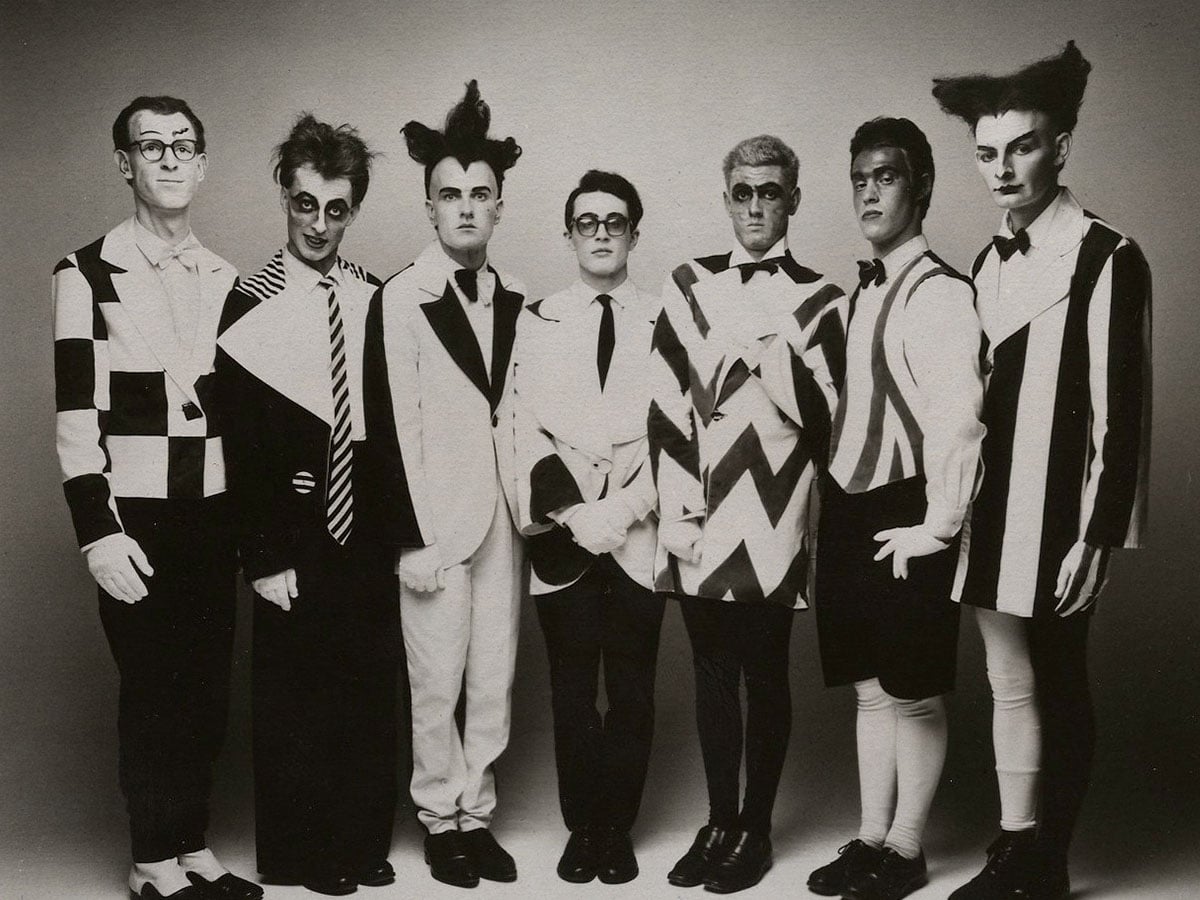
Founded in Auckland in the early 1970s by Tim Finn and Phil Judd, Split Enz had initially made their name as one of the most visually eccentric bands anywhere in the Commonwealth. Their theatrical costumes, surreal lyrics, and art-rock influences owed as much to Roxy Music and British progressive rock as they did to straightforward pop or new wave. Early albums like Mental Notes earned passionate critical support, particularly in Australia, but widespread commercial success remained elusive.
By the end of the 1970s, everything had changed. Phil Judd had departed, Tim Finn had become the undisputed frontman, and, perhaps most importantly, his younger brother Neil had come aboard; first as a guitar-playing necessity, but soon as an unexpected genius of the melodic pop hook.
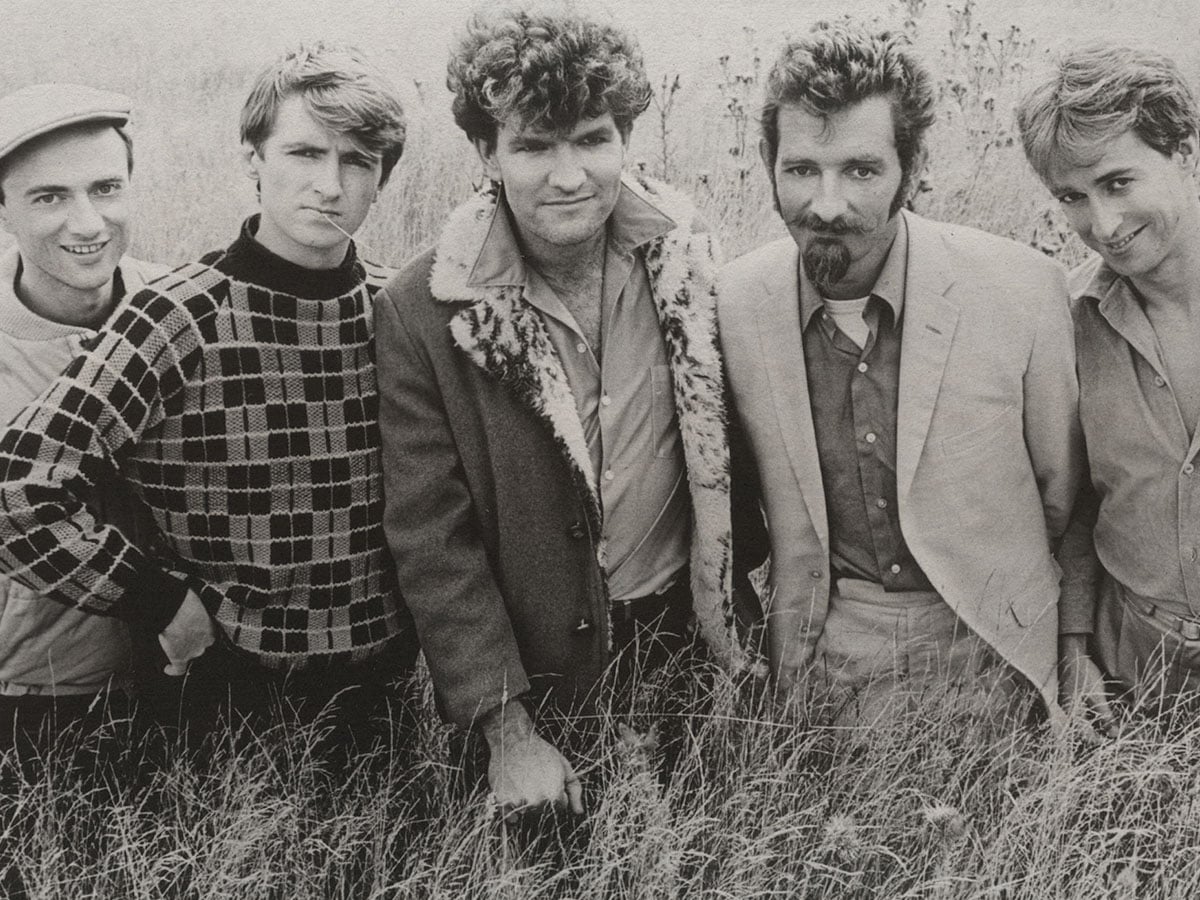
“[True Colours] was a make-or-break record in a way,” Tim Finn told Double J in 2020, on the 40th anniversary of the album. “We were able to survive, and we were pulling good houses. We were playing a lot of gigs, but we really, really wanted to get on the radio and fulfil that kind of destiny of reaching a wider audience. It felt like we had the momentum at last, and all the pieces [in place].”
Recorded with English producer David Tickle, True Colours might have partially resonated with Sam Neill because, like Sam himself, the members of Split Enz had relocated to the UK for a spell, and had written a lot of songs there, inspired by the energy in London in the late ‘70s. The resulting record, which was ultimately recorded in Australia, retained enough of Split Enz’s quirky personality to remain unmistakably theirs, but it also embraced a cleaner, punchier sound built around those hooks.
Gone were many of the labyrinthine arrangements that had defined their earlier work. In their place came songs like ‘I Got You’, ‘Poor Boy’, ‘Missing Person’, and the shockingly sincere ballad ‘I Hope I Never’ – tracks that still possessed an off-kilter intelligence, but suggested more of a warmth and human vulnerability that betrayed the silly costumes. This new dynamic would carry on into their next few records, and later, the sound of Neil Finn’s next band, Crowded House.
“Like everything that Split Enz did,” Sam Neill wrote, “[True Colours] is wracked with contradiction. Above all, I love its recklessness – it is far too fast for safety. But for all the high-octane bravado, it is as fearful as a novel by Kafka. ‘Shark Attack’ is an extraordinary screaming terror of a certain kind of predatory female while at the same time has a hint of a thrilled masochism. ‘I Hope I Never’ may be the most beautiful love song ever from our shores, but turns out not to be about love at all, or even a lover, but about a former band member [Phil Judd]. Oh yes, there was angst in the ranks of this band!”
There might not be a better way to reconnect with the life force of someone we’ve lost than to revisit the way they talked about something they loved. Reading Sam Neill’s essay on True Colours certainly provides this. Despite becoming pals with the Finns years later, his relationship with that 1980 record never really changed.
“I play [the album] still,” he wrote in 2006, at the age of 58, “and every time I know that I, that previous person, was right then. It is a great album; a glorious headlong ride with a band at the height of its powers, fuelled by testosterone and ambition and vivid talent.”
Concluding, “Recently, I saw the New Zealand Ballet, of all things, choreograph many of these songs at the Regent Theatre in Dunedin. It was sublime: funny, touching, sexy, innocent, knowing and yes, reckless. It was one of the great nights of my life, but I watched it through tears.”
