


Shock rock surrealism: When Salvador Dalí turned Alice Cooper’s brain into a work of art

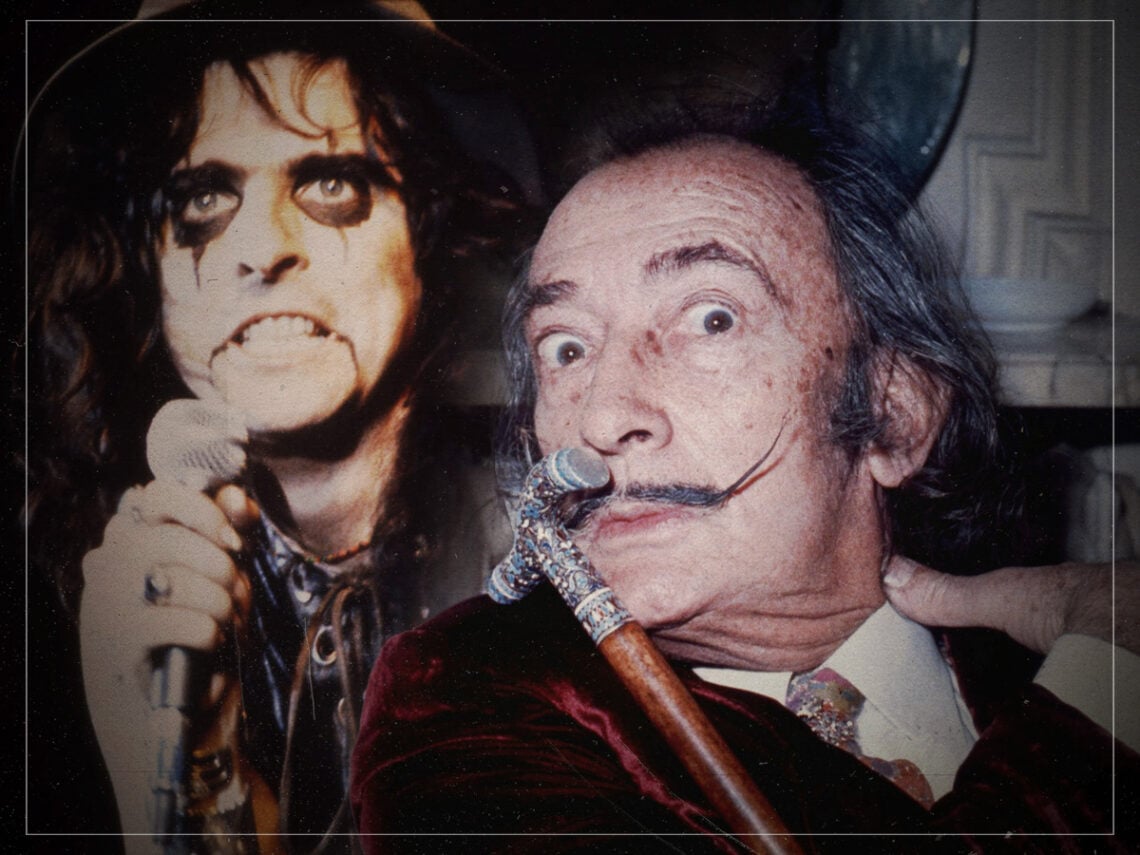
During the peaks of his shock rock fame, Alice Cooper found himself the bizarre, living subject to one of Salvador Dalí’s surrealist imaginings.
Rubbing shoulders with the stars of the music industry and the Hollywood elites was nothing new to Dalí, much to the chagrin of the arts community. His skills were without doubt. Defining the surrealist movement with 1931’s The Persistence of Memory, his unforgettable imagery and stirring dreamscapes brought respect in his field, but the flamboyant excesses of his celebrity peacocking rubbed his peers the wrong way.
Legend has it that fellow artistic radical Pablo Picasso personally implored him to stop playing the clown and focus on his “exceptional gifts as a painter”.
However sincere, Dalí always maintained that artistry rivalling anything from the aloof pedestals of academia or historic stature could be found among the pop culture, once naming Walt Disney, Cecil B DeMille, and Harpo Marx as the “three great surrealists”. Naturally, Cooper’s hard rock vaudeville would pique Dalí’s interest. Live snakes, guillotine props, and the band’s smeared-mascara glam would radiate their own surrealist danger while Billion Dollar Babies was topping the charts on both sides of the Atlantic.
The two would cross paths in the spring of 1973. Meeting at New York’s St Regis Hotel, Dalí waltzed into the room in full eccentric theatre: a giraffe-skin vest proudly sported along with gold Aladdin shoes and purple socks, surrounded by associates decked out in pink chiffon.
Picasso wouldn’t have been impressed, but Cooper, who was a huge fan, dug the ostentation and struck up a friendship with Dalí, eventually leading to the unlikely proposal of his living, breathing feature in the Spanish artist’s next creative venture.
It was an ambitious project for the early 1970s. The idea was to dress Cooper in a million dollars’ worth of Harry Winston diamonds, sit cross-legged on a rotating pedestal while holding a model of the Venus de Milo like a microphone and be captured via hologram technology. Behind the hologram was a chocolate éclair atop a plaster brain and all crawling with live ants, a representation of the shock rocker’s grey matter, as Dalí saw it at least.

Was it just more clowning? First Cylindric Chromo-Hologram Portrait of Alice Cooper’s Brain was certainly a pioneering vision and flashed imagery that matched the surrealist conjurings he’d found fame with decades earlier, as well as pioneering the emerging multimedia convergence of the arts and tech. The original piece is on display at Figueres’ Dalí Theatre-Museum with a replica at Florida’s Salvador Dalí Museum, and Cooper tried to keep the brain as a keepsake before the veteran artist shot down the idea: “Of course not, it’s worth millions!”
What was it about Cooper that Dalí found so creatively appealing? It could have been shameless celebrity ingratiation, or a surface fascination with the band’s shock rock glam, but perhaps the master surrealist saw in the ‘School’s Out’ singer another example of a character placed out into the pop landscape like a piece of art in itself, Cooper no less a creation than Dalí’s Pierrot antics performed on the world’s stage.
