


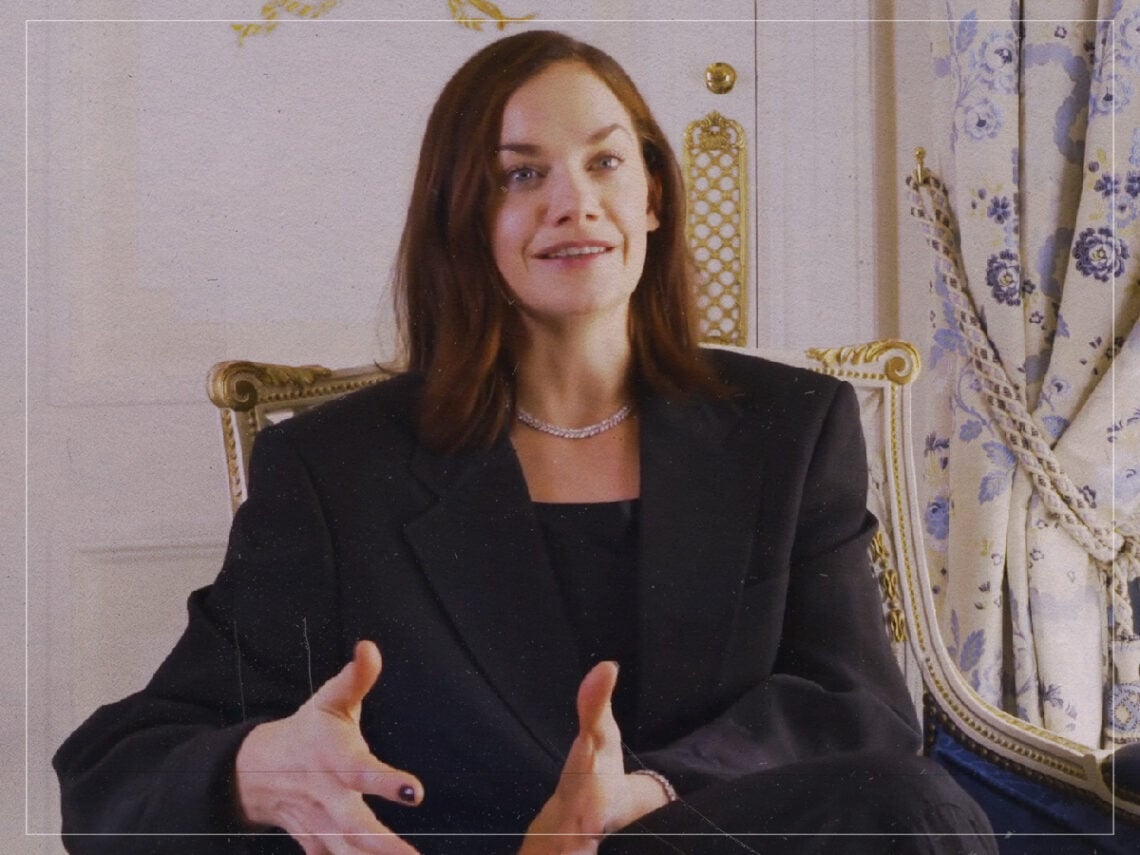
Ruth Wilson’s all-time favourite TV show: “It was so weird and wonderful”

Ruth Wilson has been in some of the most groundbreaking television shows of the past few decades, but she turns to the great David Lynch for opening her eyes to the potential of the medium.
Although there used to be a serious difference in prestige and quality between film and television, the two formats are now more fungible than ever before, where it’s not uncommon for great actors and filmmakers to choose to work on high-end television productions, as they often provide more opportunities to tell mature and complex stories than mainstream films.
Hence, while Wilson may have had a few memorable performances in films like Saving Mt Banks and See How They Run, she only attained the reputation of being a generational talent thanks to her efforts on the small screen.
Her appearance in the BBC’s four-part adaptation of Jane Eyre offered far more nuance than any previous cinematic interpretations of the classic text, Luther gave her the opportunity to play the ultimate femme fatale alongside the brilliant titular detective played by Idris Elba, and Showtime’s underrated drama The Affair was also praised for a deeper exploration of psychological romance than what is often seen on screen, in both film and television.
Even after appearing in shows that were highly influential upon the development of the television landscape, she paid respect to the one that kicked off this renaissance, and in an interview with Rotten Tomatoes, said that Twin Peaks was her all-time favourite show. “I watched that as a kid, and I just thought it was so weird and wonderful and scary,” Wilson said, “I just didn’t get it, but I loved the music. It was so, sort of, haunting”.
The actor’s willingness to admit that she didn’t totally understand Twin Peaks when she first watched it isn’t because of how young she was; David Lynch’s groundbreaking series baffled many viewers when it first debuted, as it didn’t follow the typical procedural formula that most crime shows did at the time. It introduced the idea of a serialised mystery that grew more nuanced and complex on a weekly basis, a concept that would later be used in everything from Lost to Severance.
Wilson’s remark that Twin Peaks was “haunting” is also a sign that she understood the deeper intentionality that Lynch was going for, and although the show has been analysed to death by those seeking to understand it on a narrative level, it was often at its most successful when dealing with themes of psychological horror related to trauma and abuse in a liminal space.
Although there was a limit to how much graphic content Twin Peaks could show on network television during the dawn of the 1990s, Lynch was able to include some horrific imagery, particularly in the shocking season two finale, ‘Beyond Life and Death’, which ended on one of the biggest cliffhangers in television history. Many of the under-the-surface themes that were only hinted at in the original series were expanded upon in the prequel film Twin Peaks: Fire Walk With Me, which he directed a year after the show’s cancellation.
Lynch’s tragic death earlier this year means that Wilson sadly never had the chance to work with him; however, she is currently appearing on the acclaimed Apple TV+ mystery show Down Cemetery Road, which has been praised as a spiritual successor to Twin Peaks because of its sprawling cast of characters and hallucinatory vibes.
