


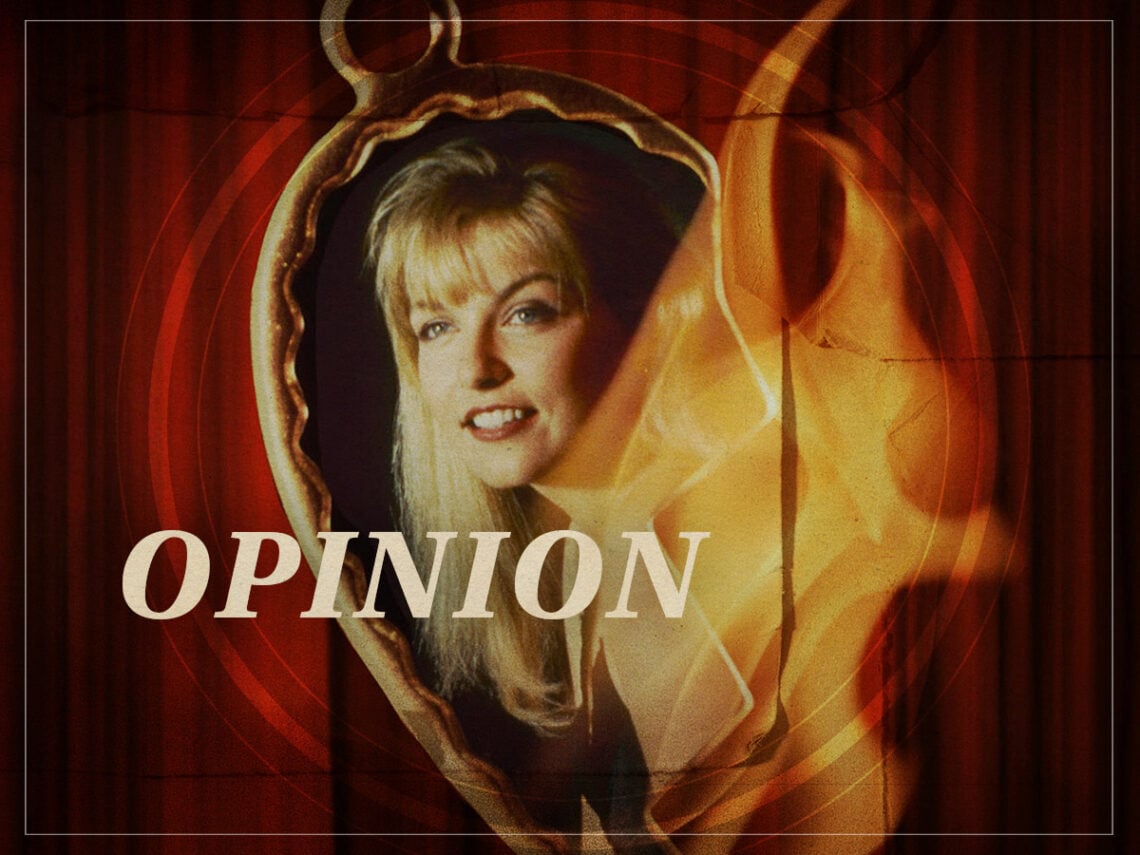
Hear Me Out: ‘Twin Peaks: Fire Walk with Me’ is David Lynch’s most devastating movie

At the heart of every David Lynch production is a profound understanding of what it means to suffer. Pain and destruction, the loss of innocence, and exposure to life’s darkest elements are common themes within the late filmmaker’s work, and Twin Peaks: Fire Walk with Me remains his most emotionally devastating movie.
A fair few of Lynch’s movies could be contenders for the title, like the heartwrenching The Elephant Man or the nightmarish Inland Empire, but it’s Fire Walk with Me that leaves you gasping for breath and wanting to let out a great big, ugly sob. The level of human depravity seen in the film is beyond comprehension, but the saddest part is that we know it to be much closer to reality than we want to believe.
The movie serves as a prequel to Twin Peaks, the series co-created by Lynch and Mark Frost. The show changed television with its subversive take on classic soap operas and murder mystery shows, with Lynch and Frost uncovering an idyllic-looking town full of dirty secrets. In the second season, we discover that Leland, the father of high-schooler Laura Palmer, was responsible for her death.
Having repeatedly raped her from a young age while under the influence of a malevolent spirit named BOB, Laura turned to drugs and prostitution as a means of escape. When it’s revealed that Leland is BOB’s host, we’re confronted with the grim reality of paedophilic incestual abuse. How could anyone even treat their child in such a way? “Maybe that’s all BOB is: the evil that men do, maybe it doesn’t matter what we call it,” says FBI Agent Albert Rosenfield in the episode ‘Arbitrary Law’.
Fire Walk with Me was released in 1992 to mixed reviews, with critics believing Lynch had gone too far in his depiction of violence and depravity. Even Quentin Tarantino had something rather harsh to say: “David Lynch had disappeared so far up his own ass that I have no desire to see another David Lynch movie until I hear something different.” Yet, years after its release, viewers started to come around to an initially misunderstood masterpiece about the darkness lurking behind floral curtains and fine china, where suburban stability is merely a facade.

On the surface, Laura Palmer is a symbol of popularity and perfection – the blonde homecoming queen fawned over my multiple boys. Yet, Lynch shows the sad reality of her life in Fire Walk with Me, charting the week in which she realises that her father is actually her rapist, finds escape in drugs and sex with older men, witnesses her boyfriend kill a man, and eventually reaches her tragic end.
Lynch clearly loves Laura more than any of his creations. She is a complex figure – we see her at once as the typical teenager making bad decisions and the scared child, unable to process the abuse she has faced since she was 12 and coming to terms with the fact that “the angels wouldn’t help you, because they’ve all gone away.” As Lynch gives autonomy to Laura in a way that she was unable to have in the series, which opens with the discovery of her body, we see a careful portrait of a girl who just wants to be free from pain.
Sheryl Lee gives an incredible performance as Laura, allowing us to experience a range of emotions, from confusion and fear to excitement and euphoria. Most affecting is her ability to appear truly frightened; her scared face symbolises everything wrong in this dark and unforgiving world. Paired with Angelo Badalamenti’s terrific and often moving score, Fire Walk with Me presents a story that isn’t easy to digest but one that remains profound and unforgettable.
The most devastating moment is, unsurprisingly, Laura’s death scene, in which Leland viciously attacks his daughter, sexually abusing her as she screams before brutally killing her. The image of Leland grinning maniacally as he holds Laura and Ronette in the dark, their screaming faces illuminated by torch lights, is truly horrific, but Lynch intercuts the sequences of harrowing abuse with an angel coming to comfort Laura, the sound drowning out as she sees a symbol of her pain coming to an end.
The music used near the end of the sequence, intense and choral, perfectly conveys the overwhelming emotion of the scene, and it’s hard not to feel incredibly disturbed while watching it play out. When we then see Laura in the Black Lodge, greeted by another angel, she is laughing and crying simultaneously, and it’s a beautiful and tragic image at once.
As Fire Walk with Me ends, you’re left with the visceral feeling of wanting to cry or be sick or let out a weird sigh of stress and upset. Lynch’s film is hard to sit through, but it’s one of his most accomplished works – communicating the evil that can be found in the places we deem safe, the kind that destroys lives and leaves you shaken.
