


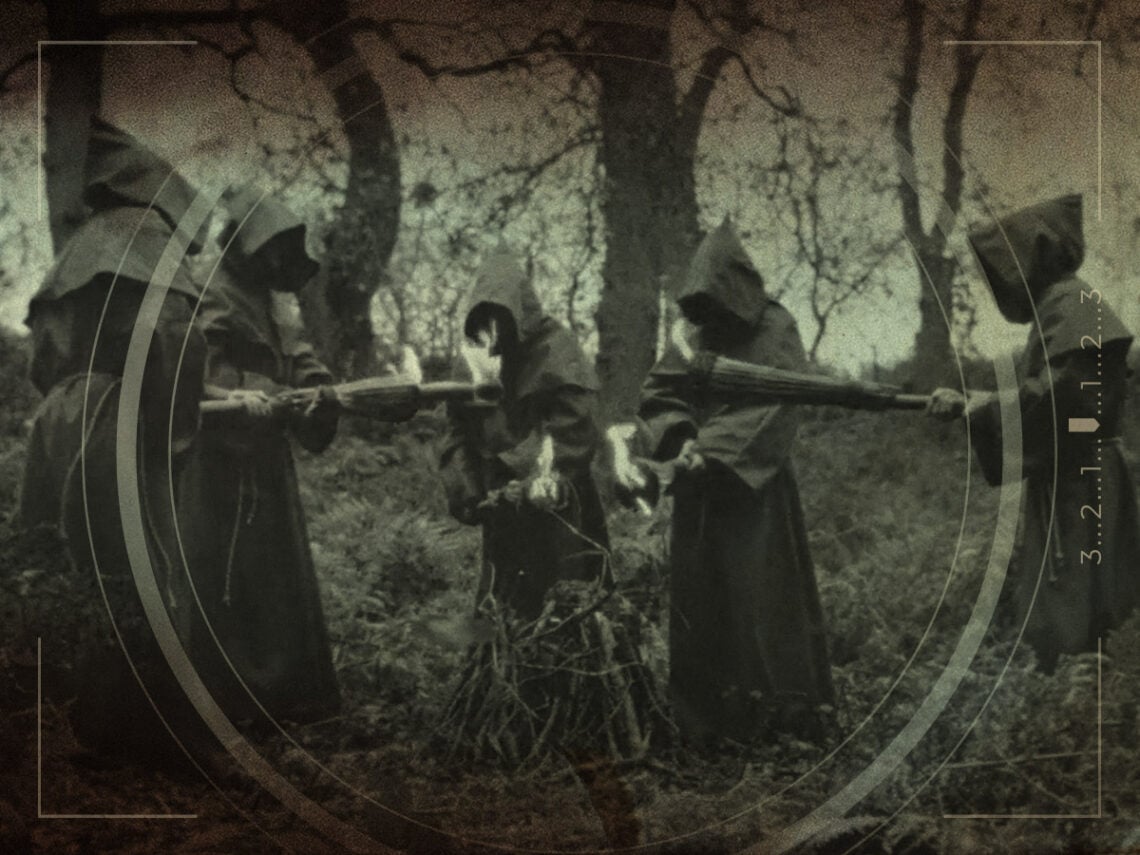
Rupert Russell on how Wicca inadvertently gave birth to the Satanic Panic: “Transformed in the American context”

Rupert Russell recently spoke with Far Out Magazine about his documentary The Last Sacrifice. That excellent film analyses the connection between the real-life murder that inspired the classic British horror movie The Wicker Man and the broader world of folk horror movies, delving into how the murder informed many of the tropes audiences have come to expect from the genre. However, because the documentary also touches on wider elements of British society in the 1960s and 1970s, including the embrace of Wicca as a religion, it brought up several compelling threads that couldn’t fit neatly into the documentary.
The most intriguing threads were the connections Russell made between the British Wicca movement and the Satanic Panic that plagued the US in the 1980s – a cultural exploration that he’d also love to turn into a film. “We’re trying to make a documentary at the moment about the Satanic Panic,” Russell revealed, before admitting that it was proving difficult to mount.
“It’ll probably never happen because I’m having difficulty with access to the people that I want to talk to, but that’s another conversation,” he confessed. Regardless of whether or not he gets to turn his theories into a documentary, though, Russell smiled, “I’ve done a lot of research on it, and I think that the two are connected.”
Russell believes that the modern pagan religion, popularised by retired civil servant Gerald Gardner in Britain in 1954, is integral to explaining the 12,000 bogus accusations of Satanic ritual abuse that tormented a morally panicked US in the ’80s. Naturally, though, this had to involve a perversion of the core teachings and beliefs of Wicca, which is very much not about worshipping Satan in any way.
Russell explained that Wicca was fairly niche for several years, but when it was embraced by “the counter-culture in the ’60s,” it gained a huge amount of popularity. This brought more players into the space, including Alex Sanders, an occultist and Wiccan high priest who was initiated into Gardnerian Witchcraft before breaking off to form his own coven. “There’s a competition to kind of succeed Gardner,” Russell explained. “A power struggle. It was all quite earnest in the sense that these were people who genuinely believed in paganism and a witchcraft religion.”
However, Russell believes that the American exploration of occultism was nowhere near as earnest. “I think what you had in the States was something slightly different,” he said. He didn’t feel that the Church of Satan founder Anton LaVey, a San Franciscan paranormal researcher and performer who rose to fame in the ’60s, was in it for the same reasons as the British practitioners of Wicca. “I feel that was much more opportunistic,” Russell argued. “That was much more of a circus act.”
In the 1960s and ’70s, though, many Americans struggled to see LaVey’s schtick as an act, and a real fear of Satan worshippers began to develop in society. Counter-cultural religions like the Church of Satan were viewed as genuinely dangerous to the moral fabric of the country, and at the same time, movies like Rosemary’s Baby, The Exorcist, and The Omen brought the Devil into the mainstream. Add to that the 1969 Tate-LaBianca murders committed by the Manson Family, a cult that had ties to Satanism, and it was a perfect cultural storm for a moral panic.
“The cross-pollination is fascinating,” Russell added. “So, what started off as Wicca in Britain in the ’60s and ’70s, by the time it gets to America via the hippie movement and the counter-culture, it gets transformed in the American context. It gets transformed into lots of different things.” He concluded, “It’s fascinating how it comes from quite, as I said, a sincere place of a witchcraft religion, then merges with American social movements in the 1980s.”
