


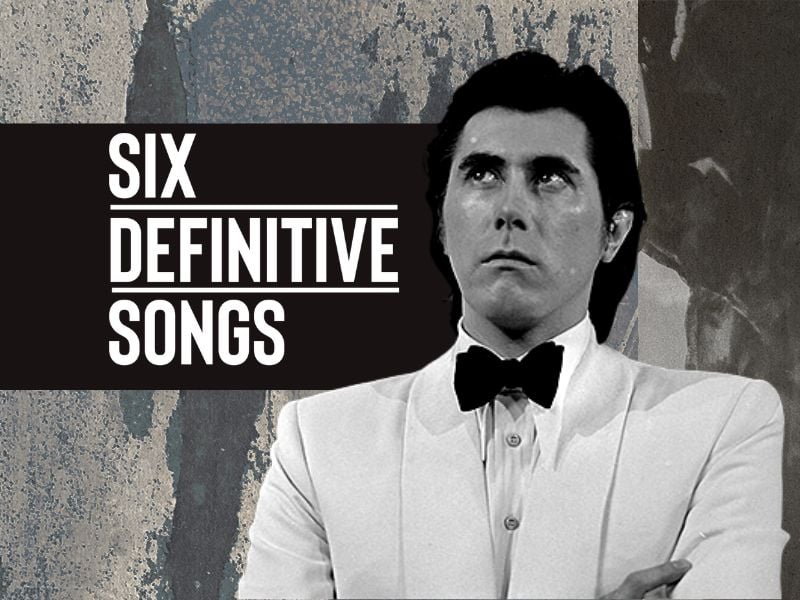
Six Definitive Songs: The ultimate beginner’s guide to Roxy Music

Throughout the 1970s and early 1980s, no band was a better example of the fantastically ostentatious and outrageous genre of art rock than Roxy Music. Featuring the crooning style of the lead singer Bryan Ferry, the razor-edge lead guitar of Phil Manzanera, and the electronic treatments of a young Brian Eno, Roxy Music were more than just ahead of the curve during their initial run: they helped create the curve for which all other acts attempted to beat.
The problem was that no other band could match the potent mix of 1950s traditional pop vocals, 1960s psychedelia and uniquely 1970s glam rock that Roxy Music spearheaded. Both refined and flamboyant, Roxy Music proved that style could come before substance without having to sacrifice either. Even when the colourful touches became the centrepiece of their material, Roxy Music were never weird for weirdness’ sake — everything had its place, and the members worked hard to make sure the final product was as perfect as could be.
Inevitably, that led to tension between the band’s early creative forces, Ferry and Eno. As Eno attempted to assert more control over the band’s music, Ferry solidified his role as the band’s leader and took over, causing Eno to find his own musical path outside the band. With Ferry now unchallenged as the captain of the Roxy Music ship, he steered the band towards a sleeker and less experimental pop sound.
But Roxy Music never lost their unique edge, even as their songs became more and more acceptable to mainstream audiences. Ferry’s singular bray, combined with Manzanera’s ear-catching guitar, Paul Thompson’s rock-solid thump behind the drums, and Andy MacKay’s gonzo touches on everything from soprano saxophone to oboe, continued to make Roxy Music a one-of-one outfit.
By 1983, however, Ferry felt that the band had run its course. Already established as a solo performer, Ferry opted to dissolve the band in order to have his own chance at pop stardom. Variations of the group have continued to reform over the years, mainly revolving around the quartet of Ferry, Manzanera, MacKay, and Thompson, and the band is currently celebrating their 50th anniversary with that lineup touring across the world while playing some of their most iconic songs.
If you need to experience the full breadth of Roxy Music for the first time, then look no further. Although they have had many guises over the years, there’s a short list of songs that every casual music fan must associate with Roxy Music. Here are the band’s six definitive songs for beginners looking to get into the otherworldly sounds of Roxy Music.
Roxy Music’s six definitive songs:
‘Virginia Plain’ (1972)
The intoxicating introduction that most listeners got to Roxy Music was on their first hit single, ‘Virginia Plain’. A potent blast of neo-psychedelia that was a top five hit in the UK and later appeared on the American version of their self-titled debut album, ‘Virginia Plain’ is nothing short of Roxy Music fully formed from the very beginning.
Eno’s keyboard work and “Enotronics” are more prominent on ‘Virginia Plain’ than on any other song from the band’s catalogue, showing just how important Eno was to the writing process. Instead of his signature croon, Ferry sounds peppy and frenetic, eager to spin a tale of intrigue, glamour, and seduction.
‘Do The Strand’ (1973)
There was something wonderfully wonky about Roxy Music’s mix of throwback culture and modern musicality. Ferry was firmly stuck in the 1950s, with chic tailored suits and obsessions with pin-up girls firmly intact. At the same time, the rest of his band was pulling him into the future, surrounding his songs with eclectic electronic flourishes and fantastically forward-thinking arrangements.
How else do you describe ‘Do The Strand’, a dance craze song that sounds like it was beamed directly from the year 2300? Ferry is at his best, rattling off instructions like they’re going both in and out of style at the same time. Behind him, the band get caught up in their own groove, pushing themselves to get louder and louder before clattering to a climactic halt.
‘In Every Dream Home a Heartache’ (1973)
In his heart, Ferry always wanted to be a crooner. Unfortunately for him (and fortunately for the rest of us), he was in Roxy Music, a band that was beaming the otherworldly art-pop directly into the brains of proto-new wave glam rock fans. If he had his way, Ferry probably would have nudged Roxy Music into the smooth ballads that he favoured in his solo career much sooner than he actually did.
There are traces of emotional slow dance songs in the DNA of ‘In Every Dream Home A Heartache’, but the rest of the band dresses it up in a buzzy electronic arrangement that feels alien to Ferry’s light vocal work. This tension always seemed to benefit the overall Roxy Music sound, but it became untenable for Ferry, who opted to give Eno the boot and smooth out the band’s style.
‘Love Is The Drug’ (1975)
With Eno now a past-tense entity, Roxy Music largely opted to turn their noses up at the experimental art rock that had become their signature by the middle 1970s. In its place would be more mainstream sounds, including the tones of modern synthesizers and a more pronounced pop feel. That kind of transformation tends to destroy great bands, but Roxy Music were uniquely suited for the change in style.
1975’s Siren leads off with the slick funk-pop singer ‘Love is the Drug’, featuring bouncy bass work from John Gustafson. Because they had a revolving door of bass players, the bass is often a footnote when talking about Roxy Music, but Gustafson is front and centre on ‘Love is the Drug’, providing what any other band would put at the lead guitar riff on the lower end of the sonic spectrum.
‘Over You’ (1980)
By 1980’s Flesh and Blood, Roxy Music’s transition to contemporary pop was fully complete. No longer worried about being on the cutting edge of new technology and modern style, the band decided to ease into the new wave genre they were always meant to play. Armed with three chords and an ear toward the charts, Roxy Music crafted their simplest and most immediate pop song ever put to record, ‘Over You’.
One major setback for Roxy Music was their inherent Englishness, something that limited their appeal in the United States. ‘Over You’ proved to be the band’s final push on the American charts, only reaching as high as number 80 in the summer of 1980. That’s a shame because American new wave would have sounded a lot more refined had they embraced Roxy Music’s singular sound.
‘More Than This’ (1982)
Strangely enough, Roxy Music were just hitting their peak when they decided to call it quits. 1982’s Avalon is miles away from the jumpy experimentalism of the band’s early work, but Ferry had perfected what would be the new wave pop ballad, something that he showed off expertly on Avalon. Of all the album’s tracks, it’s ‘More Than This’ that continues to have the longest-lasting impact.
Just look up Roxy Music on Spotify. Their most streamed song isn’t any of the early-era classics like ‘Virginia Plain’ or ‘Love is the Drug’: it’s ‘More This This’, and by quite a healthy margin. With numerous covers and a long shelf life, ‘More Than This’ might not be the groundbreaking sound that Roxy Music are cited as having spearheaded, but it is a damn good pop song, and sometimes that matters most of all.
