


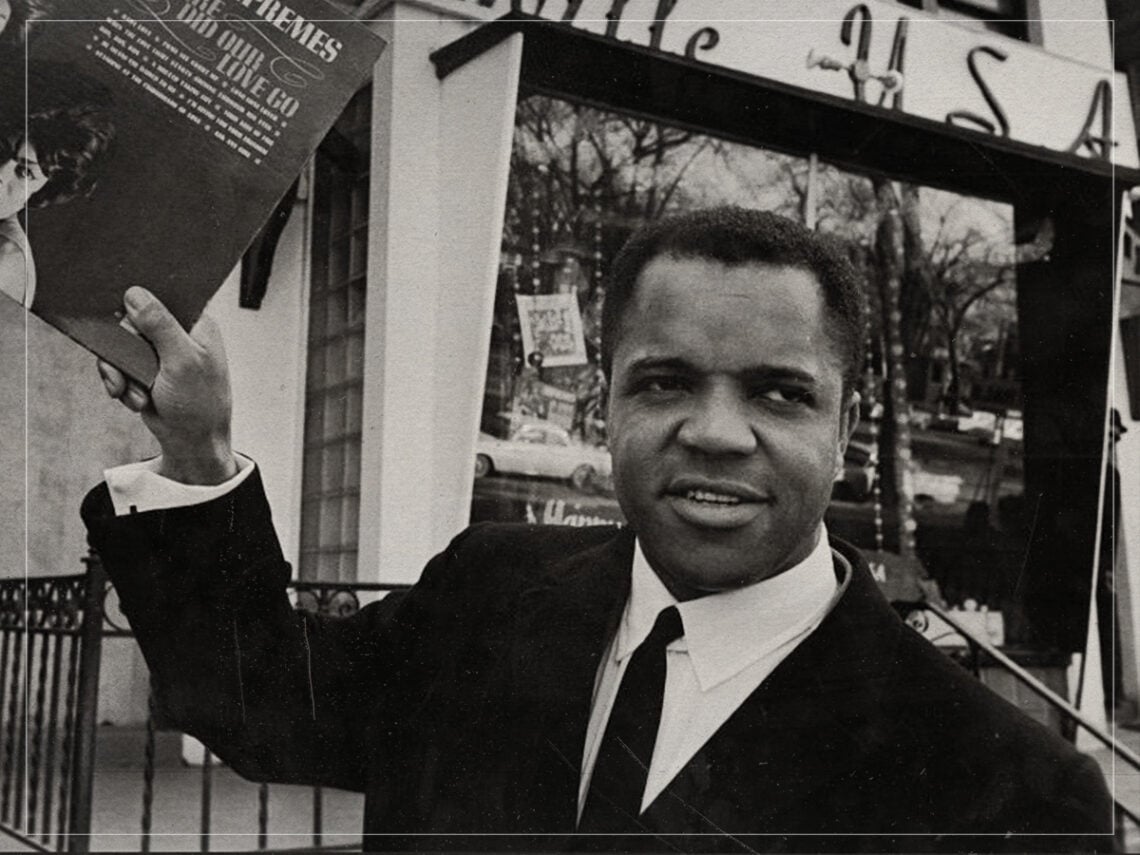
The core root of the Motown sound, according to Berry Gordy

An unshakable omnipresence within the pop charts of the 1960s, Motown Records went from being a small, local set-up in Berry Gordy’s native Detroit to a global R&B powerhouse churning out a seemingly endless volume of hits and launching a plethora of still-beloved stars; the ‘Motown sound’ remains a cornerstone of pop mastery to this day.
Despite its unparalleled command over the transatlantic pop trade and its lasting impact on the realm of funk, soul, and R&B, though, the parameters of that ever-present Motown sound are strangely vague and elusive.
After all, Motown itself incorporated a wealth of different sounds over the course of its history, spanning the spectrum from 1950s surf rock to cheesy 1980s power pop ballads, for which we have Lionel Richie to thank. Surely, then, not every record released by Hitsville USA counts towards the Motown sound.
Many R&B aficionados will gladly tell you that the root of the Motown sound lies in the songwriting stylings of Holland-Dozier-Holland. After all, that infallible trio produced a litany of legendary hits for the label, penning virtually every song that is conjured up when you think of Motown – ‘Heatwave’, ‘Baby Love’, ‘Reach Out (I’ll Be There)’ all arose from their collective efforts. However, the trio certainly weren’t the first people at Motown to write hit records, and it was Berry Gordy who provided them with a kind of blueprint to follow.
It was Barrett Strong’s 1959 hit ‘Money (That’s What I Want)’ that ushered in an age of Motown hits, becoming the first of the label’s releases to break into the US singles chart. Arguably, then, it was that single which set out the blueprint for all future Motown hits, as commercial success was chased above all else as far as Gordy was concerned.
Even still, the commercial power of that success remained a mystery to most other record labels of the 1960s; how on Earth was an independent operation with only a few years of experience striking upon these chart-topping smashes? According to Berry Gordy, it was all rather simple.
“It’s so simple that it seems complicated,” he told Rolling Stone in 2009.
Giving an insight into the sound that made him one of the most successful music moguls in American history, he explained, “It’s a combination of everything I heard in my life that makes you feel good. Whether it be gospel, blues, jazz, whatever”.
He added, “I don’t like labels. When people ask me, I just say it’s pop. That means it is popular – it sells over a million records. That’s what it was.”
That uniquely euphoric combination of gospel, blues, jazz, and whatever else was included in Gordy’s own pool of inspiration, coupled with the seeming simplicity of Motown’s output, was something that nobody else could pull off at that time – particularly not to the same extent nor regularity as Motown was churning out hits.
Such was the power of that distinctive combination that, even today, when Motown’s modern incarnation is composed largely of B-list rappers, the timeless sound of its 1960s heyday still looms large over the pop scene, with the likes of Charli XCX going so far as to record a 21st-century cover of ‘Money (That’s What I Want)’.
