


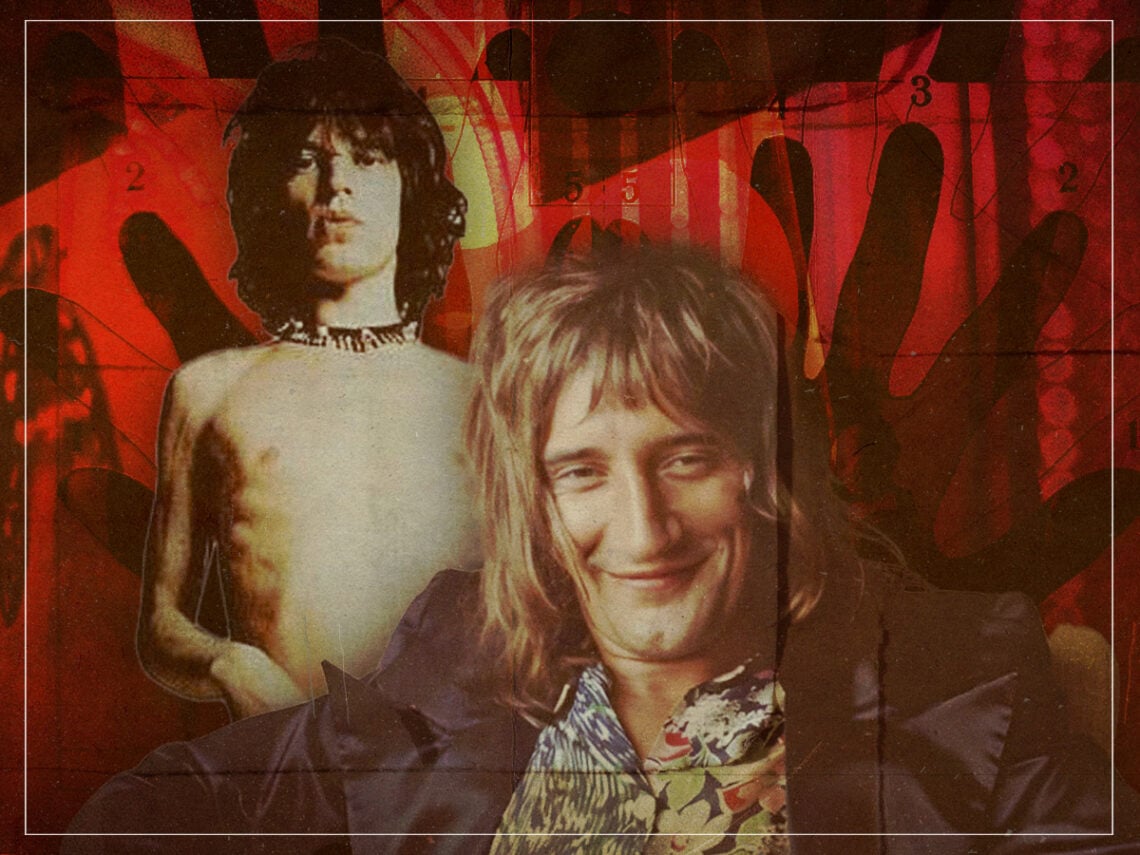
The Rod Stewart song produced by Mick Jagger

1960s London was the place to be. A city in the midst of transformation—architecturally, culturally, and socially—change was happening on every level. This sprawling metropolis, once the heart of the world’s largest empire, was evolving into a vibrant epicentre of the arts. Whether it was Mick Jagger, Rod Stewart, Jimmy Page, or Marianne Faithfull, many of the era’s most iconic musicians found their footing in the capital during this revolutionary time.
‘Swinging Sixties’ London was characterised by a great deal of cross-pollination. So many of those who would go on to be the period’s most consequential figures would play together in bands before going off and finding success separately with different projects. For instance, Eric Clapton, Jeff Beck, and Jimmy Page all played in The Yardbirds, with the latter duo helming a twin guitar assault for a brief period after the former had left to join John Mayall and the Bluesbreakers.
That band would also feature many famous names, including Peter Green, Jack Bruce, Mick Taylor, John McVie, and Mick Fleetwood. They provided the footing for such names to develop and laid the foundations for two of the world’s most significant rock acts, Cream and Fleetwood Mac.
These two groups are only the tip of the iceberg, but they provide excellent examples of how tight-knit the period was and how fundamental this spirit was in creating a wave of creativity that would change the world. One outfit that was central to it all in the capital was The Rolling Stones, the dandyish, transgressive answer to the world’s most vital band, The Beatles.
Not only did they represent the bold, creative spirit of the city and embody their generation’s increasingly hedonistic tendencies, but they also actively contributed to the work of others. Most famously, the songwriting duo of frontman Mick Jagger and guitarist Keith Richards were allegedly locked in a kitchen by their manager, Andrew Loog Oldham, and pressured into writing what would become a classic.
According to Richards in Life, he told them: “I want a song with brick walls all around it, high windows and no sex.”
That song became the Marianne Faithfull hit, ‘As Tears Go By’, one of the definitive musical moments of the era that launched the teenage vocalist as a pop culture icon. Tragically, it also sent her off on the journey that would lead to crippling heroin addiction, debilitating eating disorders and a time spent homeless on the streets of Soho. At that point, though, such darkness was years away.
It’s often used as a stick to beat The Rolling Stones with that they blatantly took the work of the Black American artists that inspired them and watered their style down to find global success, but to be fair to the group, they’ve had many moments of unique artistic genius over the years. Take ‘Gimme Shelter’ or ‘Paint It Black’, for instance. Furthermore, they gave many songs away, with Jagger, Richards, and the rest of the band also masters in the studio.
According to Rolling Stones guitarist Ronnie Wood, who joined in 1975 after playing in The Creation, Faces and The Jeff Beck Group, Jagger also produced a song by former Faces and Jeff Beck Group vocalist Rod Stewart.
Speaking on How Can It Be? with Bob Harris in 2015, he reflected upon the creative cross-pollination of the era. He revealed that Jagger produced Stewart’s ‘A Little Misunderstood’. Typifying just how willing artists were to help others out, unlike today, the song and album it’s from, A Little Misunderstood: The Sixties Sessions – which weren’t released until 2001 – features a supergroup of Stewart, Jagger, Richards, Nicky Hopkins and PP Arnold. It’s an overlooked moment that played a big part in Stewart continuing his career in this formative period and almost certainly bolstered the two men’s friendship, which would culminate in Jagger allegedly asking Stewart for an orgy. It wasn’t all just creative collaboration back then.
