


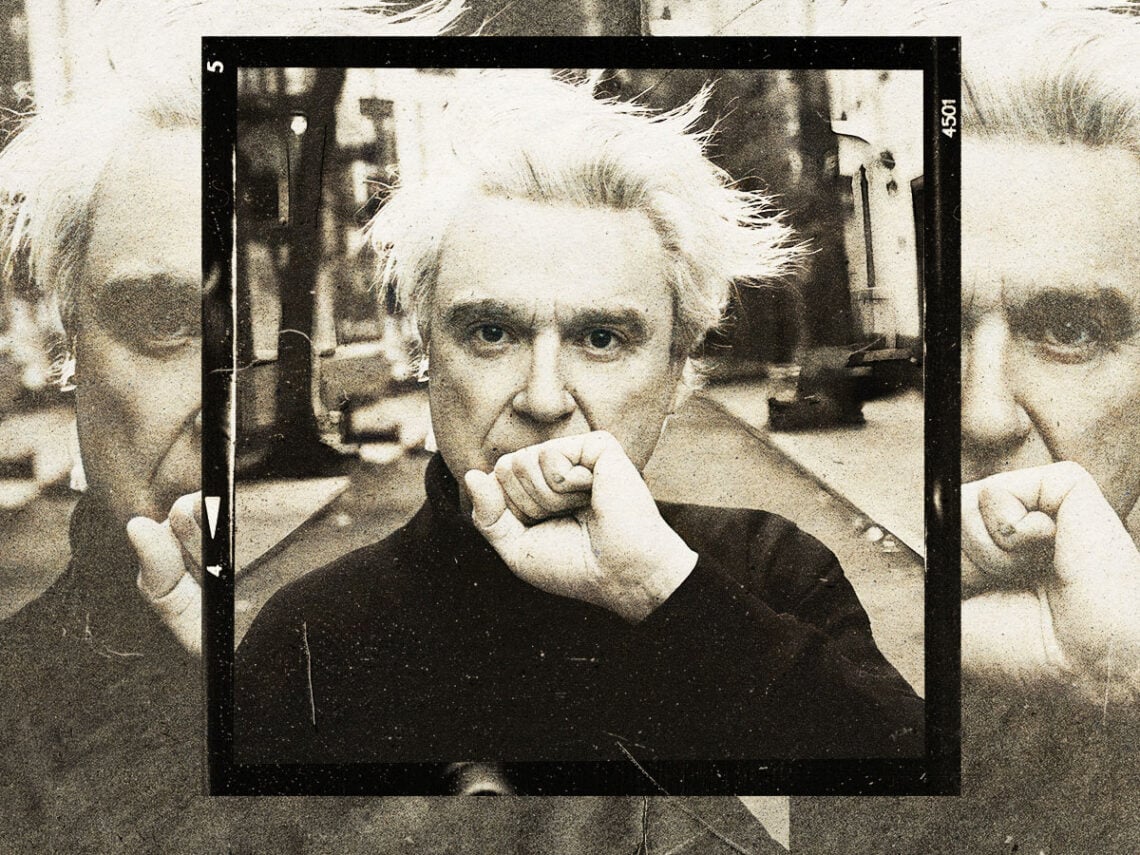
The moment rock ‘n’ roll lost its innocence, according to David Byrne: “It was ruined right there”

“Rock and roll is dead.” That’s a phrase that gets thrown around a lot. It’s normally tossed out by disgruntled classic rock fans who either remember the hazy days of certain band’s early gigs or one that wasn’t there and have been bitter about it since, claiming they were ‘born in the wrong generation’. It’s usually a lazy phrase, wholly dedicated to worshipping the rose-tinted past rather than being open to the greatness currently going on around them. That never feels like a worthy path, but when it comes to David Byrne’s perspective on the comment and the complex history of the birth and possible ‘death’ of the genre’s heyday, now that’s a worthy discussion.
Rock and roll has never died. Just this week, hundreds of exciting new bands will keep the genre alive as they borrow from everyone who’s come before them and boil it down into something fresh to intrigue all those who will come after them. Rock is one long, extensive lineage where, while we might worship the likes of Mick Jagger or Led Zeppelin as the Gods, everyone’s position in the line is something to celebrate.
However, there is no denying that things have changed. Looking around at the 2020s, it’s starkly different from the 1960s or ‘70s. With the impact that social media, marketing and the industrialisation of music have had on the scene, it’s no wonder that so many people feel nostalgic for a time they didn’t exist in or can’t remember. However, for the people who were there, reflection is a complex thing.
It seems that even right there and then, as the hippie days of the 1960s gave way to the darker eras of the ‘70s and ‘80s, everyone could already feel a shift. Standing in the midst of the New York alternative scene that seemed to be born out of that switch, David Byrne felt the change happen in real time.
In the mid-80s, the New York Times deemed him the “thinking man’s rock star”, holding him up as a kind of next-generation frontman after the era of Mick Jagger or Jim Morrison or the high-glam, sex symbol frontmen had apparently come and gone. It seemed that the media wanted to split music into two camps: the theatrical, sexy, somewhat brainless rock of before and the intelligent music that popped up in its wake. Byrne contested that to Playboy as he said, “It’s possible to do some things that are… a little unusual and still be accessible to a fairly broad public. The public is underestimated and pandered to. You don’t have to pretend that people are stupid.”
Of his own wordy lyricism, he said, “Intelligent lyrics and rock ‘n’ roll don’t have to be antithetical.”
It seemed that, for the first time since the seeming heyday of the sound, someone was trying to declare that rock and roll was dead. But for Byrne, it wasn’t a matter of life or death, it was a matter of changing shape. “Rock ‘n’ roll lost its innocence in the sixties,” he said. He chalks it up to one band as he continued, “Once Rolling Stone appeared, it was ruined right there. But even simple rock ‘n’ roll has that kind of intellectual awareness, or maybe just smarts. The Rolling Stones or John Fogerty–who I think of as playing basic rock ‘n’ roll–have something else in the music.”
For Byrne, the second The Stones got on stage with their darker, deeper lyrics about drugs, their metaphors and their willingness to merge all different genres into a kind of new mutt of music, the “rock ‘n’ roll” people worshipped was gone. Instead, from then on, it would be an ever-changing beast, refusing to stick to the stereotypical, “innocent” shape of the hot guy with a guitar playing catchy songs while hoards of fans screamed.
Really, Talking Heads and even the likes of The Smith or Joy Division were simply the next wave of that loss of innocence. Just as The Stones had started to put the dark side of the era into their lyricism, the cynical nature of the early post-punk scene reflected the worsening state of music and society as a whole. If Jagger marked the initial tainting of rock and roll, Byrne and co were making rock music that was utterly degenerate and contaminated by the tragedy and darkness that came after the 1960s as the decades rolled on.
In this way, rock and roll can never be dead. But with every change and twist in its look and feel, the corpse we see and hear is simply a sign of the times.
