


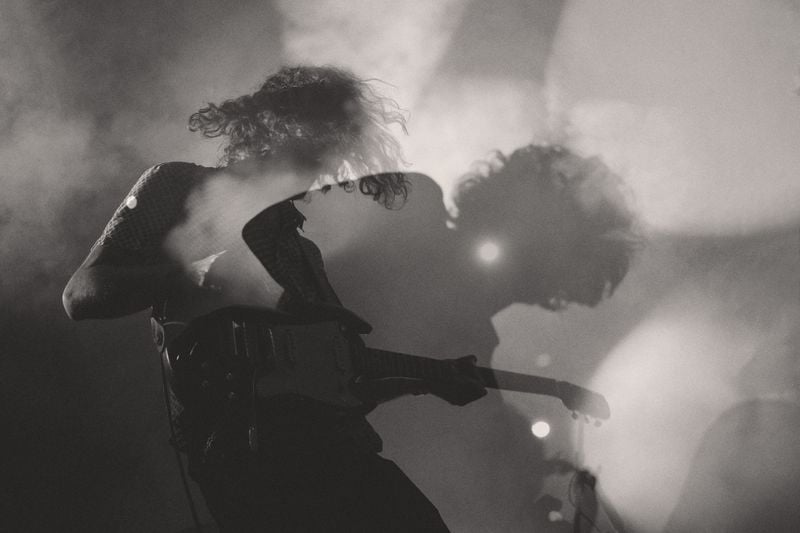
No More Heroes: Artists explain why the radical rock star is dead

“The rock star is dying. And it’s a small tragedy.” – Nick Cave.
For better or for worse, it would seem that the rock star is dead—a relic of the highwire teenage days of the rock ‘n’ roll daydream. Now, the rock star has come of age. They are responsible. The question is, whether music has become more sedate along with it. Whether rock ‘n’ roll has been shepherded into conformity or it is just as vibrant and visceral without the nettlesome proposition of an ignorant prat?
The reverberations of the death are multifaceted, filled with pros and cons, but it does seem certain that they are beyond us now and we caught up with musicians to grasp the whys and wherefores of the radical rocker’s demise. “I always feel that these days the nature of the music industry doesn’t fund the freaks,” The Big Pink’s Robbie Furze confirmed. “It doesn’t fund the oddballs.” These rockers have never been reliable engines of income. Hell, there was one time when Bez was an integral part of a multi-million-pound machine. Who is the maraca shaking lay-about these days?
“It would be very difficult for another Bowie to be allowed to exist,” Furze explains. “All these mad singers and characters are gone. So, when someone like Kanye West who is definitely an oddball, but is unbelievably talented, is funded and can take the stage and get his music to so many people around the world is a great thing. Yeah, you will find he is a bit weird – he cuddles Trump or whatever – but if he wants to be weird and he wants to be crazy then I’m alright with it if he’s putting out that sort of output.”
It must be noted that Furze told me this before West’s recent anti-Semitic remarks and he was quick to condemn West’s troublesome side. His remarks were reprehensible and should be denounced. Thus, it is perhaps here where your answer lies. When these freaks and oddballs of art are funded indiscriminately without repercussions, the lack of accountability can head towards troubling territories. However, the question still remains, has West mere bore out an extreme example that should society deal with? Or is this the reality of what happens and why funding should be considered?
According to Furze, certain genres are better at answering this issue than others. “I think in hip hop, it’s easier for these characters to come out because there is way more funding as a whole,” he explains. “As a musical culture, they are also taking so many risks. There is such a support for the development of that because it’s a younger music genre. So, nobody wants to rehash an old sound from a hip hop artist who has been around and sold records 30 years ago.”
Thus, perhaps it isn’t the far end of “freaks” and the nettlesome issues that they bring, but the rather more morally unambiguous issue of originally being sequestered away from the grind of the business. As Furze continued: “I think the nature of guitar music, especially now, is that it is all about numbers. You have to sound like that audience would take to you, or a band that did well recently for anyone to give you a chance.”
Adding: “With anything that is truly original they say stupid shit like, ‘Well, I don’t know where there is a place for that’. That’s a good thing. When I was listening to Ministry, I didn’t want other people to like it. I wanted me and the other people listening to it to like it, but I didn’t want mum and dad to like it. I wanted this to be a tiny niche band and that was important. But there is none of that now, it’s all like, ‘They’re good but where are they going to play? What radio station are they going to play on?’ so, everything has to sound the same because everything has to have a place.”
Strong characters usually break this mould. Currently, many artists claim they are being held at arm’s length away from opportunity. “We should be very careful with it because loads of bands just rehash old sounds. I think you can be eclectic. I like to think that The Big Pink are a combination of different influences from older references, but you get these weird cultures where one band comes out like Sleaford Mods and these kinds of bands that have been influenced by The Fall and then there are so many Falls at the minute,” an undeniable truth, “which is really lazy A&Ring,” Furze explains.
“It’s people going, ‘Well, here’s just another band that sounds like this because that band is selling records. They have a fanbase so let’s channel this in and it becomes manufactured pop music which doesn’t make any sense in the alternative world. It’s also boring. Why do you want to hear it if these guys are doing it already?” However, Furze adds that this is also nothing new and it comes in phases. “It happened around Nirvana in the grunge era too,” he notes. “It was almost Nirvana’s fault. They came over from the unpopulous to the populous and suddenly everyone with a plaid shirt was selling records and getting played on the radio.”
This meant that the rock star was monetised and managed. The argument is that now with the cottage industry of punk subsumed with big business and everything algorithm-ed up to the eyeballs, it is harder for acts to break through without a big label approval. And the labels want to put their money behind reliable horses.
The sunny flipside, of course, is that maybe every dog has their day, and the loss of the radicals is okay. After all, there is no shortage of great music at the moment, and added accountability is an equitable thing for everyone. Let’s just hope the original cream can still rise to the top.
