


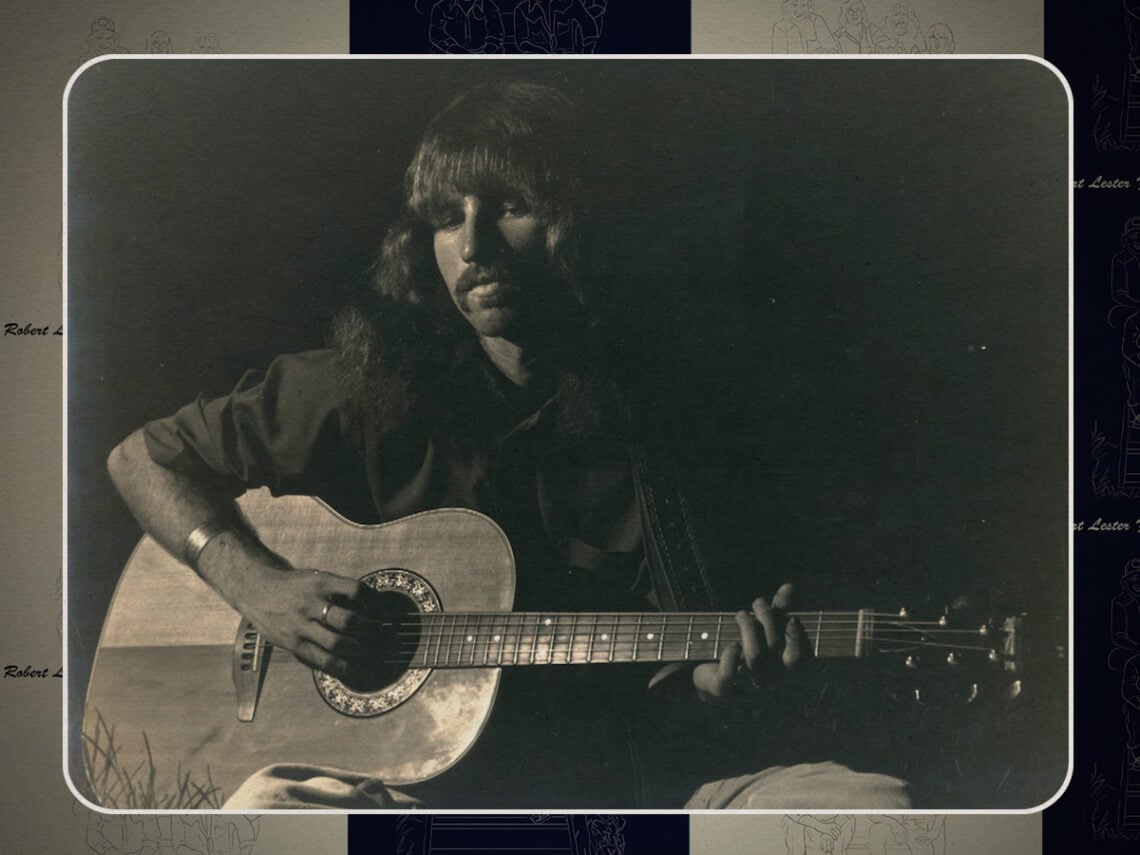
Forgotten no more: The story of how Robert Lester Folsom kept his old archive music alive

Nick Drake was once the standard bearer for the singer-songwriter who got his deserved recognition on a several-decade delay. But in more recent years, the high-profile rediscoveries of artists like Sixto Rodriguez, Sibylle Baier, and even Drake’s own mother, Molly Drake, have led to a sort of mini-industry dedicated to hidden gems of the past.
Anthology Recordings is just one of the many reissue-centric record labels that’s dug into this marketplace, with no allegiance to any specific genre of music, but more of a mission toward preservation, bringing forgotten or unknown music back into the light like a quality “barn find” on American Pickers.
One of Anthology’s great success stories has been the heartwarming career relaunch of Robert Lester Folsom, a small-town singer-songwriter from Adel, Georgia, who wrote a bunch of songs in the 1970s that would have fit in quite nicely with the mainstream sounds of LA’s Laurel Canyon, but instead went thoroughly unnoticed by just about all of humanity.
Folsom, who had never even been to California until booking a show at the Troubadour earlier this year, self-released one album in 1976 called Music and Dreams, and while nobody bought it, its physical existence would prove worthwhile in the long run.
The crate-digging community finally caught on to the record in the 2000s, spreading word slowly online, and by 2009, Keith Abrahamsson of the Brooklyn record label Mexican Summer (owner of the Anthology imprint) tracked down Folsom to discuss a re-release of the album. That finally happened in 2014, and after another slow burn spurred by social media needle drops, Folsom got the opportunity to release more recordings from his personal archive of unreleased tapes, including several sets of material pre-dating Music and Dreams.
After living 40 years with the assumption that his music was only ever a hobby – something that had never really worked out – Folsom was now an in-demand artist, promoting records and playing concerts to enthusiastic audiences at the age of 70.
“It’s funny,” Folsom recently told Setlist Kitchen. “Last year when we played in Chicago, I had never been that far north in the Midwest. We sold out the place [the Hideout], and all these people were there – it was like a communion. It was like a reunion of all these people that knew all my music, and I felt like somehow, because of that, I knew them. It was just the biggest blessing ever.”
Folsom certainly hadn’t kept all his old tapes with the idea that the world would one day get to hear them. He was merely doing what thousands of other amateur musicians do – holding on to something precious from his past; for memories, for family, for posterity. What he couldn’t have anticipated is the growing appeal of this type of “lost” art – free of pretence, cynicism, marketing, internet-ification – among young people, in particular.
“A lot of the listeners now weren’t even around back then,” he said. “They’re in their mid-20s. I would say the average age of my audience is 25, and I absolutely love it. Now I have a band touring with me, and their average age is about 25. They’re digging into my old music and loving it and enhancing it, and that inspires me completely. That’s one of the reasons I’m very excited about this tour. These kids are awesome. I love them to death. I really do.”
