


‘Rhythmic Itch’: When The Stranglers and Devo crossed paths

As the 1970s were nearing their end and UK punk’s flashbang catalyst exploded into a myriad of disparate sub-genres and offshoots, Guilford’s The Stranglers began to truly reveal their eccentric, idiosyncratic selves. While boasting some of the new wave era’s mega hits, previous songs like ‘Peaches’ and ‘Bring On the Nubiles’ lapses into oafish sexism threatened the band with the longevity of old milk.
A slow shift toward their evocative and mystical pop offerings that would dominate the following decade started in earnest on 1979’s The Raven. Keyboardist Dave Greenfield swapped his electric keys for the Oberheim OB-Xa synthesiser, and the band embraced lyrical studies across heroin, extraterrestrials, nuclear war, and the Iranian Revolution. Two months later, a side project from frontman Hugh Cornwell and Captain Beefheart drummer Robert Williams was released, exploring The Stranglers’ new expanded creative horizons with further intrepid depth.
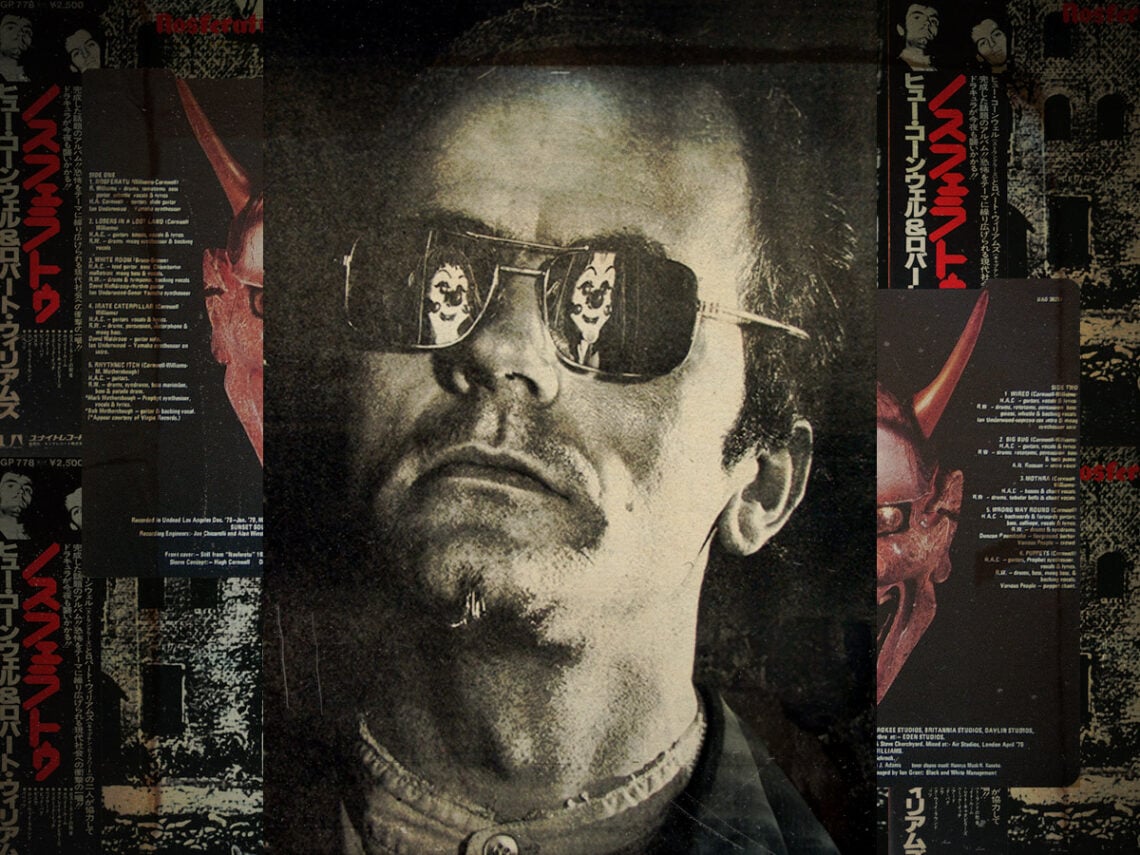
Dropped November 1979 via the United Artists label, Cornwell and Williams’ Nosferatu sought to provide an alternative score to the namesake 1922 expressionist silent horror with a bizarre blend of psychedelic post-punk and uneasy gothic new wave. The pair strove for a unique, if uneven, sound. Wriggling synths and lacerating guitar nicks all cast a sooty dread over Williams’ hectic percussion, and the only number spiked with the faintest pop appeal was a thoroughly deconstructed cover of Cream’s ‘White Room’ – Nosferatu‘s sole single.
Having befriended each other after The Stranglers’ 1978 North American tour, an impulse phone call from Cornwall suggesting a collaboration resulted in a flight to Los Angeles shortly after Christmas the same year. With such short notice, the pair found themselves hopping haphazardly between Village Recorder, Cherokee, Sunset Sound, and Davlin Studios, with further time eaten up by the lengthy setup and disassembly of Williams’ Ludwig Maple drum kit. Coming to the rescue was Fleetwood Mac’s Lindsay Buckingham, who gifted the pair a solid chunk of their recording time due to a Mac member being AWOL last-minute.
“Hugh and I made the songs up in the studio, usually starting with the drum track,” Williams revealed to Strangled in 2014. “Hugh did not have a demo before starting Nosferatu, but he had a few little riffs on guitar for just a few songs that we both fleshed out. Then we would bring home cassettes from the sessions to study and come up with subsequent parts. We spent daylight hours sleeping and worked throughout the night, very much like vampires.”
At Williams’ recommendation, various artists were roped in to contribute, including longtime Frank Zappa keyboardist Ian Underwood and Joe’s Garage engineer Joe Chiccarelli for extra studio assistance. Fresh off the sessions for Duty Now for the Future at nearby Chateau Recorders in Hollywood, Devo‘s Mark and Bob Mothersbaugh were invited to lend their synthpunk acerbicism as well.
Penning the lyrics and contributing their Prophet-5 synth, ‘Rhythmic Itch’ stands as Nosferatu‘s stand-out cut, capturing that fizzy angular energy only Devo knew how to conjure, with Mark’s unnerving vocals warbling around Williams’ bass marimbas and Cornwell’s stiff guitar attack.
Where exactly the track is supposed to feature in the alternative Nosferatu score is anyone’s guess; the LP’s original liner notes merely state that the cut was “a moving tribute to Dracula”. Nosferatu would end up mixed and finished in London’s Eden Studios with uncredited crowd bray and fairground barker dialogue from The Clash and Ian Dury, respectively, but it’s ‘Rhythmic Itch’ which leaps out of the speakers with the most skewed and arresting vitality over 45 years later.
