


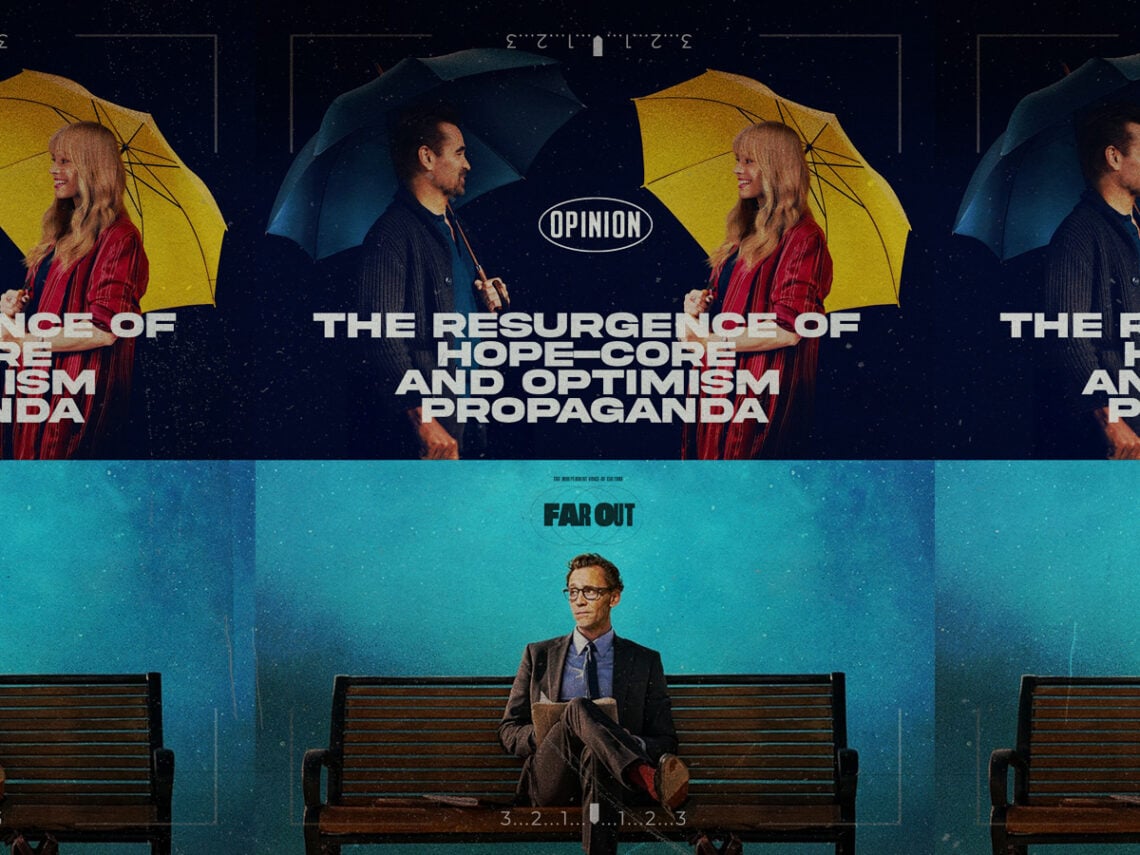
The resurgence of hope-core and optimism propaganda

The majority of the movie-watching public love films that leave you with a warm and fuzzy feeling; stories about the strength of the human spirit, about persevering no matter what and about people doing lovely things for each other.
We love films about dysfunctional yet endearing families, people with big ideas and outcasts who find their way back into the hearts of their community. These are tales as old as time, with many people craving the stories that will make them feel better, that will uplift and reaffirm a goodness in the world around us, leaving us feeling optimistic and, dare I say, hopeful. If Olive can shimmy her way onto that stage, then maybe humanity isn’t doomed. Maybe there’s a good ending right around the corner.
But unfortunately, life isn’t always this easy, something which is reflected through a myriad of other stories that mirror the darkness, unpredictability and tragedy of other human experiences. From the inevitability of death to the pain of breakups and heartache, there are many other filmmakers who devote themselves to stories that don’t appeal to our comfort zone, but to making us feel uncomfortable. Perhaps the only true function of art is to make us feel, and if it isn’t making us feel a range of emotions, then it surely isn’t doing its job.
However, as the world around us grows darker and hope becomes a limited commodity, there are many studios and filmmakers who are resorting to a genre described as ‘hope core’, crafting certain kinds of stories that always seem to crop up during recessions, wars and times of global uncertainty in an attempt to convince us of just how wonderful life truly is or can be. While some might enjoy this, perhaps there is a darker motivation behind this genre that makes it a little less rosy.
For those who don’t know what hope-core is, think stories of defiance in which people overcome all the hurdles in their way to achieve a very unlikely odd. It could be Shawshank Redemption, Little Miss Sunshine, About Time or The Secret Life of Walter Mitty, with a life-affirming message that reminds us that it’s never too late, love is great, you can always achieve your dreams and so forth and so forth.
While there have been many fantastic films within this genre, the key to making it feel genuinely uplifting and not completely cringeworthy is a strong script and authenticity, leading to something that doesn’t trick you into feeling for the sake of it, but something genuine that happens to elicit a very emotional response. These types of films have always cropped up during times of crisis and dire need, with those in power perhaps recognising that audiences need some hope to latch onto and revitalise their outlook on the world.
Naturally, in recent years, there has been a huge resurgence of this genre, with the upcoming release of A Big Bold Beautiful Journey and The Life of Chuck pointing towards the fact that it is rearing its head again. While it can be comforting to see these, an over-saturation of the genre starts to feel a little bit like brainwashing and optimism propaganda; a way of forcing our heads into the sand and distracting us from the glaring problems that exist around us.
Now, don’t get me wrong, when executed well, they can be exactly what we need to get out of a slump. But when poorly done, it can feel like blatant manipulation that targets predictable story beats and forces us into a heightened state without being grounded in anything authentic. This often results in predictable films that exploit traditionally emotional plot lines for the sake of creating a tear-jerker that will coerce audiences into feeling hopeful.
It pains me to say this, but we can certainly see this from the trailer of A Big Bold Beautiful Journey, which, from the outside, appears to be precisely this. While Kogonada might prove us wrong, it comes across as incredibly cliché from the trailer. The mysterious door in the middle of a field trope is just about as predictable as any student film, and the title sounds like the name of a free book you’d find in a remote English charity shop. Sadly, upon first look, it doesn’t fill me with hope that it might be anything other than cringey studio sap, probably with some plot twist in which you find out both characters were dead the whole time and how we should cherish the precious time we have on Earth.
Perhaps I’m just nihilistic, but I cannot stand this genre of filmmaking, and the last thing we need are more films that flatten the human experience into something so two-dimensional and formulaic that we can predict each beat before it happens. What we truly need are urgent, empathetic and daring stories that encourage us to expand our way of thinking and connect with lesser-seen experiences that don’t package pain in a neat and simplistic way. Life doesn’t work that way, and it only numbs our ability to connect with what’s truly going on in the world and the consequences of all the labour that goes unseen.
