


Five repulsive movies that should be avoided at all costs

There are some films that leave you heading straight to the toilet, with a visceral and repulsive quality that leaves you wanting to empty your insides. Whether it be the sound design of Dennis Quaid’s character eating shrimps in The Substance or the violent sea sickness in Triangle of Sadness, there have been many movie moments that have become infamous for their grotesque subject matter, body horror and gore.
But while it’s common for some films to have one or two scenes that make you feel a bit squeamish, there are fewer films that are successful in achieving this effect throughout the entire duration, leaving you in a hazy headspace as you try to settle your stomach and process the monstrosities committed to celluloid.
From David Cronenberg’s work to Julia Ducournau and Catherine Breillat, countless filmmakers have built careers on churning the stomachs and curdling the blood of audiences, finding a sick kind of joy in inducing sickness.
Here, we explore the depths of cinema sickness; which of these films can be considered the most effective at evoking discomfort?
Five repulsive movies that should be avoided:
Pink Flamingos (John Waters, 1972)
The infamous motto of John Waters is “get more out of life, see a fucked-up movie”, which is a sentiment that is evident in his wildly inappropriate but devilishly fun characters.
Pink Flamingos is no exception to this rule, following the antics of a character called Divine and the miscreants that they associate with, with some of them breeding babies in their basement and selling them to desperate lesbians and having sex with chickens, with Divine seeking the label of the “filthiest person alive”.
It’s a shamelessly repulsive and striking film that mocks the expectations that bigots have about queer people, subverting this by making these characters genuinely disgusting for reasons that are unrelated to their sexuality or gender identity. The political undertone, however, is somewhat irrelevant as you are watching it, leaving you thinking about your gag reflex more than anything else as Divine quite literally eats shit, a scene that became incredibly controversial due to the fact that the actor ate genuine shit in their commitment to grossness. It’s a delightful attack of the senses that is campy and exaggerated in its style and is completely incomparable to anything else.
Tetsuo: The Iron Man (Shinya Tsukamoto, 1989)
While David Cronenberg is largely heralded as the father of body horror, the existence of Tetsuo: The Iron Man slightly trumps the psycho-sexual grossness of Crash and Titane with its grotesque physical transformations that will leave your stomach churning.
The film follows a metal fetishist who is aroused by the process of jamming metal into his flesh. However, after one of his wounds becomes infected, he runs onto the streets and is accidentally run down by a businessman who later finds himself afflicted with a mysterious disease that causes his flesh to turn into iron.
It’s an erratic and violent story that will crawl inside your own skin as you watch, leaving you feeling itchy and violated as nearly unwatchable images flash across the screen. As you watch this man having his insides ravaged by a metallic virus, you also begin to feel as if the film is churning you inside out, leaving you feeling disoriented by the madness that consumes him.
Raw (Julia Ducournau, 2016)
Usually, I’m not particularly squeamish, but this film really took the finger. By combining the coming-of-age genre with body horror, Ducournau creates a visceral portrait of female desire and sexuality that is taken to extreme levels. Raw follows a vet student who develops a taste for human flesh after trying meat for the first time, developing a new kind of appetite that slowly takes over her life.
Through an unflinching visual style, extreme score and suffocating sound design that seeps into every corner of your brain, Ducournau shows the growing sexual appetite of this young woman through cannibalism, satirising the idea of the female agency being grotesque and ‘other’ by likening her sexual desire with something genuinely disturbing. Everything is shot through a harsh lens that is only emboldened by the stark colour palette and inescapable sound effects as Justine scratches raw flesh and bites through cracking bones as her appetite becomes completely consuming.
It is a unique coming-of-age story that not only explores self-discovery and sexual identity but also how the web of family bonds that we try to separate ourselves from often dictate parts of ourselves that we cannot understand, with a chilling ending that shows how blood is always thicker than water.
Anatomy of Hell (Catherine Breillat, 2004)
While I have many qualms with the way that Breillat executes her ideas, you cannot deny that she is a unique kind of genius in her ability to make truly repulsive and vile films, never failing to get under my skin and linger on my mind for days on end. Anatomy of Hell is no different, exploring the intricate intersection between gender and sexuality as a woman tries to expose the prejudices that a gay man has about women, becoming a commentary on internalised misogyny and sexual violence.
It shows a woman who forces a man to “watch her as she becomes unwatchable”, mutilating her body in a number of ways in order to prove her detachment from her body and prove to this man that she is more than just her flesh. There are many contradictions and issues within her methodology, as she attempts to prove she is more than her body purely by only focusing on her body, something that seems rather counter-productive to me.
However, you cannot deny that it is repulsive, and Breillat definitely achieves something unique in her weaponization of the female body to confront male audiences with their unrealistic fantasies about women. She is undoubtedly a provocateur, but I’m just not sure how much of it I can stomach.
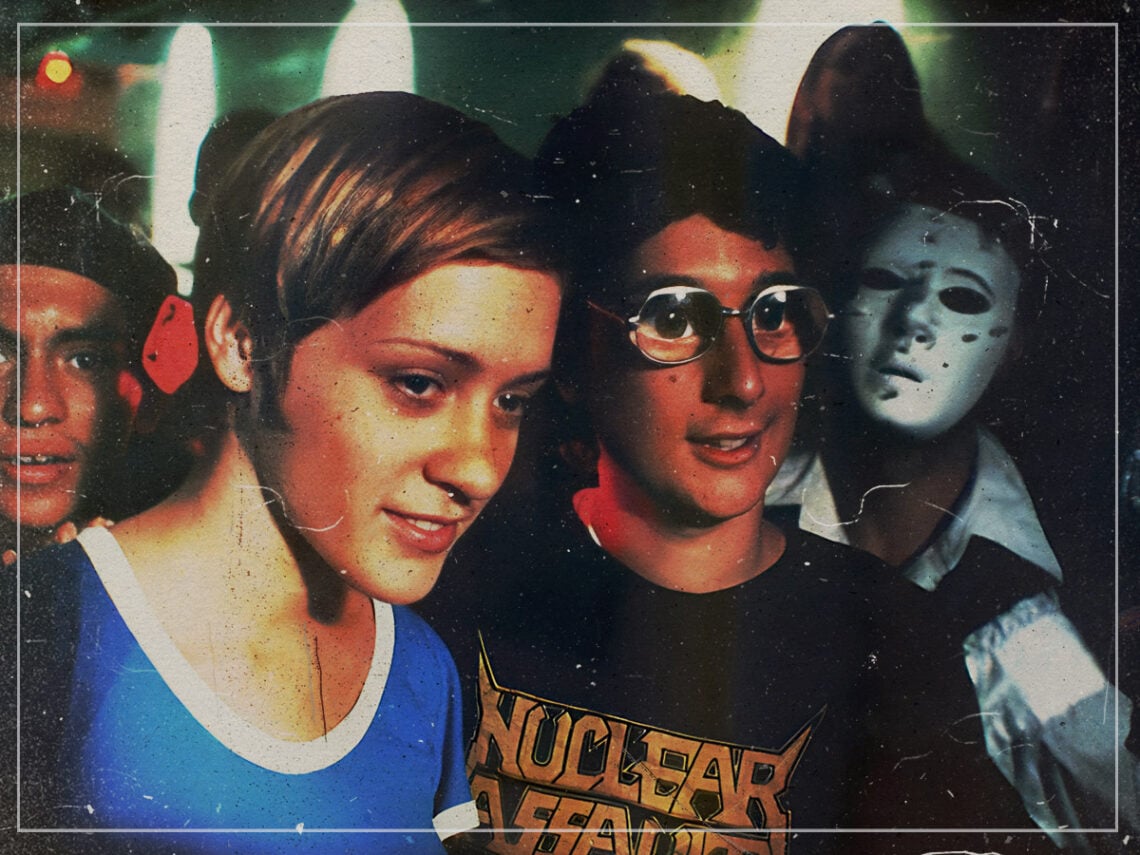
Kids (Larry Clark, 1995)
Kids is, without a doubt, one of my most hated films of all time, and definitively counts as repulsive through its sleazy and exploitative portrayal of adolescence and male desire. Larry Clark has been accused of hiding his own perverse fantasies by labelling the story as an expose of urban living and the aids crisis but creates something that only revels in these ideas without critiquing them in any fathomable way.
Kids follows a teenage boy with AIDS who believes that he cannot pass on the disease by sleeping with virgins, and so seeks out increasingly young children to sleep. Clark attempts to derive meaning from controversial subject matter but instead adopts a tone that is encouraging of this behaviour, choosing to shoot from the perspective of the boys who are assaulting these young girls with long and incredibly uncomfortable rape scenes that show teenage boys assaulting girls as young as ten.
Clark was also criticised for his behaviour on set, with no safe-guarding for the actors and allegedly providing them with drugs and walking around naked. It seems, to many, as though the film was an opportunity for him to explore his own fantasies instead of saying anything meaningful about the destructive nature of male desire and objectification.
