


The real reason Eric Clapton left The Yardbirds in 1965

Eric Clapton is an indisputably vital rung on the rock ‘n’ roll ladder, and as one of the most naturally gifted lead guitarists of all time, he’s left a host of killer riffs and memorable songs in his wake. He has never shied from his instincts and rarely avoids voicing his opinion. Naturally, this has dunked the artist deep into hot water on a few occasions over the years.
This headstrong, outspoken nature could partly explain how he worked his way through The Yardbirds, John Mayall and the Bluesbreakers, Cream, Blind Faith and Derek and the Dominos in the space of just six years before he settled into the relative comfort of a solo career.
In David Bowling’s book Eric Clapton FAQ: All That’s Left To Know About Slowhand, he notes that Clapton disliked the brand-new style of pop music the Yardbirds were exploring by the mid-’60s and labelled the hit single, ‘For Your Love’, as a significant nail in the coffin. It was a huge departure from the blues-heavy style of which Clapton was a keen advocate.
At the time, Clapton’s departure seemed baffling to many observers because ‘For Your Love’ was exactly the kind of breakthrough most young bands desperately wanted. The single became a major commercial success and helped push The Yardbirds further into the mainstream spotlight, but for Clapton, commercial ambition increasingly felt incompatible with artistic authenticity.
His obsession with Chicago blues musicians such as Muddy Waters, Freddie King and Buddy Guy made him deeply suspicious of anything that resembled calculated pop music, even if it offered fame and financial security.
“I’ve got very disillusioned since I entered the commercial side of show business. A lot of cattiness and cruelty goes on.”
Eric Clapton
That tension between artistic purity and mass appeal would follow Clapton throughout much of his career. Even after becoming one of the biggest guitar heroes in the world, he frequently gravitated back toward stripped-down blues projects whenever the pressures of stardom became overwhelming. His exit from The Yardbirds therefore set a pattern that defined much of his later life, choosing musical sincerity over commercial convenience even when it came at considerable personal or professional cost.
‘For Your Love’ was recorded in early February 1965, and by the time it hit the shelves on March 5th, Clapton had left the saloon doors swinging. In a conversation with Rave Magazine later that year, Clapton opened up on his departure from the Yardbirds and identified feelings of regret, mostly regarding money.
“I don’t want to knock the Yardbirds because it would only seem like sour grapes,” Clapton levelled. “They are the best of the pop and R&B groups, and they can be terrifically good. I actually miss lots of things about them and the old life. Even though we had downs more than ups, I did spend all that time with them, and sometimes I think about what they’ll be doing. I wonder how the new boy [Jeff Beck] is getting on, wonder if things are still the same. I think about Keith’s [Relf] asthma. I especially miss the nights at the Marquee, they were good.”
The interviewer then asked: “Eric, are you a lonely person now?”
“Yes, as a matter of fact, I am,” the guitarist hesitantly answered. “But not so lonely as when I was with the Yardbirds. Then it was a question of being alone within a crowd, and that is the worst form of loneliness. I lived as part of the Yardbirds until I was completely out of touch with it. I couldn’t speak and be understood, and they couldn’t speak to me either.”
Discussing his final single with the group, ‘For Your Love’, Clapton said: “The song was such a big hit that I wished I’d stayed on a bit longer; the money would have come in pretty useful. It wouldn’t be honest to pretend I didn’t think about it after. But things had got to such a state between us that I couldn’t have faced it. I think many pop bands are pushed too hard; they can’t help but lose some feeling, and tension amongst them can easily build up. Working every night, you become a machine, you play to order. You have to get your bit right, so you don’t get yelled at by the management. You lose your regard for your fellow artists in the group, then the tension really mounts.”
Clapton continued, telling Rave Magazine that the pressure of the work ultimately came between him and his bandmates. Frontman Relf agreed with this account but pointed out the departure of style as a compounding factor. Speaking to Rave he said: “Eric is a true blues man. He likes very way out, deep music. We are playing more understandable R&B. Overwork, and a mixture of temperaments caused the trouble, but we parted quite good friends.”
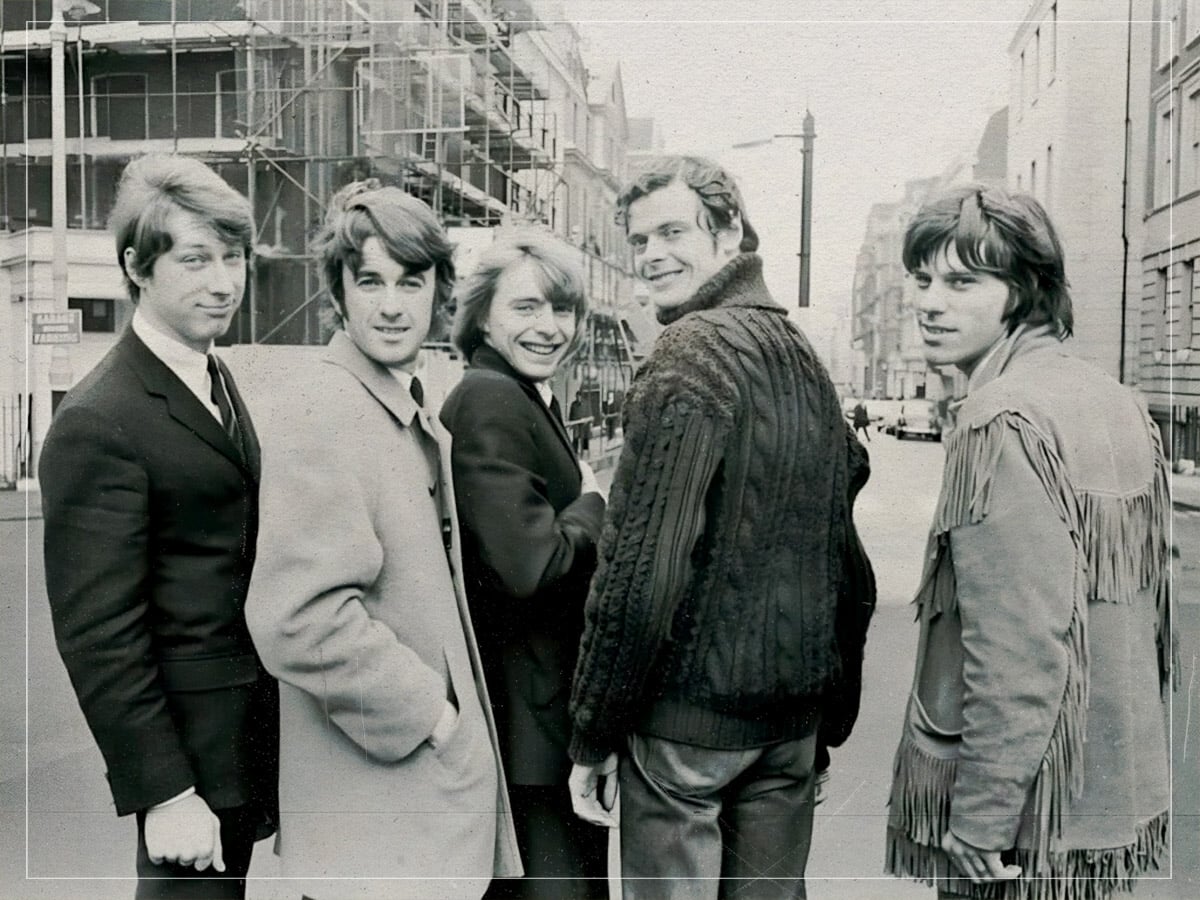
Following his split from the Yardbirds, Clapton joined John Mayall and the Bluesbreakers. “Playing to me has always been an outlet,” he added later in his conversation with Rave. “With John Mayall, I can play how I like. I’m a very passive person, but I can make chords on a guitar sound vicious and violent. When I do, it’s all the bad things I’ve ever seen coming out. Sometimes I don’t play for days, but when I pick up the guitar, a stream of feelings pour through it.
“I’ve got very disillusioned since I entered the commercial side of show business. A lot of cattiness and cruelty goes on. I kick hard at that. Someone has to start saying what they think; if they don’t it’s a negative way of behaving. You should give and not take all the time. Real musicians give because they want to see music improved.
“If I hadn’t left the Yardbirds, I wouldn’t have been able to play real blues much longer because I was destroying myself,” Clapton said, touching on his mental decline at the time as another factor in the spit. “One night, I was so concerned that I felt I was going mad, so I rang up my best friend, but there was something wrong with his phone, and he couldn’t hear me. I thought I had gone out of my mind and that my only friend was against me.
“I suppose it shows how insecure I felt, but I don’t want you to think that my years with the boys were all bad; they were not. We had some exciting and happy times. I don’t expect I’ll be a great success; I’m not that sort of a bloke. I never expect good things to happen to me. When I came here, I expected the train would be late, and I’d miss the interview or that you wouldn’t like me when I did get here. But if I don’t make it big as a musician and I end up very poor, it won’t really mean I’ve failed, not within myself. You have to do what you think is right, and for me to face myself, I have to play what I believe is pure and sincere and uncorrupted music. That’s the reason why I had to leave the Yardbirds.”
It would appear that Clapton’s decision to leave the Yardbirds in 1965 was a no-brainer, fuelled by a range of converging factors. One further possible explanation that hasn’t been so widely discussed is jealousy within the group.
Clapton identified a certain level of friction in his conversation with Rave, but in a more recent interview, drummer Jim McCarty seemed to reveal a battle of egos between Relf and Clapton.
“Our band was like the typical band at the time that was based around the lead singer,” McCarty said. “The lead singer was the frontman, so all the attention would go towards Keith. Then after a while, after [Eric] played in the band for a while, we noticed that there were a crowd building up on his side of the stage. And lots of girls and men as well, you know, that were very interested in what he was doing. So he was doing something or other, but I don’t know exactly what [laughs].”
“He got the nickname ‘Slow Hand’ Clapton actually from Hamish Grimes,” McCarty added, discussing the origin of Clapton’s nickname. “We were playing frenetically; he’d really be bashing into his strings, and he’d break a string, and, of course, he’d take a while to change the string. And this was the joke, ‘Slow Hand’ Clapton.”
Watch Eric Clapton perform ‘Louise’/’I Wish You Would’ with The Yardbirds in 1964 below.
