


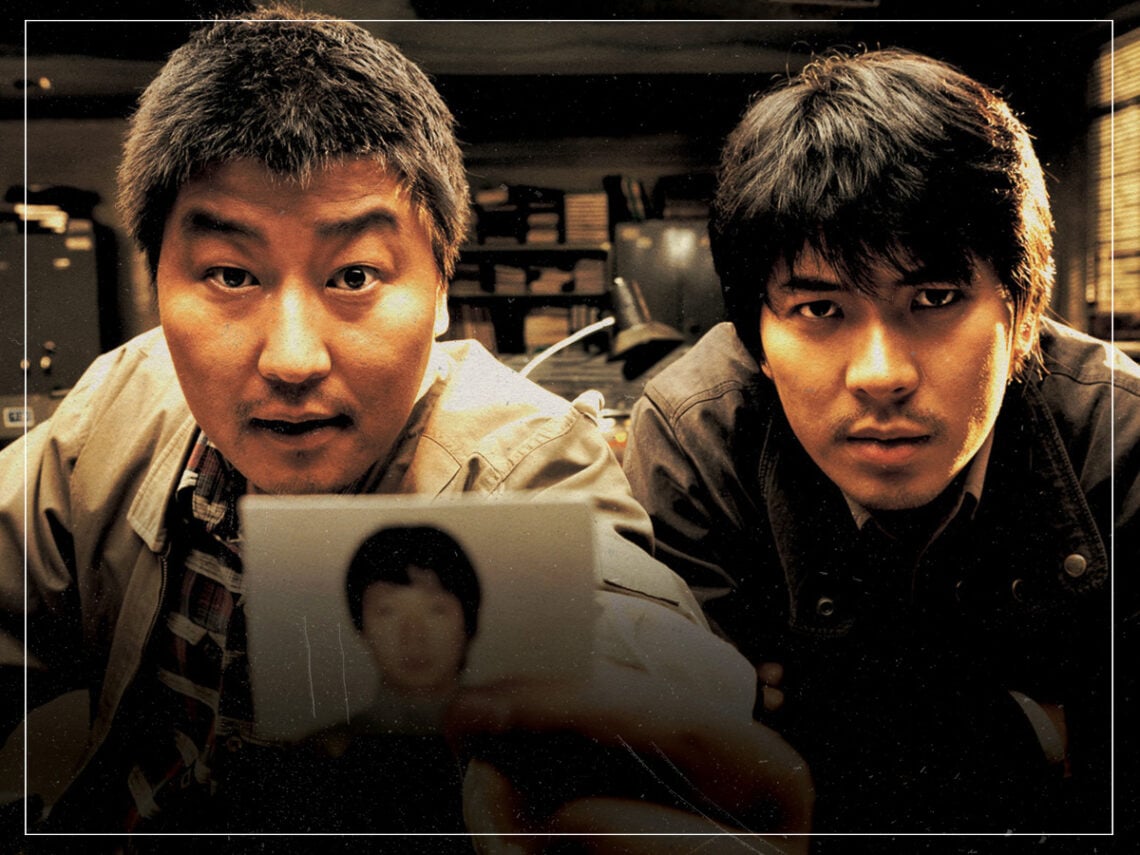
The real-life crimes behind Bong Joon-ho’s ‘Memories of Murder’

While his 2019 black comedy thriller Parasite is often regarded as Bong Joon-ho‘s most significant contribution to the cinematic medium, the real heads of East Asian cinema know that the South Korean director’s best work arrived in 2003 with his crime thriller Memories of Murder, starring Song Kang-ho and Kim Sang-kyung.
As with many of Bong’s movies, Memories of Murder provides a combination of genre, tone and mood, and while it’s indeed strangely hilarious, at its core, the film is a detective movie. Narratively, Bong’s 2003 film focuses on an investigation into a string of rapes and murders in the Korean city of Hwaseong in the late 1980s.
The brilliance of the film largely arrived as a result of the dichotomy between one detective, a bumbling, inept and superstitious cop played by Kang, and another, a precise and competent police officer from Seoul, with Bong exploring the shocking nature of the crimes against the backdrop of a rural setting and its banal ways of life.
While Bong had drawn inspiration from the many works of detective fiction that he loves and facets of his personal life, the iconic Korean filmmaker had also been influenced by the first confirmed serial murder in South Korea that took playing in Hwaseong between 1986 and 1994.
At the time of the film’s production and release, the Hwaseong serial murders were unsolved. In fact, it was only in 2019, around the time that Bong’s Parasite was released, that the identification of the murderer was confirmed following a DNA test and confession of Lee Chun-jae, who had already been sentenced to prison in 1994 for killing his sister-in-law.
Between 1986 and 1991, he raped and murdered a series of women victims, often strangling them to death with their underwear. A huge criminal investigation followed with only two million man-days spent searching for the unknown murderer. However, Lee’s true identity remained hidden, and even though many suspects were arrested, none could be deemed to be the proper criminal.
The serial murders were naturally big news in Korea and Bong had been inspired by them when making Memories of Murder. As in the real life case, the film really focuses on the investigation itself as opposed to the actual assailant, with the film’s characters expressing their frustration at a conclusion being persistently elusive.
Bong’s film renewed the interest in the case, but Lee’s identity still remained a mystery. That was until September 2019, when he was identified by DNA found in the underwear of one of the victims. By early October, Lee had confessed to killing 14 people, including all 10 of the serial murder victims.
At the Beyond film festival in Los Angeles, Bong reacted to the news of Lee’s confession. “It felt very complicated to hear that news,” the director admitted. “These serial killings, they were a horrendous incident [sic] that happened in Korea. In Korea, this incident was a big trauma to our society.”
Bong had admitted to being “curious” about what Lee looked like, especially as he had remained at large for so many years after the crimes took place. When Bong finally was able to see the face of Lee, he experienced mixed emotions, but wanted to “applaud the police force for their endless effort to find the culprit.”
When making Memories of Murder, Bong had been in contact with a number of authority figures and journalists who had been involved with the Hwaseong murders case, but the only person he had not been able to meet was, of course, Lee himself. Bong’s film is a testament to the power of cinema in raising awareness of true crime and equally the impact that real life events can have on the narrative arts.
