


The comic oddity of Bong Joon-ho’s ‘Memories of Murder’

Even before Bong Joon-ho became a universally acclaimed household name with his 2019 black comedy thriller, the South Korean cinema icon had established himself as a vital figure in contemporary cinema with a series of celebrated films like The Host, Mother, Snowpiercer, and Okja.
Going back to near the beginning of Bong’s career as a filmmaker, though, one will find perhaps his best film, the 2003 crime thriller Memories of Murder, which serves as the director’s sophomore effort following his directorial debut, 2000’s Barking Dogs Never Bite.
As in Parasite, even the most serious of Bong’s movies possess within them a wry sense of humour delivering through the most tongue-in-cheek means, and Memories of Murder is undoubtedly no different. Even though the film is the most harrowing of Bong’s back catalogue, it somehow manages to be the funniest, significantly contributing to its overall quality and undoubted masterpiece status.
Based on the 1996 play Come to See Me by Kim Kwang-rim and starring Song Kang-ho and Kim San-kyung, Memories of Murder tells of two police detectives who lead a criminal investigation into a series of rapes and murders that occur in the South Korean city of Hwaseong in the late 1980s.
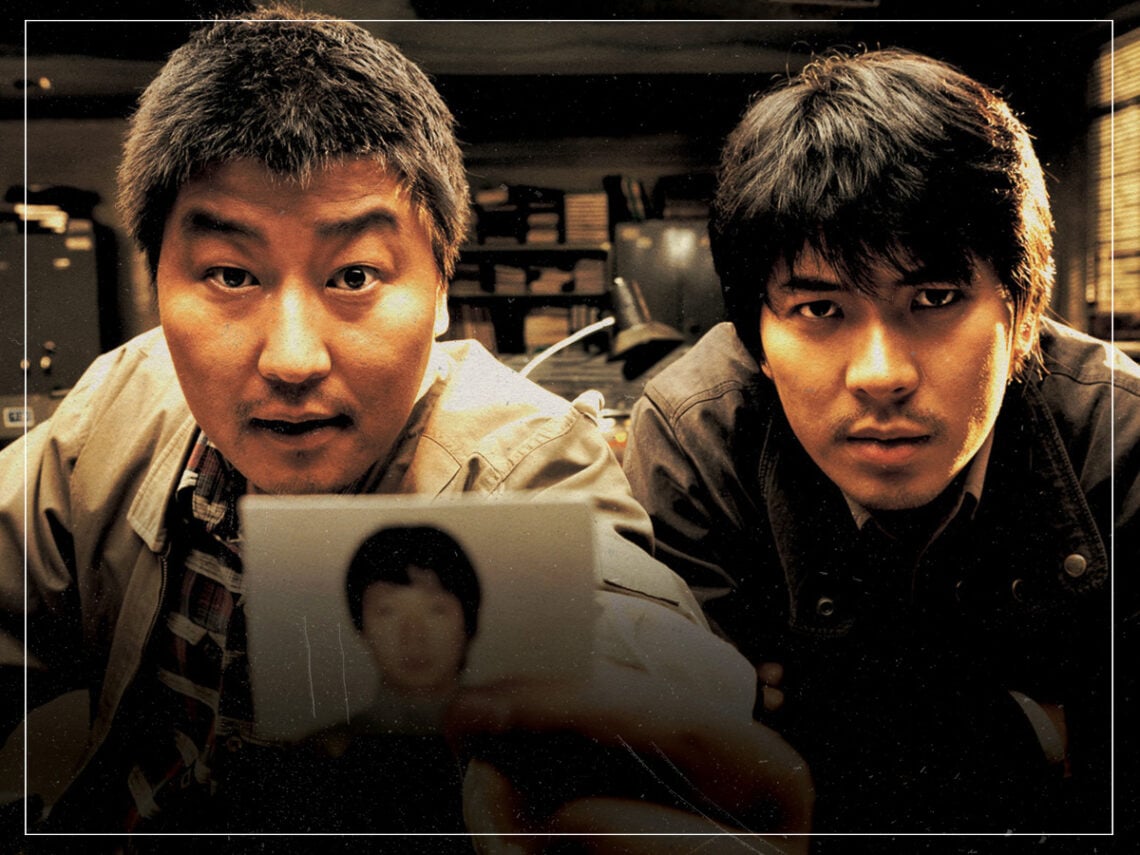
Song plays the local detective, Park Doo-man, who seems to believe he can know a suspect’s guilt just from looking at them. However, this frequent failure provides many brilliant moments of humour throughout Memories of Murder. When the severe case of rape and murder arrives in Hwaseong, the bumbling Park, who often uses physical intimidation to get the job done, is joined by a Seoul detective, Seo Tae-yoon, who is better trained in forensics and performs his work in a precise and methodological manner.
The disparity between the two detectives creates an air of comedy even despite the serious crime that they are investigating. Park’s ineptitude and incompetence occasionally err on the side of slapstick, which is naturally counterposed with Seo’s neo-noir-esque sense of composure.
Perhaps the small-town setting of Memories of Murder also contributes to the comic quality of Bong’s film, just as the Minnesota environment had for the Coen Brothers’ Fargo. The mundane and everyday activities of the inhabitants of Hwaseong, as well as its sparse muddy fields and damaged buildings compared to the capital help to create a juxtaposition with the sheer darkness of the crimes Park and Seo are tracing down and a dissonance between setting and narrative.
The characters of Hwaseong, even the mentally disabled, also suffer the brutality and overconfidence of Park as he attempts to beat his way to the truth and though such actions prove his desperation to gain information concerning the murder and rape spree, one can’t help but laugh at the length he is willing to go to succeed, especially when confession arrive from those who have nothing to do with the case, again highlighting the fact that this is a town where little happens, and when it does, it is exciting.
The triviality of small-town Korean life is counterposed by the seriousness of the narrative, which escalates tension and gravitas throughout the film. Bong masterfully never lets the comedy of Memories of Murder overshadow the thriller and crime aspects, though, which essentially comes down to carefully planned timing and the cast’s excellent performances, particularly Song’s.
On the other hand, perhaps Memories of Murder’s brilliance comes down to the fact that even despite the shocking reality of the film’s criminal narrative, Bong never allows things to become too grim and uses comedy to perfection to punctuate the darkness and provide the entire case with the absurdity it deserves. After all, evil acts make no sense to the morally inclined, which we like to think means most of us.
So Bong’s second feature film is a true masterpiece, not only because of the harrowing story it weaves and resolves but also because of the way it is ultimately presented. It would be difficult to argue that Memories of Murder is indeed a comedy film because it is, but still, humour plays an integral role in providing the film with its unique tone and engaging energy.
